 Add to Chrome
 Add to Firefox
 Add to Edge
HFMCA: Orthonormal Feature Learning for EEG-based Brain Decoding
Feb 04, 2026
Electroencephalography (EEG) analysis is critical for brain-computer interfaces and neuroscience, but the intrinsic noise and high dimensionality of EEG signals hinder effective feature learning. We propose a self-supervised framework based on the Hierarchical Functional Maximal Correlation Algorithm (HFMCA), which learns orthonormal EEG representations by enforcing feature decorrelation and reducing redundancy. This design enables robust capture of essential brain dynamics for various EEG recognition tasks. We validate HFMCA on two benchmark datasets, SEED and BCIC-2A, where pretraining with HFMCA consistently outperforms competitive self-supervised baselines, achieving notable gains in classification accuracy. Across diverse EEG tasks, our method demonstrates superior cross-subject generalization under leave-one-subject-out validation, advancing state-of-the-art by 2.71\% on SEED emotion recognition and 2.57\% on BCIC-2A motor imagery classification.

Occlusion Boundary and Depth: Mutual Enhancement via Multi-Task Learning
May 27, 2025Occlusion Boundary Estimation (OBE) identifies boundaries arising from both inter-object occlusions and self-occlusion within individual objects, distinguishing intrinsic object edges from occlusion-induced contours to improve scene understanding and 3D reconstruction capacity. This is closely related to Monocular Depth Estimation (MDE), which infers depth from a single image, as occlusion boundaries provide critical geometric cues for resolving depth ambiguities, while depth priors can conversely refine occlusion reasoning in complex scenes. In this paper, we propose a novel network, MoDOT, that first jointly estimates depth and OBs. We propose CASM, a cross-attention multi-scale strip convolution module, leverages mid-level OB features to significantly enhance depth prediction. Additionally, we introduce an occlusion-aware loss function, OBDCL, which encourages sharper and more accurate depth boundaries. Extensive experiments on both real and synthetic datasets demonstrate the mutual benefits of jointly estimating depth and OB, and highlight the effectiveness of our model design. Our method achieves the state-of-the-art (SOTA) on both our proposed synthetic datasets and one popular real dataset, NYUD-v2, significantly outperforming multi-task baselines. Besides, without domain adaptation, results on real-world depth transfer are comparable to the competitors, while preserving sharp occlusion boundaries for geometric fidelity. We will release our code, pre-trained models, and datasets to support future research in this direction.
Optimized preprocessing and Tiny ML for Attention State Classification
Mar 20, 2023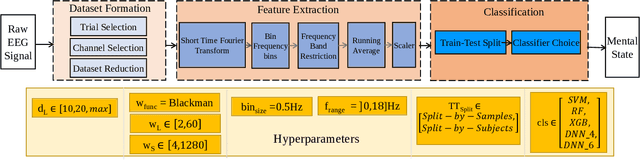

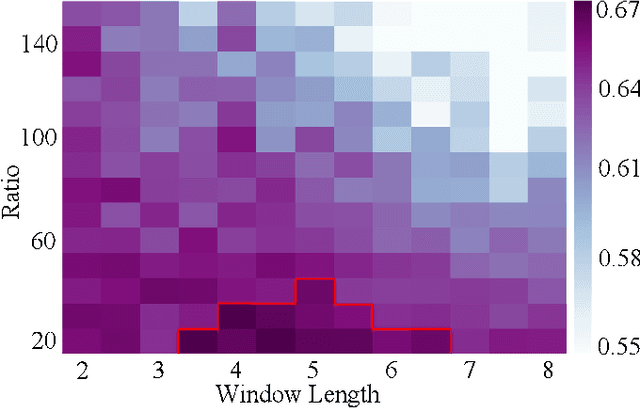
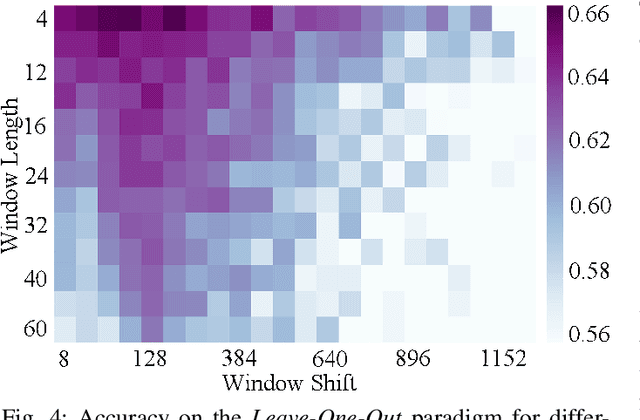
In this paper, we present a new approach to mental state classification from EEG signals by combining signal processing techniques and machine learning (ML) algorithms. We evaluate the performance of the proposed method on a dataset of EEG recordings collected during a cognitive load task and compared it to other state-of-the-art methods. The results show that the proposed method achieves high accuracy in classifying mental states and outperforms state-of-the-art methods in terms of classification accuracy and computational efficiency.