 Add to Chrome
 Add to Firefox
 Add to Edge
Optimal Transport-Guided Adversarial Attacks on Graph Neural Network-Based Bot Detection
Jan 30, 2026
The rise of bot accounts on social media poses significant risks to public discourse. To address this threat, modern bot detectors increasingly rely on Graph Neural Networks (GNNs). However, the effectiveness of these GNN-based detectors in real-world settings remains poorly understood. In practice, attackers continuously adapt their strategies as well as must operate under domain-specific and temporal constraints, which can fundamentally limit the applicability of existing attack methods. As a result, there is a critical need for robust GNN-based bot detection methods under realistic, constraint-aware attack scenarios. To address this gap, we introduce BOCLOAK to systematically evaluate the robustness of GNN-based social bot detection via both edge editing and node injection adversarial attacks under realistic constraints. BOCLOAK constructs a probability measure over spatio-temporal neighbor features and learns an optimal transport geometry that separates human and bot behaviors. It then decodes transport plans into sparse, plausible edge edits that evade detection while obeying real-world constraints. We evaluate BOCLOAK across three social bot datasets, five state-of-the-art bot detectors, three adversarial defenses, and compare it against four leading graph adversarial attack baselines. BOCLOAK achieves up to 80.13% higher attack success rates while using 99.80% less GPU memory under realistic real-world constraints. Most importantly, BOCLOAK shows that optimal transport provides a lightweight, principled framework for bridging the gap between adversarial attacks and real-world bot detection.

Towards Neural Scaling Laws for Foundation Models on Temporal Graphs
Jun 14, 2024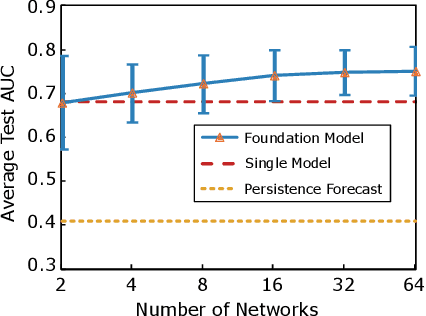
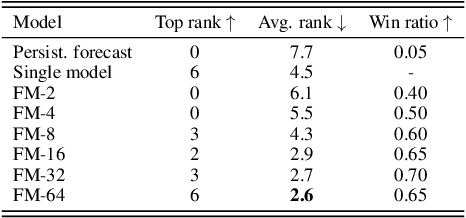
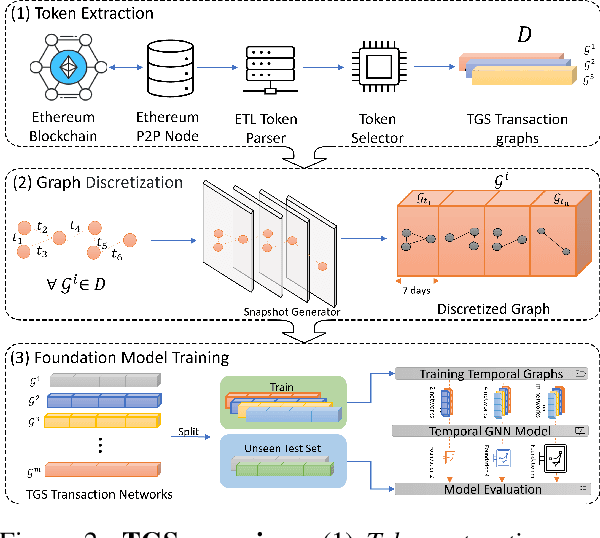
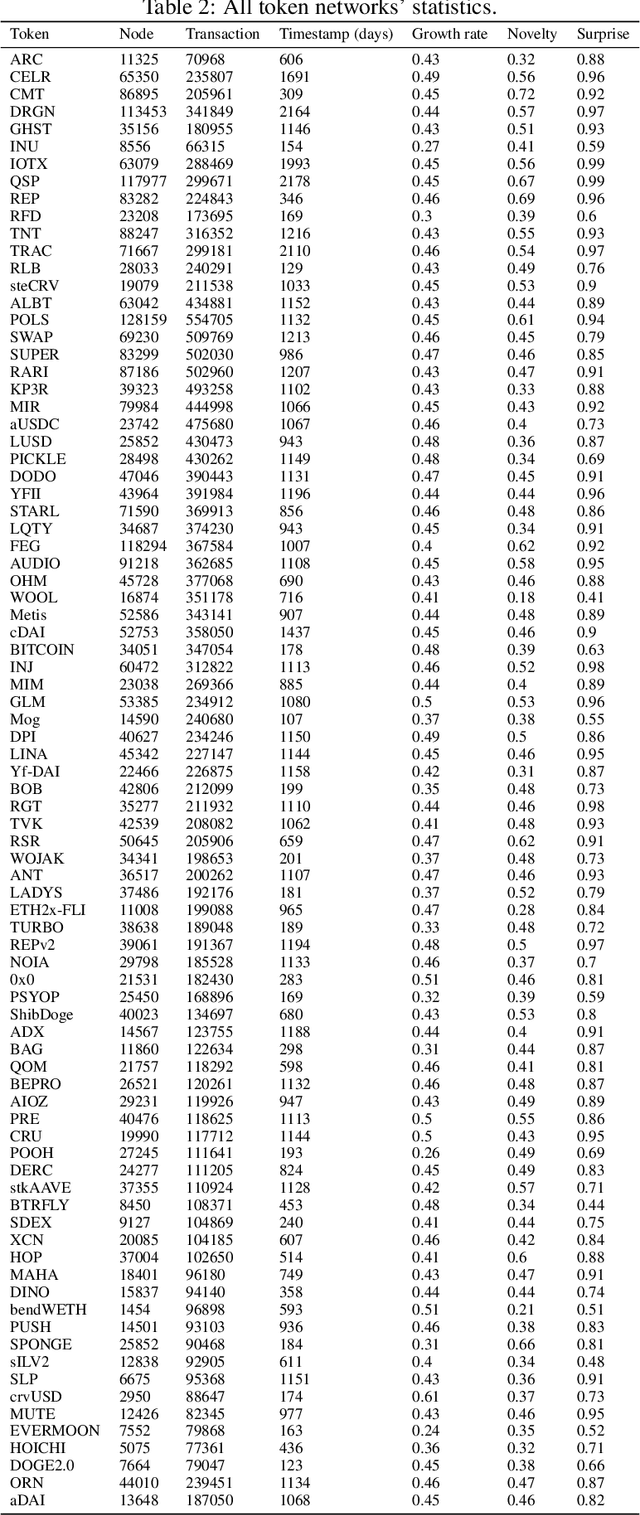
The field of temporal graph learning aims to learn from evolving network data to forecast future interactions. Given a collection of observed temporal graphs, is it possible to predict the evolution of an unseen network from the same domain? To answer this question, we first present the Temporal Graph Scaling (TGS) dataset, a large collection of temporal graphs consisting of eighty-four ERC20 token transaction networks collected from 2017 to 2023. Next, we evaluate the transferability of Temporal Graph Neural Networks (TGNNs) for the temporal graph property prediction task by pre-training on a collection of up to sixty-four token transaction networks and then evaluating the downstream performance on twenty unseen token networks. We find that the neural scaling law observed in NLP and Computer Vision also applies in temporal graph learning, where pre-training on greater number of networks leads to improved downstream performance. To the best of our knowledge, this is the first empirical demonstration of the transferability of temporal graphs learning. On downstream token networks, the largest pre-trained model outperforms single model TGNNs on thirteen unseen test networks. Therefore, we believe that this is a promising first step towards building foundation models for temporal graphs.