 Add to Chrome
 Add to Firefox
 Add to Edge
Kimi K2.5: Visual Agentic Intelligence
Feb 02, 2026
We introduce Kimi K2.5, an open-source multimodal agentic model designed to advance general agentic intelligence. K2.5 emphasizes the joint optimization of text and vision so that two modalities enhance each other. This includes a series of techniques such as joint text-vision pre-training, zero-vision SFT, and joint text-vision reinforcement learning. Building on this multimodal foundation, K2.5 introduces Agent Swarm, a self-directed parallel agent orchestration framework that dynamically decomposes complex tasks into heterogeneous sub-problems and executes them concurrently. Extensive evaluations show that Kimi K2.5 achieves state-of-the-art results across various domains including coding, vision, reasoning, and agentic tasks. Agent Swarm also reduces latency by up to $4.5\times$ over single-agent baselines. We release the post-trained Kimi K2.5 model checkpoint to facilitate future research and real-world applications of agentic intelligence.

Nanoscale Microscopy Images Colourisation Using Neural Networks
Dec 17, 2019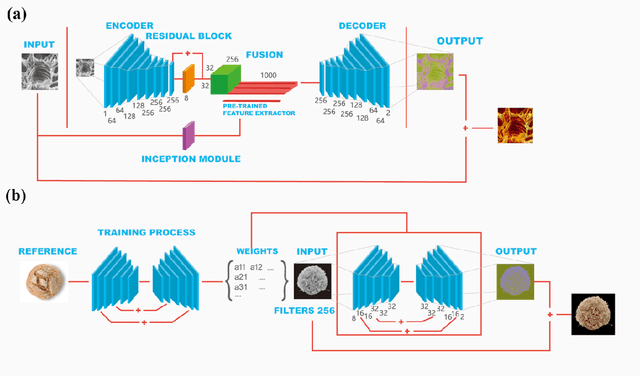
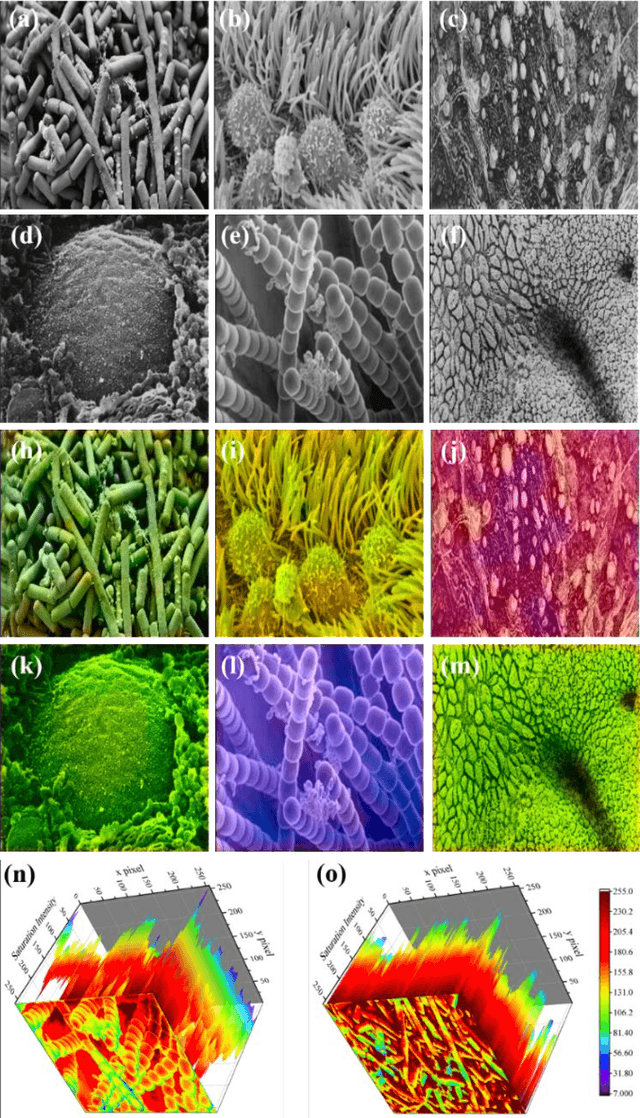
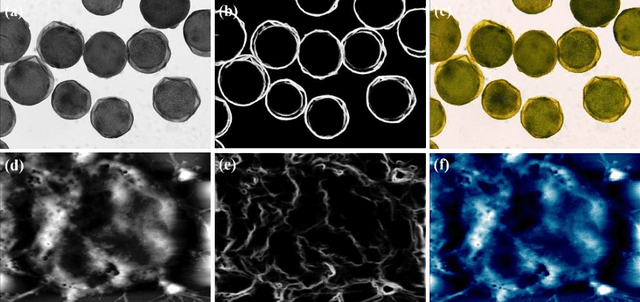
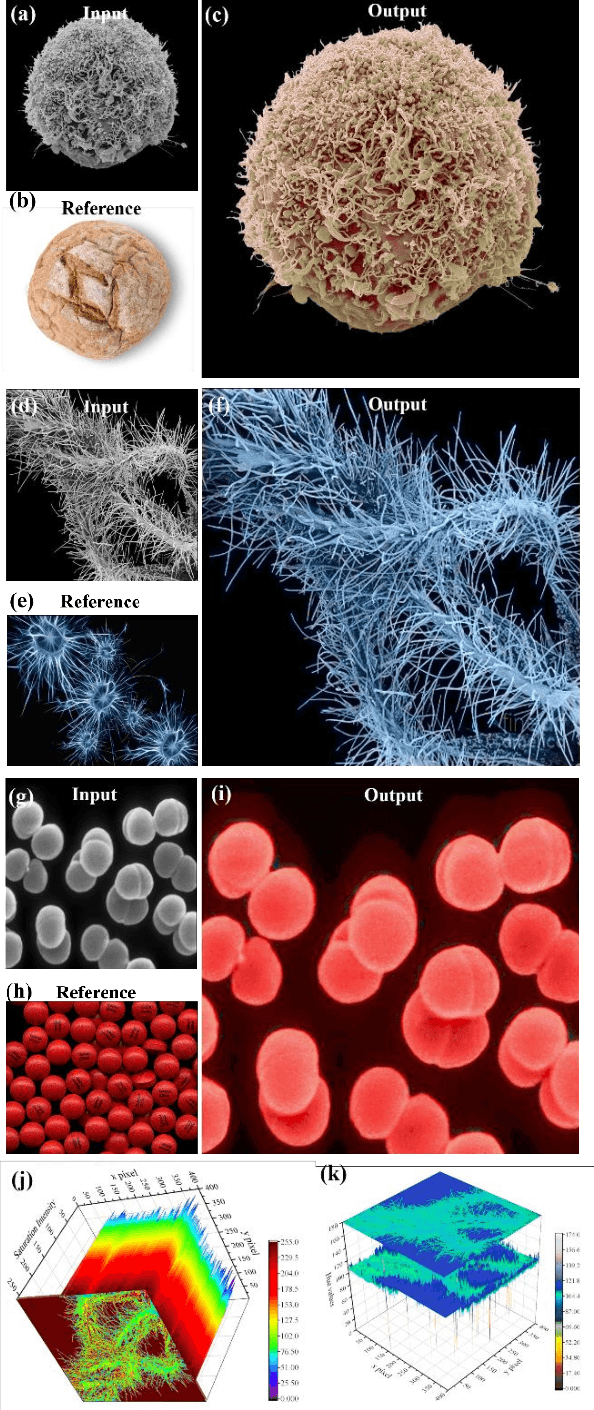
Microscopy images are powerful tools and widely used in the majority of research areas, such as biology, chemistry, physics and materials fields by various microscopies (Scanning Electron Microscope (SEM), Atomic Force Microscope (AFM) and the optical microscope, et al.). However, most of the microscopy images are colourless due to the unique imaging mechanism. Though investigating on some popular solutions proposed recently about colourizing microscopy images, we notice the process of those methods are usually tedious, complicated, and time-consuming. In this paper, inspired by the achievement of machine learning algorithms on different science fields, we introduce two artificial neural networks for grey microscopy image colourization: An end-to-end convolutional neural network (CNN) with a pre-trained model for feature extraction and a pixel-to-pixel Neural Style Transfer convolutional neural network (NST-CNN) which can colourize grey microscopy images with semantic information learned from a user-provided colour image at inference time. Our results show that our algorithm not only could able to colour the microscopy images under complex circumstances precisely but also make the colour naturally according to a massive number of nature images training with proper hue and saturation.