 Add to Chrome
 Add to Firefox
 Add to Edge
Applying Embedding-Based Retrieval to Airbnb Search
Jan 11, 2026
The goal of Airbnb search is to match guests with the ideal accommodation that fits their travel needs. This is a challenging problem, as popular search locations can have around a hundred thousand available homes, and guests themselves have a wide variety of preferences. Furthermore, the launch of new product features, such as \textit{flexible date search,} significantly increased the number of eligible homes per search query. As such, there is a need for a sophisticated retrieval system which can provide high-quality candidates with low latency in a way that integrates with the overall ranking stack. This paper details our journey to build an efficient and high-quality retrieval system for Airbnb search. We describe the key unique challenges we encountered when implementing an Embedding-Based Retrieval (EBR) system for a two sided marketplace like Airbnb -- such as the dynamic nature of the inventory, a lengthy user funnel with multiple stages, and a variety of product surfaces. We cover unique insights when modeling the retrieval problem, how to build robust evaluation systems, and design choices for online serving. The EBR system was launched to production and powers several use-cases such as regular search, flexible date and promotional emails for marketing campaigns. The system demonstrated statistically-significant improvements in key metrics, such as booking conversion, via A/B testing.

Learning to Rank for Maps at Airbnb
Jun 25, 2024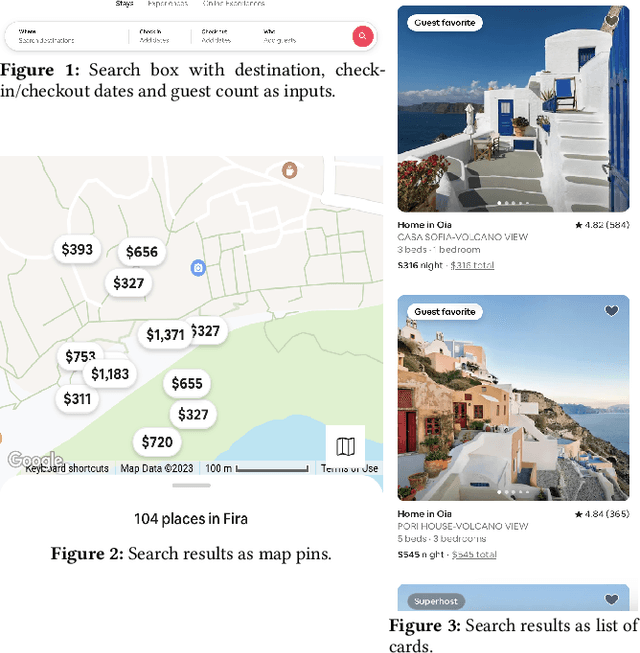
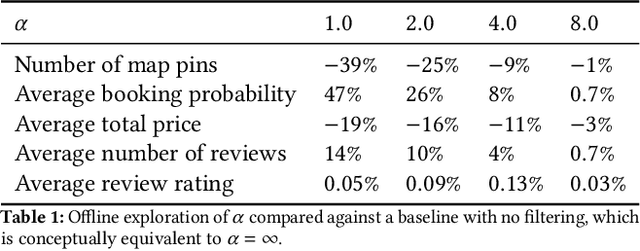
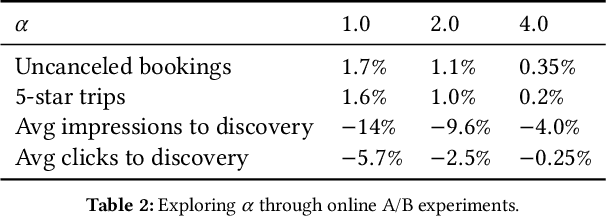
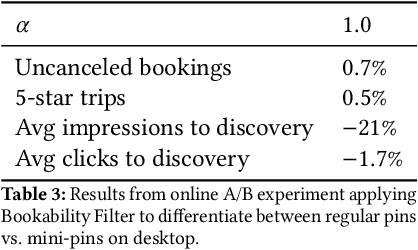
As a two-sided marketplace, Airbnb brings together hosts who own listings for rent with prospective guests from around the globe. Results from a guest's search for listings are displayed primarily through two interfaces: (1) as a list of rectangular cards that contain on them the listing image, price, rating, and other details, referred to as list-results (2) as oval pins on a map showing the listing price, called map-results. Both these interfaces, since their inception, have used the same ranking algorithm that orders listings by their booking probabilities and selects the top listings for display. But some of the basic assumptions underlying ranking, built for a world where search results are presented as lists, simply break down for maps. This paper describes how we rebuilt ranking for maps by revising the mathematical foundations of how users interact with search results. Our iterative and experiment-driven approach led us through a path full of twists and turns, ending in a unified theory for the two interfaces. Our journey shows how assumptions taken for granted when designing machine learning algorithms may not apply equally across all user interfaces, and how they can be adapted. The net impact was one of the largest improvements in user experience for Airbnb which we discuss as a series of experimental validations.