 Add to Chrome
 Add to Firefox
 Add to Edge
Semantic Search At LinkedIn
Feb 07, 2026
Semantic search with large language models (LLMs) enables retrieval by meaning rather than keyword overlap, but scaling it requires major inference efficiency advances. We present LinkedIn's LLM-based semantic search framework for AI Job Search and AI People Search, combining an LLM relevance judge, embedding-based retrieval, and a compact Small Language Model trained via multi-teacher distillation to jointly optimize relevance and engagement. A prefill-oriented inference architecture co-designed with model pruning, context compression, and text-embedding hybrid interactions boosts ranking throughput by over 75x under a fixed latency constraint while preserving near-teacher-level NDCG, enabling one of the first production LLM-based ranking systems with efficiency comparable to traditional approaches and delivering significant gains in quality and user engagement.

Trading off Relevance and Revenue in the Jobs Marketplace: Estimation, Optimization and Auction Design
Apr 04, 2025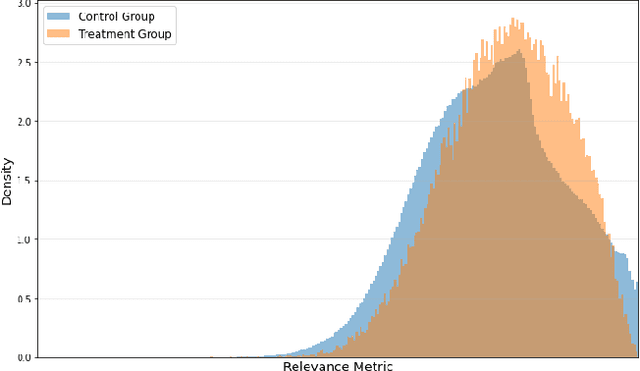

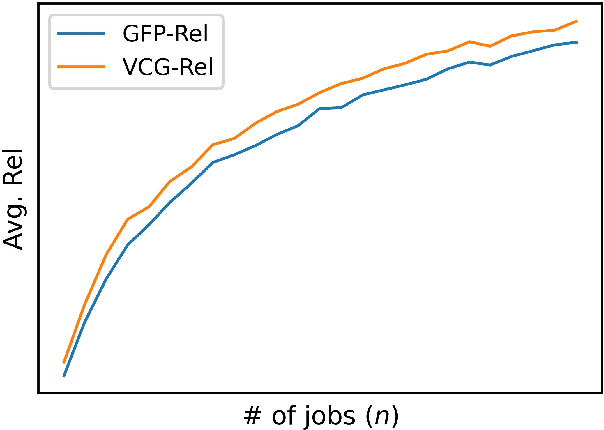
We study the problem of position allocation in job marketplaces, where the platform determines the ranking of the jobs for each seeker. The design of ranking mechanisms is critical to marketplace efficiency, as it influences both short-term revenue from promoted job placements and long-term health through sustained seeker engagement. Our analysis focuses on the tradeoff between revenue and relevance, as well as the innovations in job auction design. We demonstrated two ways to improve relevance with minimal impact on revenue: incorporating the seekers preferences and applying position-aware auctions.