 Add to Chrome
 Add to Firefox
 Add to Edge
An autonomous living database for perovskite photovoltaics
Jan 25, 2026
Scientific discovery is severely bottlenecked by the inability of manual curation to keep pace with exponential publication rates. This creates a widening knowledge gap. This is especially stark in photovoltaics, where the leading database for perovskite solar cells has been stagnant since 2021 despite massive ongoing research output. Here, we resolve this challenge by establishing an autonomous, self-updating living database (PERLA). Our pipeline integrates large language models with physics-aware validation to extract complex device data from the continuous literature stream, achieving human-level precision (>90%) and eliminating annotator variance. By employing this system on the previously inaccessible post-2021 literature, we uncover critical evolutionary trends hidden by data lag: the field has decisively shifted toward inverted architectures employing self-assembled monolayers and formamidinium-rich compositions, driving a clear trajectory of sustained voltage loss reduction. PERLA transforms static publications into dynamic knowledge resources that enable data-driven discovery to operate at the speed of publication.

From Text to Insight: Large Language Models for Materials Science Data Extraction
Jul 23, 2024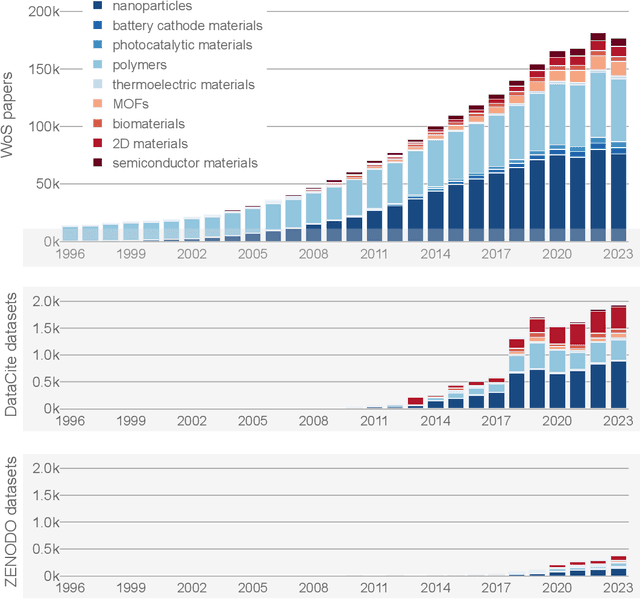
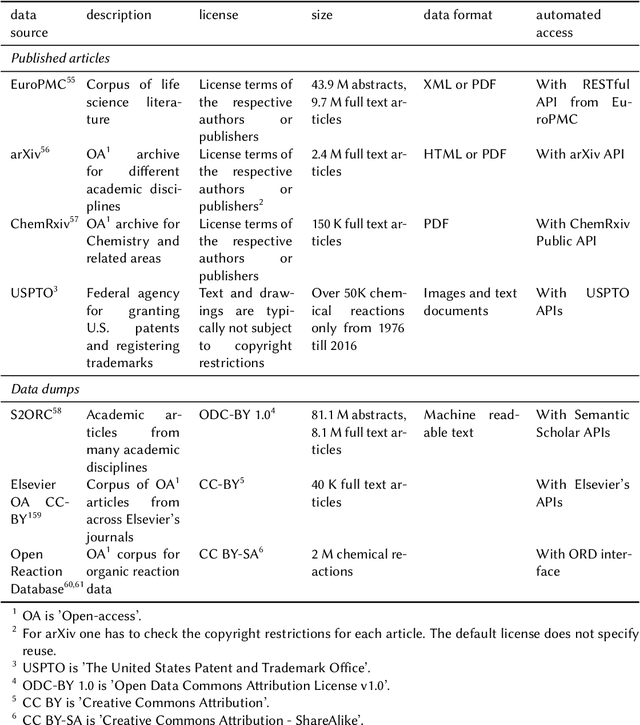
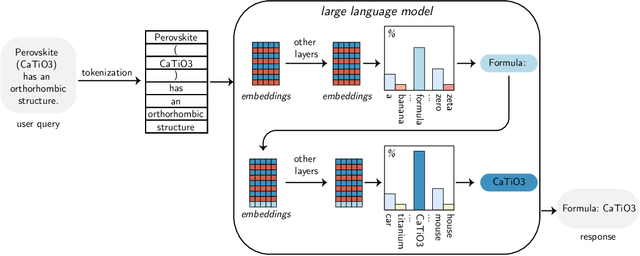
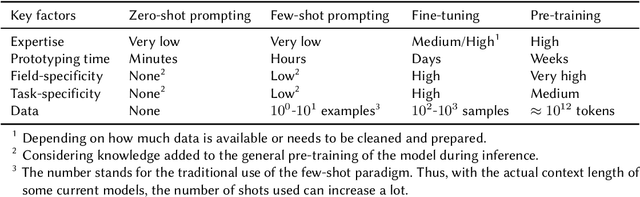
The vast majority of materials science knowledge exists in unstructured natural language, yet structured data is crucial for innovative and systematic materials design. Traditionally, the field has relied on manual curation and partial automation for data extraction for specific use cases. The advent of large language models (LLMs) represents a significant shift, potentially enabling efficient extraction of structured, actionable data from unstructured text by non-experts. While applying LLMs to materials science data extraction presents unique challenges, domain knowledge offers opportunities to guide and validate LLM outputs. This review provides a comprehensive overview of LLM-based structured data extraction in materials science, synthesizing current knowledge and outlining future directions. We address the lack of standardized guidelines and present frameworks for leveraging the synergy between LLMs and materials science expertise. This work serves as a foundational resource for researchers aiming to harness LLMs for data-driven materials research. The insights presented here could significantly enhance how researchers across disciplines access and utilize scientific information, potentially accelerating the development of novel materials for critical societal needs.