 Add to Chrome
 Add to Firefox
 Add to Edge
MUSE: Multi-Tenant Model Serving With Seamless Model Updates
Feb 12, 2026
In binary classification systems, decision thresholds translate model scores into actions. Choosing suitable thresholds relies on the specific distribution of the underlying model scores but also on the specific business decisions of each client using that model. However, retraining models inevitably shifts score distributions, invalidating existing thresholds. In multi-tenant Score-as-a-Service environments, where decision boundaries reside in client-managed infrastructure, this creates a severe bottleneck: recalibration requires coordinating threshold updates across hundreds of clients, consuming excessive human hours and leading to model stagnation. We introduce MUSE, a model serving framework that enables seamless model updates by decoupling model scores from client decision boundaries. Designed for multi-tenancy, MUSE optimizes infrastructure re-use by sharing models via dynamic intent-based routing, combined with a two-level score transformation that maps model outputs to a stable, reference distribution. Deployed at scale by Feedzai, MUSE processes over a thousand events per second, and over 55 billion events in the last 12 months, across several dozens of tenants, while maintaining high-availability and low-latency guarantees. By reducing model lead time from weeks to minutes, MUSE promotes model resilience against shifting attacks, saving millions of dollars in fraud losses and operational costs.

The GANfather: Controllable generation of malicious activity to improve defence systems
Jul 25, 2023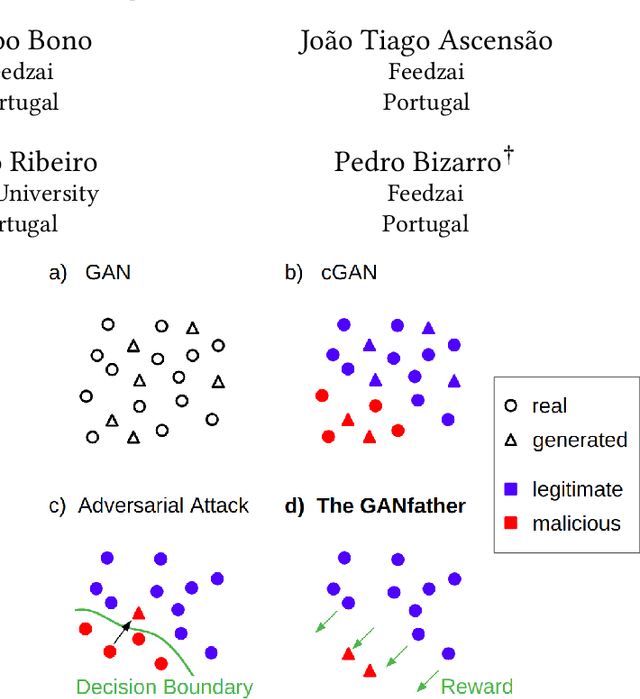
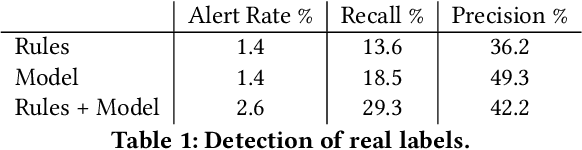
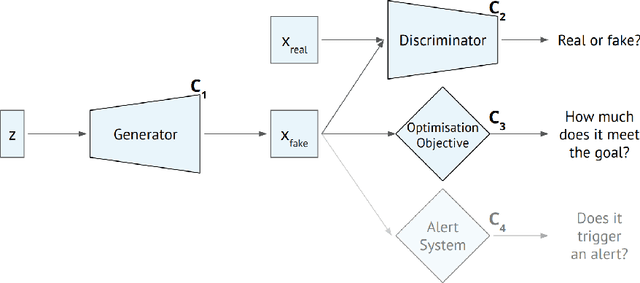
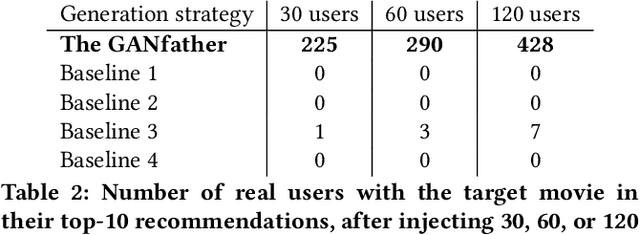
Machine learning methods to aid defence systems in detecting malicious activity typically rely on labelled data. In some domains, such labelled data is unavailable or incomplete. In practice this can lead to low detection rates and high false positive rates, which characterise for example anti-money laundering systems. In fact, it is estimated that 1.7--4 trillion euros are laundered annually and go undetected. We propose The GANfather, a method to generate samples with properties of malicious activity, without label requirements. We propose to reward the generation of malicious samples by introducing an extra objective to the typical Generative Adversarial Networks (GANs) loss. Ultimately, our goal is to enhance the detection of illicit activity using the discriminator network as a novel and robust defence system. Optionally, we may encourage the generator to bypass pre-existing detection systems. This setup then reveals defensive weaknesses for the discriminator to correct. We evaluate our method in two real-world use cases, money laundering and recommendation systems. In the former, our method moves cumulative amounts close to 350 thousand dollars through a network of accounts without being detected by an existing system. In the latter, we recommend the target item to a broad user base with as few as 30 synthetic attackers. In both cases, we train a new defence system to capture the synthetic attacks.