 Add to Chrome
 Add to Firefox
 Add to Edge
Just-in-Time Catching Test Generation at Meta
Jan 30, 2026
We report on Just-in-Time catching test generation at Meta, designed to prevent bugs in large scale backend systems of hundreds of millions of line of code. Unlike traditional hardening tests, which pass at generation time, catching tests are meant to fail, surfacing bugs before code lands. The primary challenge is to reduce development drag from false positive test failures. Analyzing 22,126 generated tests, we show code-change-aware methods improve candidate catch generation 4x over hardening tests and 20x over coincidentally failing tests. To address false positives, we use rule-based and LLM-based assessors. These assessors reduce human review load by 70%. Inferential statistical analysis showed that human-accepted code changes are assessed to have significantly more false positives, while human-rejected changes have significantly more true positives. We reported 41 candidate catches to engineers; 8 were confirmed to be true positives, 4 of which would have led to serious failures had they remained uncaught. Overall, our results show that Just-in-Time catching is scalable, industrially applicable, and that it prevents serious failures from reaching production.

A GMBCG Galaxy Cluster Catalog of 55,424 Rich Clusters from SDSS DR7
Dec 22, 2010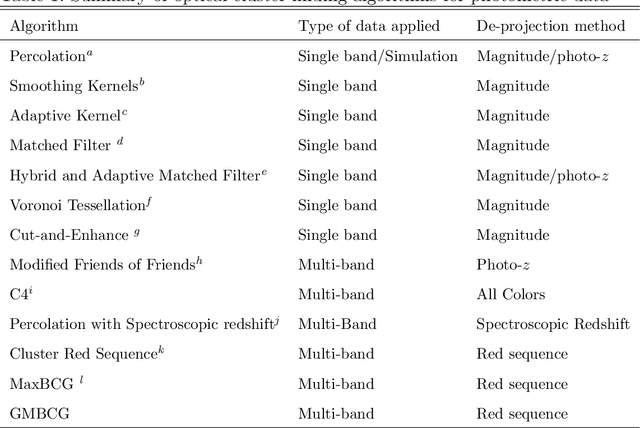
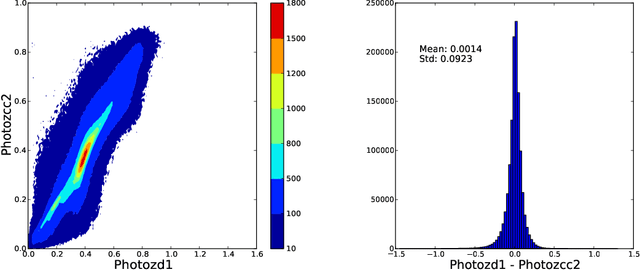
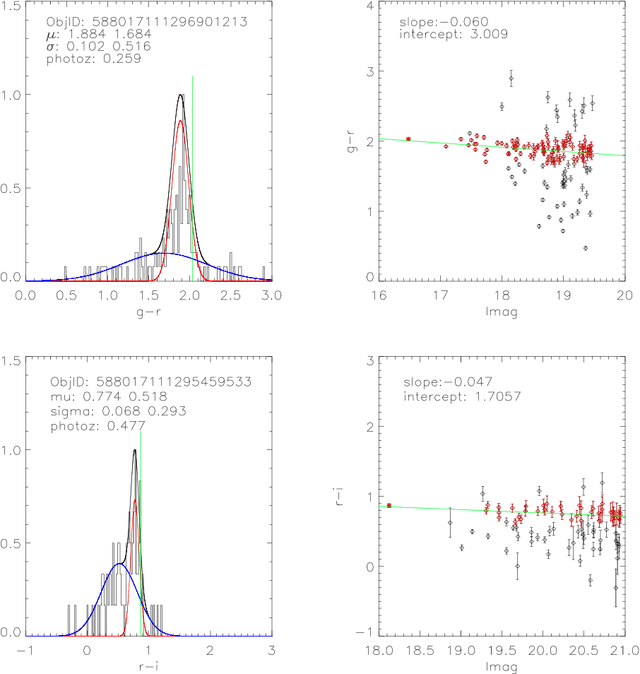
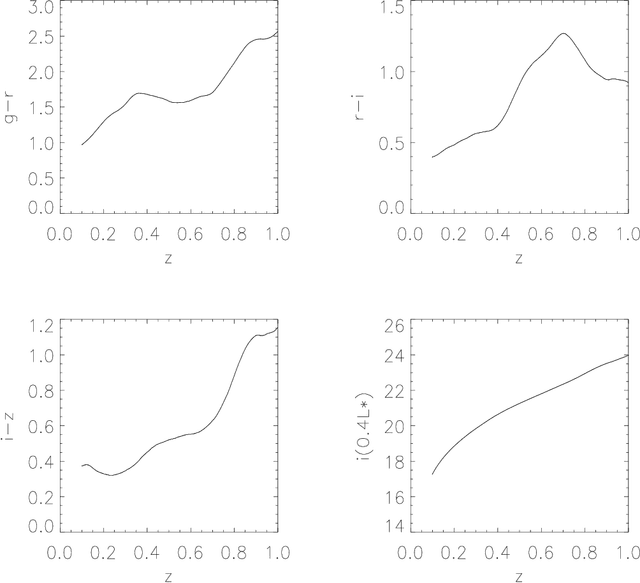
We present a large catalog of optically selected galaxy clusters from the application of a new Gaussian Mixture Brightest Cluster Galaxy (GMBCG) algorithm to SDSS Data Release 7 data. The algorithm detects clusters by identifying the red sequence plus Brightest Cluster Galaxy (BCG) feature, which is unique for galaxy clusters and does not exist among field galaxies. Red sequence clustering in color space is detected using an Error Corrected Gaussian Mixture Model. We run GMBCG on 8240 square degrees of photometric data from SDSS DR7 to assemble the largest ever optical galaxy cluster catalog, consisting of over 55,000 rich clusters across the redshift range from 0.1 < z < 0.55. We present Monte Carlo tests of completeness and purity and perform cross-matching with X-ray clusters and with the maxBCG sample at low redshift. These tests indicate high completeness and purity across the full redshift range for clusters with 15 or more members.
* Updated to match the published version. The catalog can be accessed from: http://home.fnal.gov/~jghao/gmbcg_sdss_catalog.html