 Add to Chrome
 Add to Firefox
 Add to Edge
AMP2026: A Multi-Platform Marine Robotics Dataset for Tracking and Mapping
Mar 04, 2026
Marine environments present significant challenges for perception and autonomy due to dynamic surfaces, limited visibility, and complex interactions between aerial, surface, and submerged sensing modalities. This paper introduces the Aerial Marine Perception Dataset (AMP2026), a multi-platform marine robotics dataset collected across multiple field deployments designed to support research in two primary areas: multi-view tracking and marine environment mapping. The dataset includes synchronized data from aerial drones, boat-mounted cameras, and submerged robotic platforms, along with associated localization and telemetry information. The goal of this work is to provide a publicly available dataset enabling research in marine perception and multi-robot observation scenarios. This paper describes the data collection methodology, sensor configurations, dataset organization, and intended research tasks supported by the dataset.

Scalable Aerial GNSS Localization for Marine Robots
May 07, 2025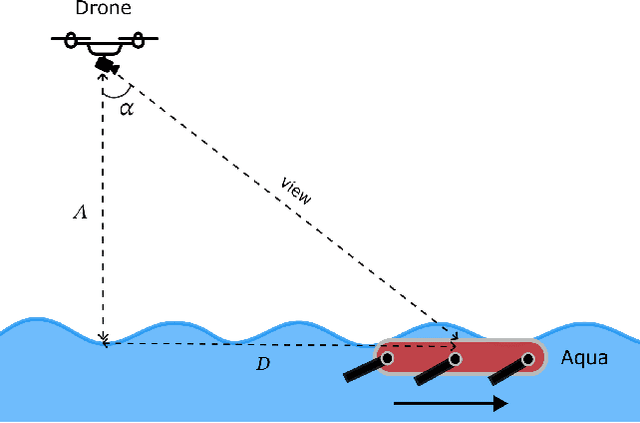
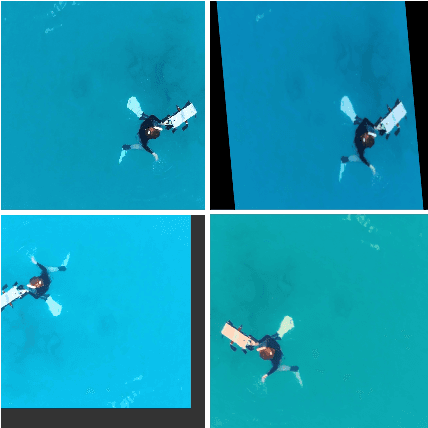
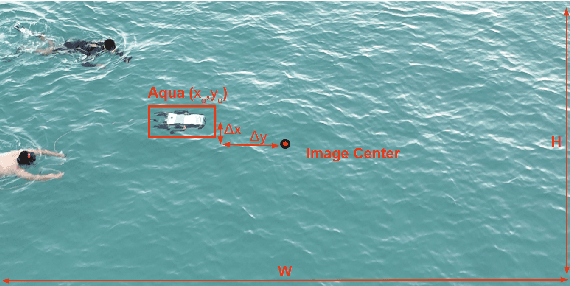
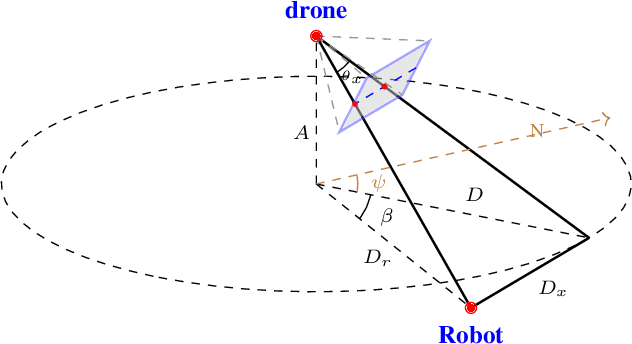
Accurate localization is crucial for water robotics, yet traditional onboard Global Navigation Satellite System (GNSS) approaches are difficult or ineffective due to signal reflection on the water's surface and its high cost of aquatic GNSS receivers. Existing approaches, such as inertial navigation, Doppler Velocity Loggers (DVL), SLAM, and acoustic-based methods, face challenges like error accumulation and high computational complexity. Therefore, a more efficient and scalable solution remains necessary. This paper proposes an alternative approach that leverages an aerial drone equipped with GNSS localization to track and localize a marine robot once it is near the surface of the water. Our results show that this novel adaptation enables accurate single and multi-robot marine robot localization.
Globally Stable Neural Imitation Policies
Mar 07, 2024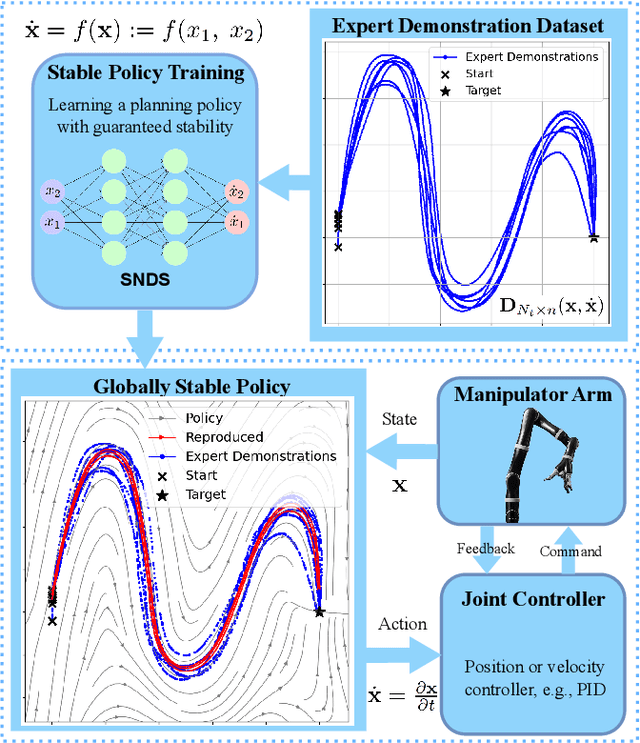
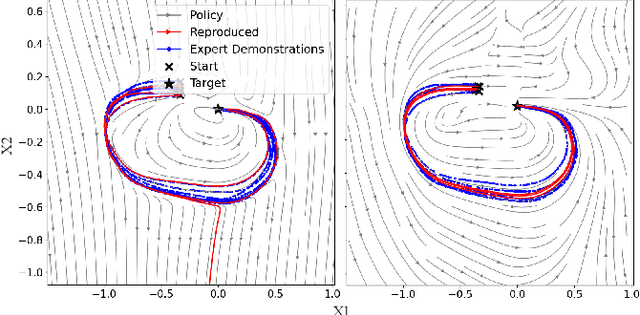
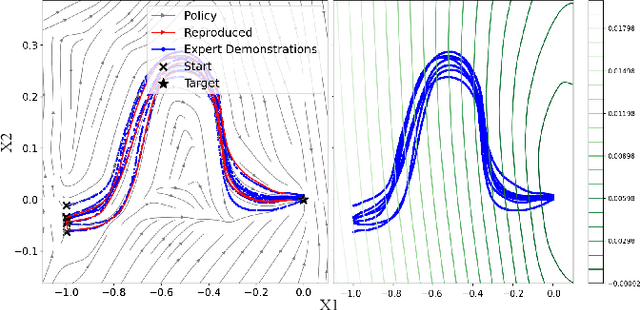
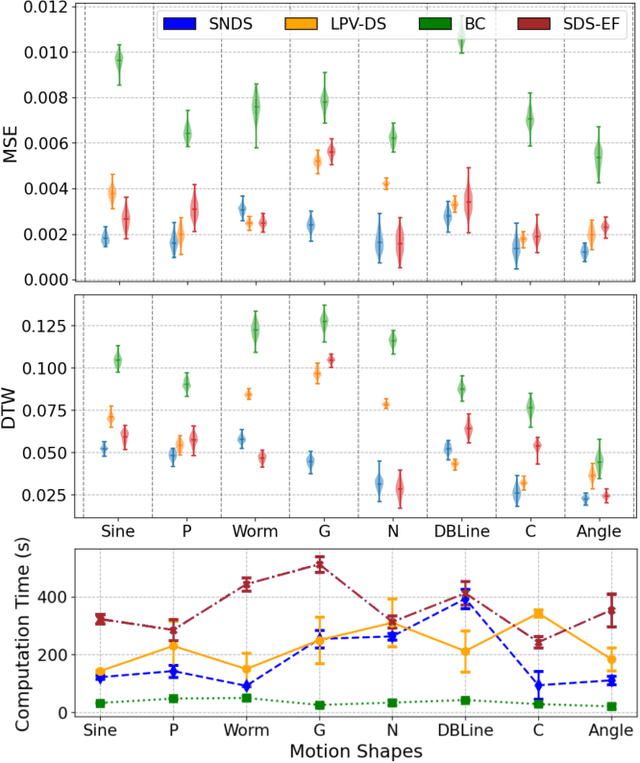
Imitation learning presents an effective approach to alleviate the resource-intensive and time-consuming nature of policy learning from scratch in the solution space. Even though the resulting policy can mimic expert demonstrations reliably, it often lacks predictability in unexplored regions of the state-space, giving rise to significant safety concerns in the face of perturbations. To address these challenges, we introduce the Stable Neural Dynamical System (SNDS), an imitation learning regime which produces a policy with formal stability guarantees. We deploy a neural policy architecture that facilitates the representation of stability based on Lyapunov theorem, and jointly train the policy and its corresponding Lyapunov candidate to ensure global stability. We validate our approach by conducting extensive experiments in simulation and successfully deploying the trained policies on a real-world manipulator arm. The experimental results demonstrate that our method overcomes the instability, accuracy, and computational intensity problems associated with previous imitation learning methods, making our method a promising solution for stable policy learning in complex planning scenarios.