 Add to Chrome
 Add to Firefox
 Add to Edge
mViSE: A Visual Search Engine for Analyzing Multiplex IHC Brain Tissue Images
Dec 12, 2025
Whole-slide multiplex imaging of brain tissue generates massive information-dense images that are challenging to analyze and require custom software. We present an alternative query-driven programming-free strategy using a multiplex visual search engine (mViSE) that learns the multifaceted brain tissue chemoarchitecture, cytoarchitecture, and myeloarchitecture. Our divide-and-conquer strategy organizes the data into panels of related molecular markers and uses self-supervised learning to train a multiplex encoder for each panel with explicit visual confirmation of successful learning. Multiple panels can be combined to process visual queries for retrieving similar communities of individual cells or multicellular niches using information-theoretic methods. The retrievals can be used for diverse purposes including tissue exploration, delineating brain regions and cortical cell layers, profiling and comparing brain regions without computer programming. We validated mViSE's ability to retrieve single cells, proximal cell pairs, tissue patches, delineate cortical layers, brain regions and sub-regions. mViSE is provided as an open-source QuPath plug-in.

Weak-to-Strong Generalization Enables Fully Automated De Novo Training of Multi-head Mask-RCNN Model for Segmenting Densely Overlapping Cell Nuclei in Multiplex Whole-slice Brain Images
Dec 12, 2025We present a weak to strong generalization methodology for fully automated training of a multi-head extension of the Mask-RCNN method with efficient channel attention for reliable segmentation of overlapping cell nuclei in multiplex cyclic immunofluorescent (IF) whole-slide images (WSI), and present evidence for pseudo-label correction and coverage expansion, the key phenomena underlying weak to strong generalization. This method can learn to segment de novo a new class of images from a new instrument and/or a new imaging protocol without the need for human annotations. We also present metrics for automated self-diagnosis of segmentation quality in production environments, where human visual proofreading of massive WSI images is unaffordable. Our method was benchmarked against five current widely used methods and showed a significant improvement. The code, sample WSI images, and high-resolution segmentation results are provided in open form for community adoption and adaptation.
Student Collaboration Improves Self-Supervised Learning: Dual-Loss Adaptive Masked Autoencoder for Brain Cell Image Analysis
May 10, 2022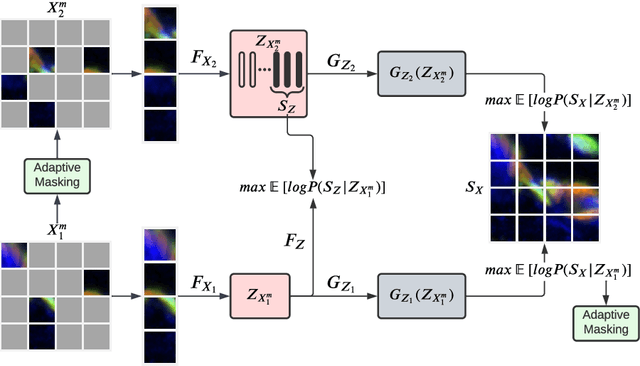
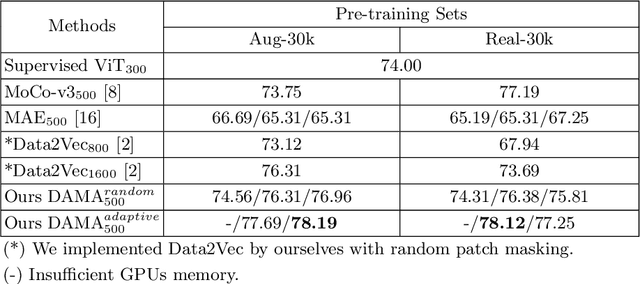
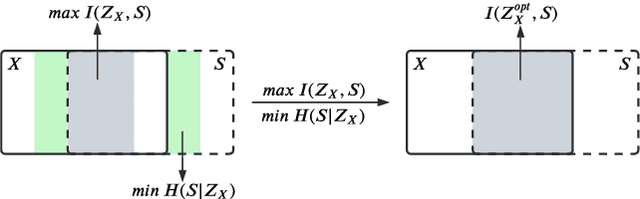
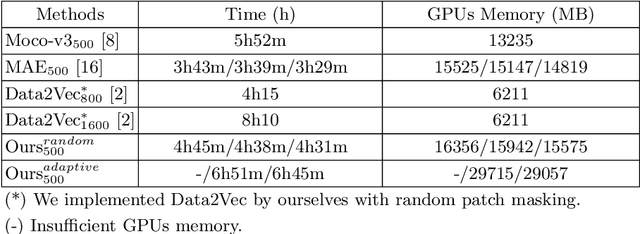
Self-supervised learning leverages the underlying data structure as the source of the supervisory signal without the need for human annotation effort. This approach offers a practical solution to learning with a large amount of biomedical data and limited annotation. Unlike other studies exploiting data via multi-view (e.g., augmented images), this study presents a self-supervised Dual-Loss Adaptive Masked Autoencoder (DAMA) algorithm established from the viewpoint of the information theory. Specifically, our objective function maximizes the mutual information by minimizing the conditional entropy in pixel-level reconstruction and feature-level regression. We further introduce an adaptive mask sampling strategy to maximize mutual information. We conduct extensive experiments on brain cell images to validate the proposed method. DAMA significantly outperforms both state-of-the-art self-supervised and supervised methods on brain cells data and demonstrates competitive result on ImageNet-1k. Code: https://github.com/hula-ai/DAMA