 Add to Chrome
 Add to Firefox
 Add to Edge
AI Agents Can Already Autonomously Perform Experimental High Energy Physics
Mar 20, 2026
Large language model-based AI agents are now able to autonomously execute substantial portions of a high energy physics (HEP) analysis pipeline with minimal expert-curated input. Given access to a HEP dataset, an execution framework, and a corpus of prior experimental literature, we find that Claude Code succeeds in automating all stages of a typical analysis: event selection, background estimation, uncertainty quantification, statistical inference, and paper drafting. We argue that the experimental HEP community is underestimating the current capabilities of these systems, and that most proposed agentic workflows are too narrowly scoped or scaffolded to specific analysis structures. We present a proof-of-concept framework, Just Furnish Context (JFC), that integrates autonomous analysis agents with literature-based knowledge retrieval and multi-agent review, and show that this is sufficient to plan, execute, and document a credible high energy physics analysis. We demonstrate this by conducting analyses on open data from ALEPH, DELPHI, and CMS to perform electroweak, QCD, and Higgs boson measurements. Rather than replacing physicists, these tools promise to offload the repetitive technical burden of analysis code development, freeing researchers to focus on physics insight, truly novel method development, and rigorous validation. Given these developments, we advocate for new strategies for how the community trains students, organizes analysis efforts, and allocates human expertise.

Building Machine Learning Challenges for Anomaly Detection in Science
Mar 03, 2025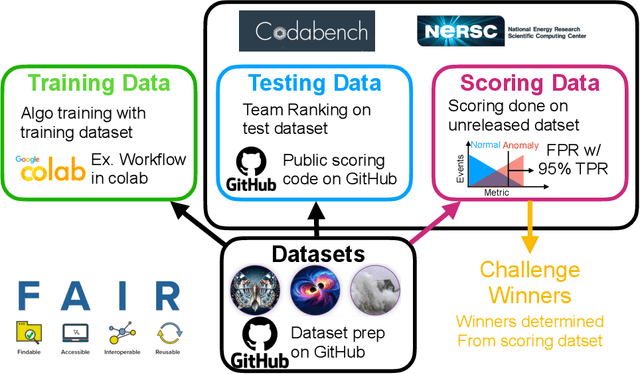
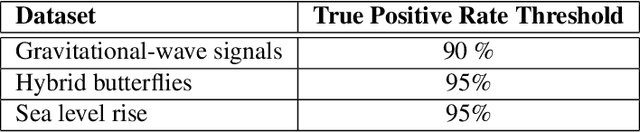
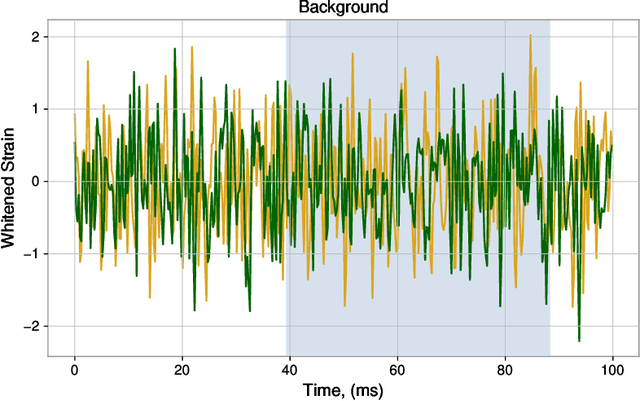

Scientific discoveries are often made by finding a pattern or object that was not predicted by the known rules of science. Oftentimes, these anomalous events or objects that do not conform to the norms are an indication that the rules of science governing the data are incomplete, and something new needs to be present to explain these unexpected outliers. The challenge of finding anomalies can be confounding since it requires codifying a complete knowledge of the known scientific behaviors and then projecting these known behaviors on the data to look for deviations. When utilizing machine learning, this presents a particular challenge since we require that the model not only understands scientific data perfectly but also recognizes when the data is inconsistent and out of the scope of its trained behavior. In this paper, we present three datasets aimed at developing machine learning-based anomaly detection for disparate scientific domains covering astrophysics, genomics, and polar science. We present the different datasets along with a scheme to make machine learning challenges around the three datasets findable, accessible, interoperable, and reusable (FAIR). Furthermore, we present an approach that generalizes to future machine learning challenges, enabling the possibility of large, more compute-intensive challenges that can ultimately lead to scientific discovery.
Improving robustness of jet tagging algorithms with adversarial training
Mar 25, 2022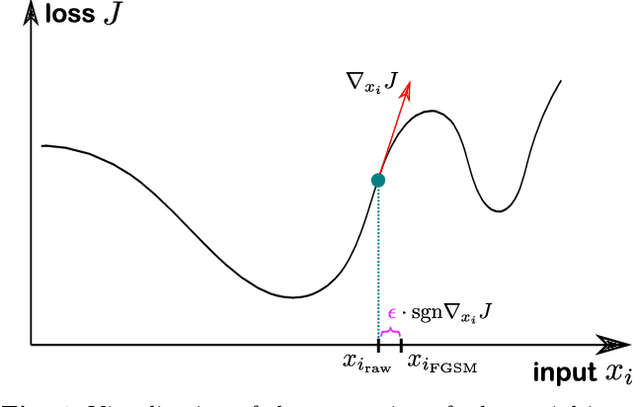
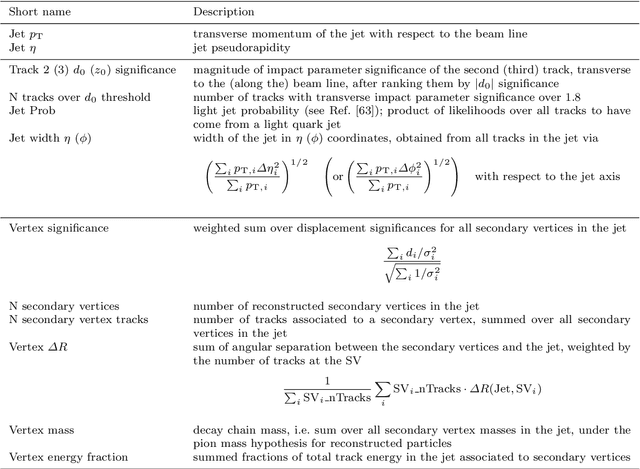
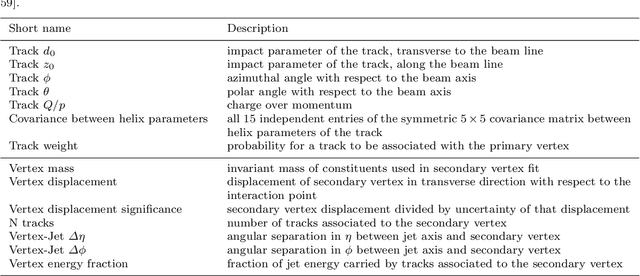
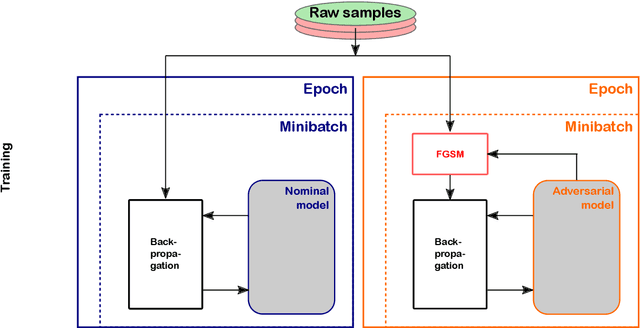
Deep learning is a standard tool in the field of high-energy physics, facilitating considerable sensitivity enhancements for numerous analysis strategies. In particular, in identification of physics objects, such as jet flavor tagging, complex neural network architectures play a major role. However, these methods are reliant on accurate simulations. Mismodeling can lead to non-negligible differences in performance in data that need to be measured and calibrated against. We investigate the classifier response to input data with injected mismodelings and probe the vulnerability of flavor tagging algorithms via application of adversarial attacks. Subsequently, we present an adversarial training strategy that mitigates the impact of such simulated attacks and improves the classifier robustness. We examine the relationship between performance and vulnerability and show that this method constitutes a promising approach to reduce the vulnerability to poor modeling.