 Add to Chrome
 Add to Firefox
 Add to Edge
KANFIS A Neuro-Symbolic Framework for Interpretable and Uncertainty-Aware Learning
Feb 03, 2026
Adaptive Neuro-Fuzzy Inference System (ANFIS) was designed to combine the learning capabilities of neural network with the reasoning transparency of fuzzy logic. However, conventional ANFIS architectures suffer from structural complexity, where the product-based inference mechanism causes an exponential explosion of rules in high-dimensional spaces. We herein propose the Kolmogorov-Arnold Neuro-Fuzzy Inference System (KANFIS), a compact neuro-symbolic architecture that unifies fuzzy reasoning with additive function decomposition. KANFIS employs an additive aggregation mechanism, under which both model parameters and rule complexity scale linearly with input dimensionality rather than exponentially. Furthermore, KANFIS is compatible with both Type-1 (T1) and Interval Type-2 (IT2) fuzzy logic systems, enabling explicit modeling of uncertainty and ambiguity in fuzzy representations. By using sparse masking mechanisms, KANFIS generates compact and structured rule sets, resulting in an intrinsically interpretable model with clear rule semantics and transparent inference processes. Empirical results demonstrate that KANFIS achieves competitive performance against representative neural and neuro-fuzzy baselines.

Exploring the relationship between response time sequence in scale answering process and severity of insomnia: a machine learning approach
Oct 13, 2023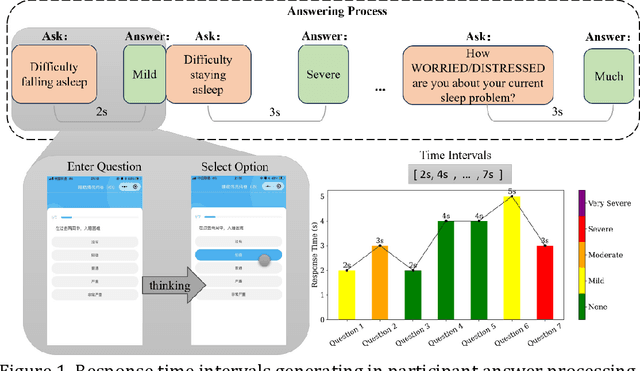
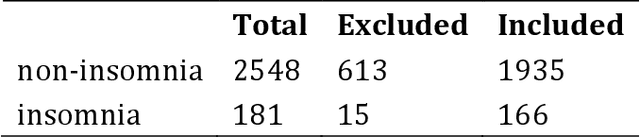
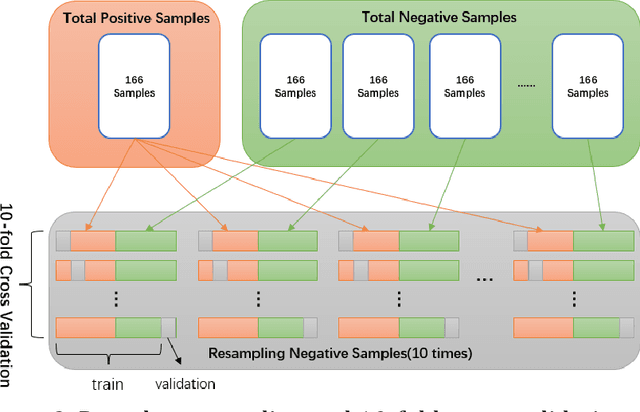
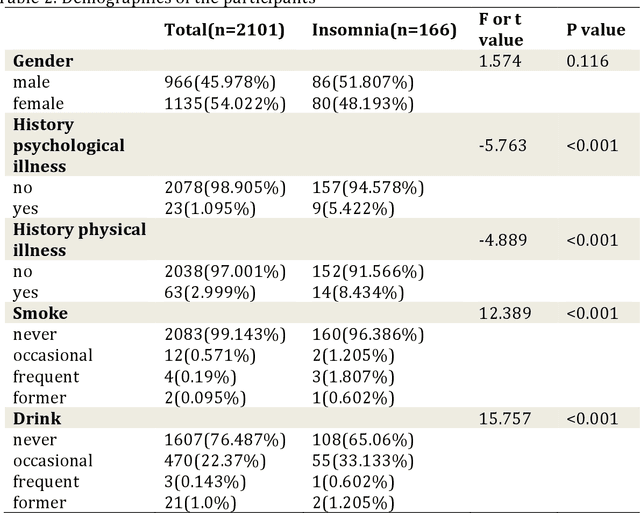
Objectives: The study aims to investigate the relationship between insomnia and response time. Additionally, it aims to develop a machine learning model to predict the presence of insomnia in participants using response time data. Methods: A mobile application was designed to administer scale tests and collect response time data from 2729 participants. The relationship between symptom severity and response time was explored, and a machine learning model was developed to predict the presence of insomnia. Results: The result revealed a statistically significant difference (p<.001) in the total response time between participants with or without insomnia symptoms. A correlation was observed between the severity of specific insomnia aspects and response times at the individual questions level. The machine learning model demonstrated a high predictive accuracy of 0.743 in predicting insomnia symptoms based on response time data. Conclusions: These findings highlight the potential utility of response time data to evaluate cognitive and psychological measures, demonstrating the effectiveness of using response time as a diagnostic tool in the assessment of insomnia.