 Add to Chrome
 Add to Firefox
 Add to Edge
Breaking the Memory Wall: Exact Analytical Differentiation via Tiled Operator-Space Evolution
Dec 28, 2025
Selective State Space Models (SSMs) achieve linear-time inference, yet their gradient-based sensitivity analysis remains bottlenecked by O(L) memory scaling during backpropagation. This memory constraint precludes genomic-scale modeling (L > 10^5) on consumer-grade hardware. We introduce Phase Gradient Flow (PGF), a framework that computes exact analytical derivatives by operating directly in the state-space manifold, bypassing the need to materialize the intermediate computational graph. By reframing SSM dynamics as Tiled Operator-Space Evolution (TOSE), our method delivers O(1) memory complexity relative to sequence length, yielding a 94% reduction in peak VRAM and a 23x increase in throughput compared to standard Autograd. Unlike parallel prefix scans that exhibit numerical divergence in stiff ODE regimes, PGF ensures stability through invariant error scaling, maintaining near-machine precision across extreme sequences. We demonstrate the utility of PGF on an impulse-response benchmark with 128,000-step sequences - a scale where conventional Autograd encounters prohibitive memory overhead, often leading to out-of-memory (OOM) failures in multi-layered models. Our work enables chromosome-scale sensitivity analysis on a single GPU, bridging the gap between theoretical infinite-context models and practical hardware limitations.

Comparative Analysis of Advanced Feature Matching Algorithms in Challenging High Spatial Resolution Optical Satellite Stereo Scenarios
May 10, 2024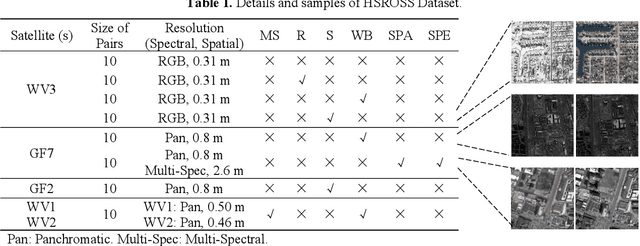
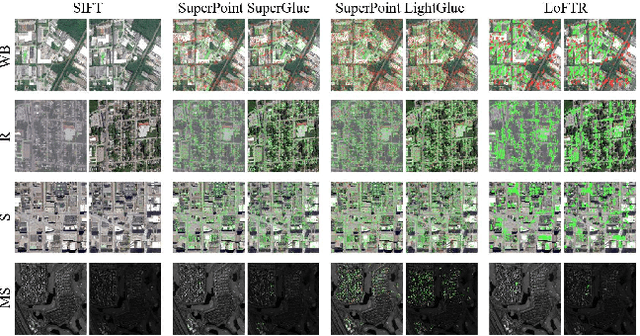
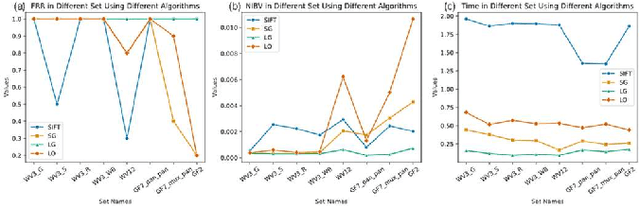
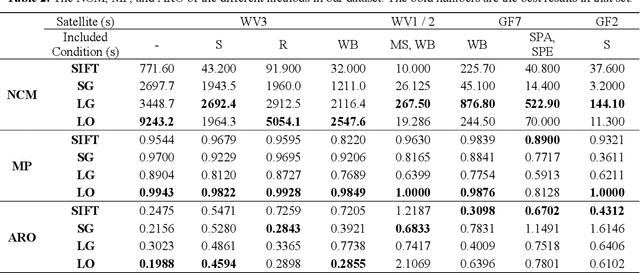
Feature matching determines the orientation accuracy for the High Spatial Resolution (HSR) optical satellite stereos, subsequently impacting several significant applications such as 3D reconstruction and change detection. However, the matching of off-track HSR optical satellite stereos often encounters challenging conditions including wide-baseline observation, significant radiometric differences, multi-temporal changes, varying spatial resolutions, inconsistent spectral resolution, and diverse sensors. In this study, we evaluate various advanced feature matching algorithms for HSR optical satellite stereos. Utilizing a specially constructed dataset from five satellites across six challenging scenarios, HSROSS Dataset, we conduct a comparative analysis of four algorithms: the traditional SIFT, and deep-learning based methods including SuperPoint + SuperGlue, SuperPoint + LightGlue, and LoFTR. Our findings highlight overall superior performance of SuperPoint + LightGlue in balancing robustness, accuracy, distribution, and efficiency, showcasing its potential in complex HSR optical satellite scenarios.