 Add to Chrome
 Add to Firefox
 Add to Edge
Monte Carlo Tree Search for Execution-Guided Program Repair with Large Language Models
Jan 28, 2026
Automated program repair with large language models remains challenging at the repository level due to long-horizon reasoning requirements and the limitations of autoregressive decoding. We present CodePilot, a hybrid framework that integrates Monte Carlo Tree Search (MCTS) with large language models to enable execution-guided program repair for real-world GitHub issues. CodePilot performs hierarchical fault localization from repository to file and function level, explores diverse patch trajectories using MCTS, and leverages execution feedback as a reward signal to guide search and refinement. The framework further incorporates confidence-calibrated generation to selectively refine low-confidence outputs. Experiments on SWE-bench Lite demonstrate that CodePilot achieves a 24.67% issue resolution rate using open-weight models, outperforming comparable baselines. These results suggest that combining symbolic search with neural language models is an effective strategy for scalable, execution-aware software engineering automation.

FinGPT: Enhancing Sentiment-Based Stock Movement Prediction with Dissemination-Aware and Context-Enriched LLMs
Dec 14, 2024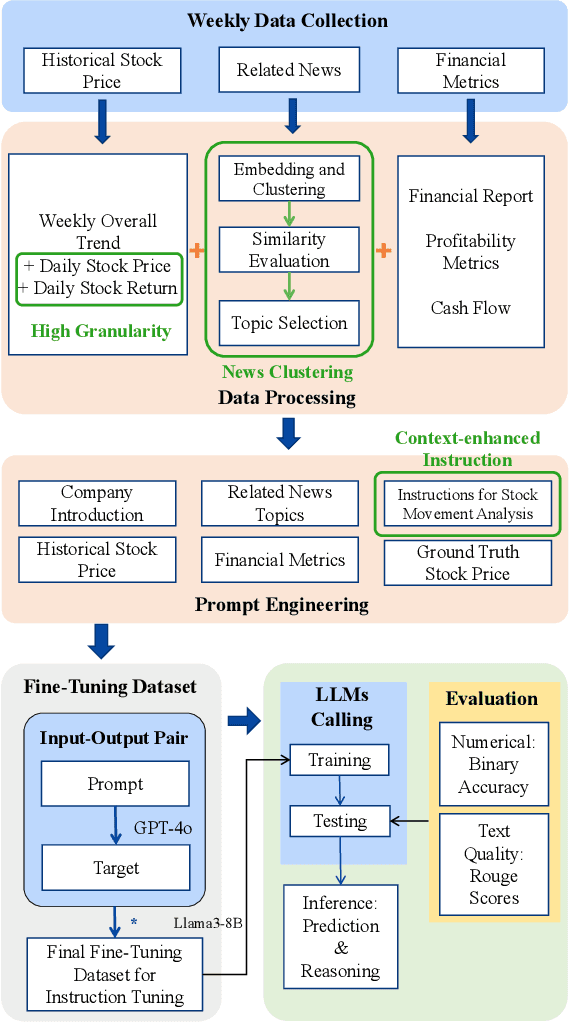
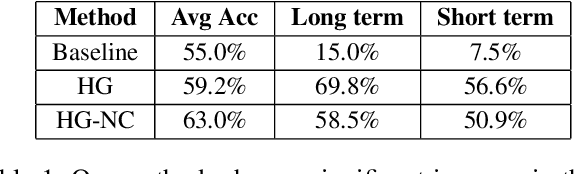
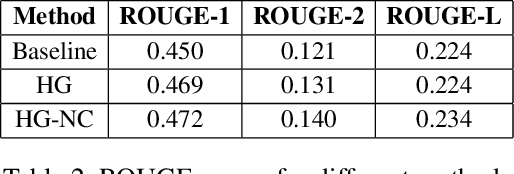
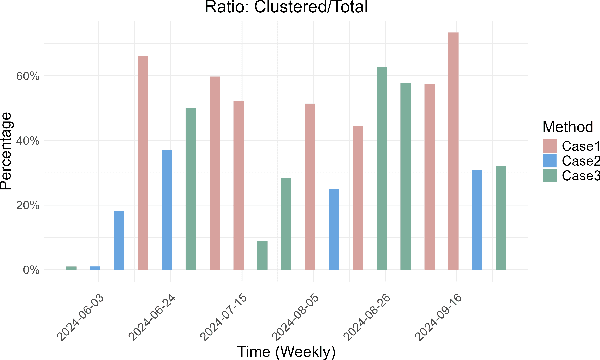
Financial sentiment analysis is crucial for understanding the influence of news on stock prices. Recently, large language models (LLMs) have been widely adopted for this purpose due to their advanced text analysis capabilities. However, these models often only consider the news content itself, ignoring its dissemination, which hampers accurate prediction of short-term stock movements. Additionally, current methods often lack sufficient contextual data and explicit instructions in their prompts, limiting LLMs' ability to interpret news. In this paper, we propose a data-driven approach that enhances LLM-powered sentiment-based stock movement predictions by incorporating news dissemination breadth, contextual data, and explicit instructions. We cluster recent company-related news to assess its reach and influence, enriching prompts with more specific data and precise instructions. This data is used to construct an instruction tuning dataset to fine-tune an LLM for predicting short-term stock price movements. Our experimental results show that our approach improves prediction accuracy by 8\% compared to existing methods.