 Add to Chrome
 Add to Firefox
 Add to Edge
CatMaster: An Agentic Autonomous System for Computational Heterogeneous Catalysis Research
Jan 20, 2026
Density functional theory (DFT) is widely used to connect atomic structure with catalytic behavior, but computational heterogeneous catalysis studies often require long workflows that are costly, iterative, and sensitive to setup choices. Besides the intrinsic cost and accuracy limits of first-principles calculations, practical workflow issues such as keeping references consistent, preparing many related inputs, recovering from failed runs on computing clusters, and maintaining a complete record of what was done, can slow down projects and make results difficult to reproduce or extend. Here we present CatMaster, a large-language-model (LLM)-driven agent system that turns natural language requests into complete calculation workspaces, including structures, inputs, outputs, logs, and a concise run record. CatMaster maintains a persistent project record of key facts, constraints, and file pointers to support inspection and restartability. It is paired with a multi-fidelity tool library that covers rapid surrogate relaxations and high-fidelity DFT calculations for validation when needed. We demonstrate CatMaster on four demonstrations of increasing complexity: an O2 spin-state check with remote execution, BCC Fe surface energies with a protocol-sensitivity study and CO adsorption site ranking, high-throughput Pt--Ni--Cu alloy screening for hydrogen evolution reaction (HER) descriptors with surrogate-to-DFT validation, and a demonstration beyond the predefined tool set, including equation-of-state fitting for BCC Fe and CO-FeN4-graphene single-atom catalyst geometry preparation. By reducing manual scripting and bookkeeping while keeping the full evidence trail, CatMaster aims to help catalysis researchers focus on modeling choices and chemical interpretation rather than workflow management.

An Artificial Intelligence (AI) workflow for catalyst design and optimization
Feb 07, 2024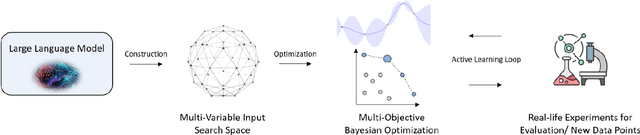
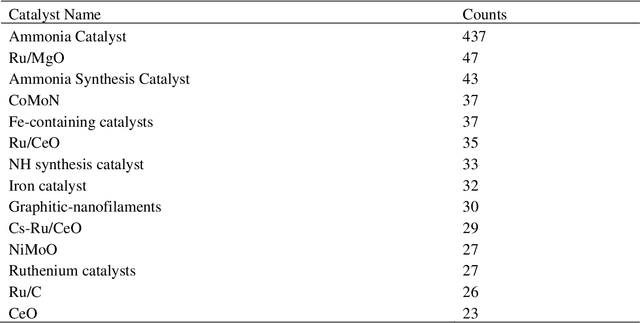

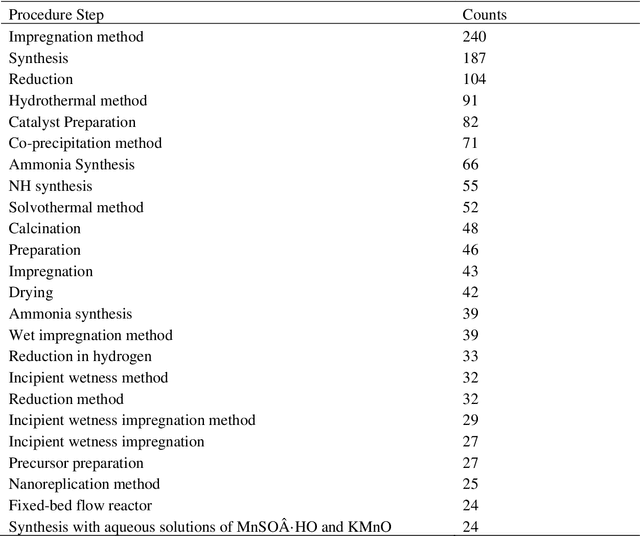
In the pursuit of novel catalyst development to address pressing environmental concerns and energy demand, conventional design and optimization methods often fall short due to the complexity and vastness of the catalyst parameter space. The advent of Machine Learning (ML) has ushered in a new era in the field of catalyst optimization, offering potential solutions to the shortcomings of traditional techniques. However, existing methods fail to effectively harness the wealth of information contained within the burgeoning body of scientific literature on catalyst synthesis. To address this gap, this study proposes an innovative Artificial Intelligence (AI) workflow that integrates Large Language Models (LLMs), Bayesian optimization, and an active learning loop to expedite and enhance catalyst optimization. Our methodology combines advanced language understanding with robust optimization strategies, effectively translating knowledge extracted from diverse literature into actionable parameters for practical experimentation and optimization. In this article, we demonstrate the application of this AI workflow in the optimization of catalyst synthesis for ammonia production. The results underscore the workflow's ability to streamline the catalyst development process, offering a swift, resource-efficient, and high-precision alternative to conventional methods.
* 31 pages, 7 figures