 Add to Chrome
 Add to Firefox
 Add to Edge
End-to-End LiDAR optimization for 3D point cloud registration
Feb 11, 2026
LiDAR sensors are a key modality for 3D perception, yet they are typically designed independently of downstream tasks such as point cloud registration. Conventional registration operates on pre-acquired datasets with fixed LiDAR configurations, leading to suboptimal data collection and significant computational overhead for sampling, noise filtering, and parameter tuning. In this work, we propose an adaptive LiDAR sensing framework that dynamically adjusts sensor parameters, jointly optimizing LiDAR acquisition and registration hyperparameters. By integrating registration feedback into the sensing loop, our approach optimally balances point density, noise, and sparsity, improving registration accuracy and efficiency. Evaluations in the CARLA simulation demonstrate that our method outperforms fixed-parameter baselines while retaining generalization abilities, highlighting the potential of adaptive LiDAR for autonomous perception and robotic applications.

Review of Extreme Multilabel Classification
Feb 12, 2023
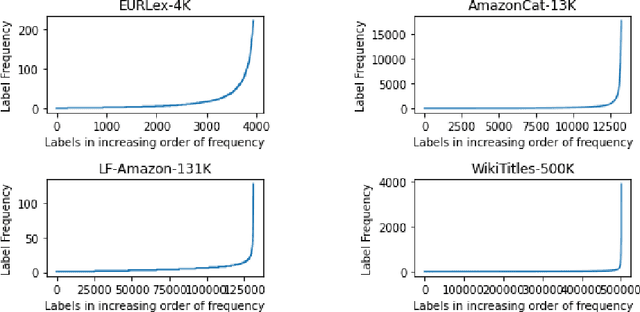
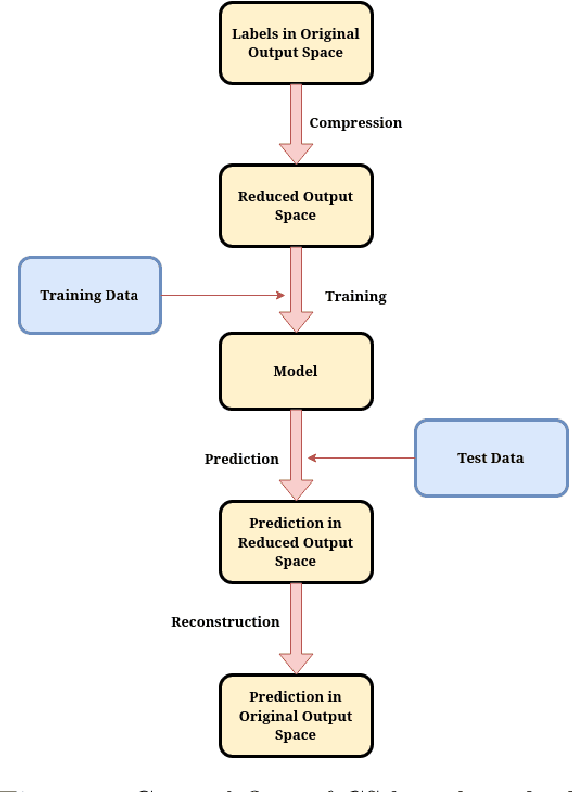
Extreme multilabel classification or XML, in short, has emerged as a new subtopic of interest in machine learning. Compared to traditional multilabel classification, here the number of labels is extremely large, hence the name extreme multilabel classification. Using classical one versus all classification wont scale in this case due to large number of labels, same is true for any other classifiers. Embedding of labels as well as features into smaller label space is an essential first step. Moreover, other issues include existance of head and tail labels, where tail labels are labels which exist in relatively smaller number of given samples. The existence of tail labels creates issues during embedding. This area has invited application of wide range of approaches ranging from bit compression motivated from compressed sensing, tree based embeddings, deep learning based latent space embedding including using attention weights, linear algebra based embeddings such as SVD, clustering, hashing, to name a few. The community has come up with a useful set of metrics to identify the correctly the prediction for head or tail labels.