 Add to Chrome
 Add to Firefox
 Add to Edge
Optimizing Prompts for Large Language Models: A Causal Approach
Feb 02, 2026
Large Language Models (LLMs) are increasingly embedded in enterprise workflows, yet their performance remains highly sensitive to prompt design. Automatic Prompt Optimization (APO) seeks to mitigate this instability, but existing approaches face two persistent challenges. First, commonly used prompt strategies rely on static instructions that perform well on average but fail to adapt to heterogeneous queries. Second, more dynamic approaches depend on offline reward models that are fundamentally correlational, confounding prompt effectiveness with query characteristics. We propose Causal Prompt Optimization (CPO), a framework that reframes prompt design as a problem of causal estimation. CPO operates in two stages. First, it learns an offline causal reward model by applying Double Machine Learning (DML) to semantic embeddings of prompts and queries, isolating the causal effect of prompt variations from confounding query attributes. Second, it utilizes this unbiased reward signal to guide a resource-efficient search for query-specific prompts without relying on costly online evaluation. We evaluate CPO across benchmarks in mathematical reasoning, visualization, and data analytics. CPO consistently outperforms human-engineered prompts and state-of-the-art automated optimizers. The gains are driven primarily by improved robustness on hard queries, where existing methods tend to deteriorate. Beyond performance, CPO fundamentally reshapes the economics of prompt optimization: by shifting evaluation from real-time model execution to an offline causal model, it enables high-precision, per-query customization at a fraction of the inference cost required by online methods. Together, these results establish causal inference as a scalable foundation for reliable and cost-efficient prompt optimization in enterprise LLM deployments.

Data Valuation and Detections in Federated Learning
Nov 13, 2023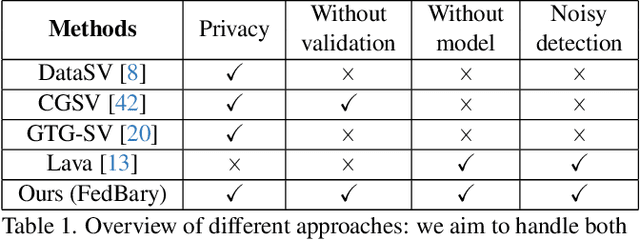
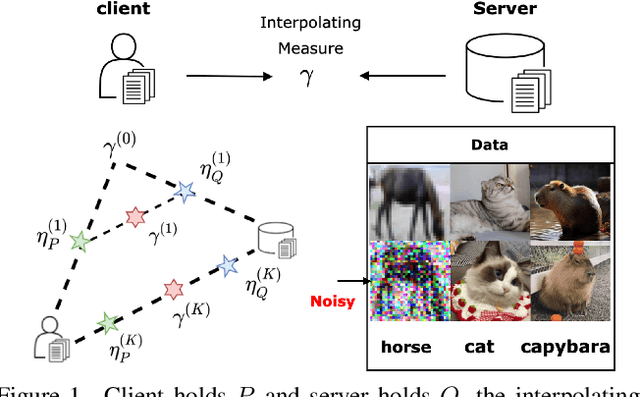
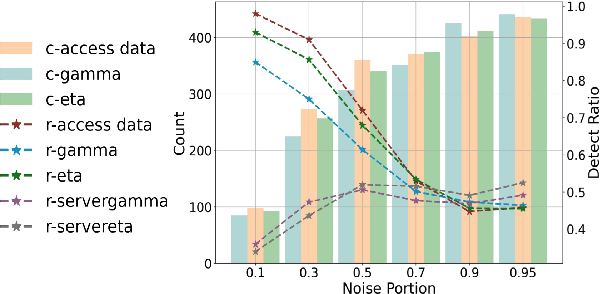
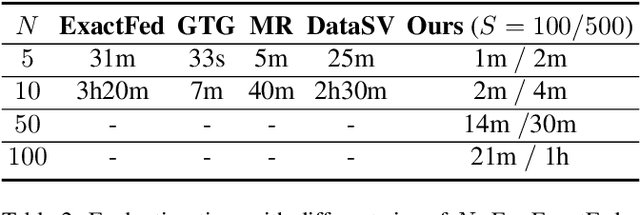
Federated Learning (FL) enables collaborative model training while preserving the privacy of raw data. A challenge in this framework is the fair and efficient valuation of data, which is crucial for incentivizing clients to contribute high-quality data in the FL task. In scenarios involving numerous data clients within FL, it is often the case that only a subset of clients and datasets are pertinent to a specific learning task, while others might have either a negative or negligible impact on the model training process. This paper introduces a novel privacy-preserving method for evaluating client contributions and selecting relevant datasets without a pre-specified training algorithm in an FL task. Our proposed approach FedBary, utilizes Wasserstein distance within the federated context, offering a new solution for data valuation in the FL framework. This method ensures transparent data valuation and efficient computation of the Wasserstein barycenter and reduces the dependence on validation datasets. Through extensive empirical experiments and theoretical analyses, we demonstrate the potential of this data valuation method as a promising avenue for FL research.