 Add to Chrome
 Add to Firefox
 Add to Edge
DFKI-Speech System for WildSpoof Challenge: A robust framework for SASV In-the-Wild
Feb 02, 2026
This paper presents the DFKI-Speech system developed for the WildSpoof Challenge under the Spoofing aware Automatic Speaker Verification (SASV) track. We propose a robust SASV framework in which a spoofing detector and a speaker verification (SV) network operate in tandem. The spoofing detector employs a self-supervised speech embedding extractor as the frontend, combined with a state-of-the-art graph neural network backend. In addition, a top-3 layer based mixture-of-experts (MoE) is used to fuse high-level and low-level features for effective spoofed utterance detection. For speaker verification, we adapt a low-complexity convolutional neural network that fuses 2D and 1D features at multiple scales, trained with the SphereFace loss. Additionally, contrastive circle loss is applied to adaptively weight positive and negative pairs within each training batch, enabling the network to better distinguish between hard and easy sample pairs. Finally, fixed imposter cohort based AS Norm score normalization and model ensembling are used to further enhance the discriminative capability of the speaker verification system.

INSPIRE: Evaluation of a Smart-Home System for Infotainment Management and Device Control
Oct 25, 2004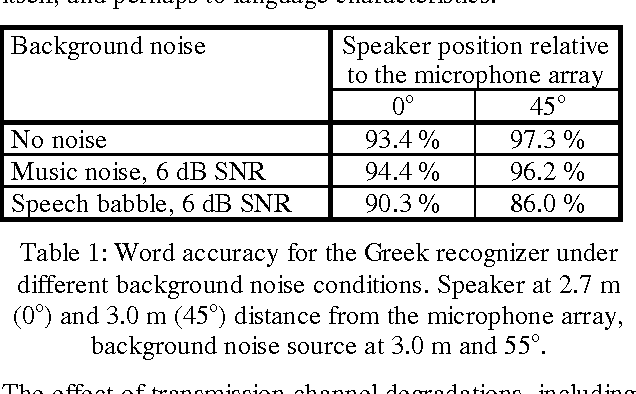
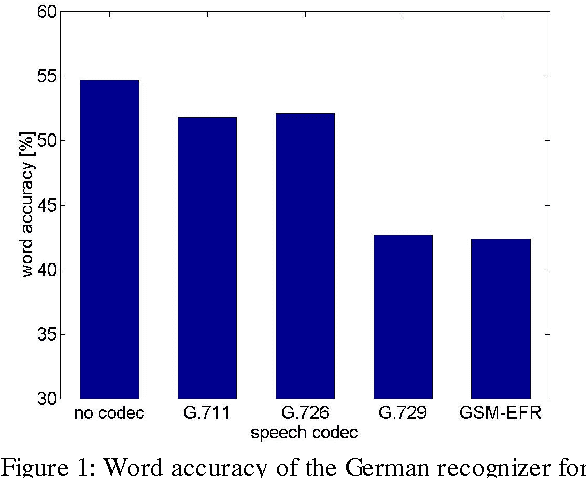
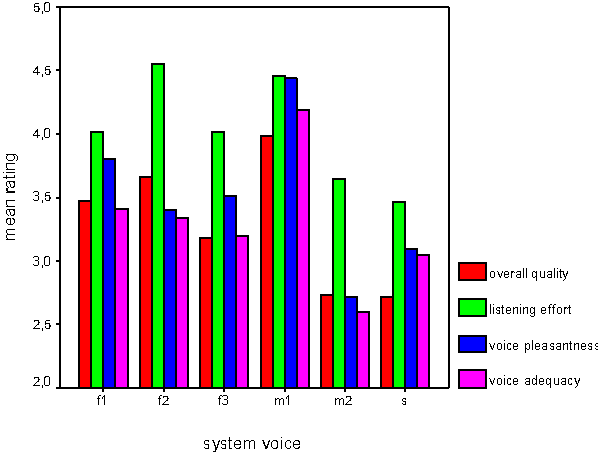
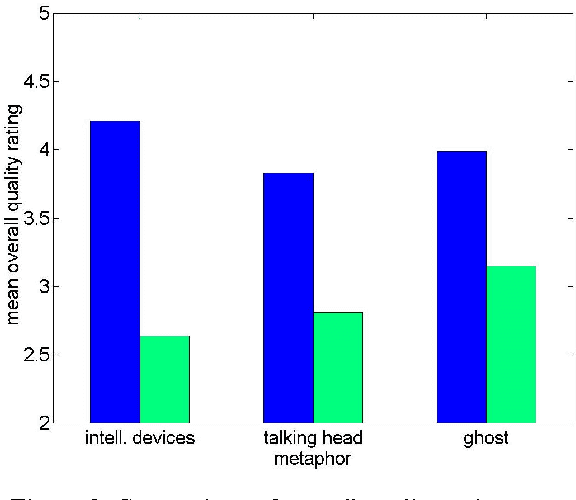
This paper gives an overview of the assessment and evaluation methods which have been used to determine the quality of the INSPIRE smart home system. The system allows different home appliances to be controlled via speech, and consists of speech and speaker recognition, speech understanding, dialogue management, and speech output components. The performance of these components is first assessed individually, and then the entire system is evaluated in an interaction experiment with test users. Initial results of the assessment and evaluation are given, in particular with respect to the transmission channel impact on speech and speaker recognition, and the assessment of speech output for different system metaphors.
* 4 pages