 Add to Chrome
 Add to Firefox
 Add to Edge
The Effectiveness of Style Vectors for Steering Large Language Models: A Human Evaluation
Jan 29, 2026
Controlling the behavior of large language models (LLMs) at inference time is essential for aligning outputs with human abilities and safety requirements. \emph{Activation steering} provides a lightweight alternative to prompt engineering and fine-tuning by directly modifying internal activations to guide generation. This research advances the literature in three significant directions. First, while previous work demonstrated the technical feasibility of steering emotional tone using automated classifiers, this paper presents the first human evaluation of activation steering concerning the emotional tone of LLM outputs, collecting over 7,000 crowd-sourced ratings from 190 participants via Prolific ($n=190$). These ratings assess both perceived emotional intensity and overall text quality. Second, we find strong alignment between human and model-based quality ratings (mean $r=0.776$, range $0.157$--$0.985$), indicating automatic scoring can proxy perceived quality. Moderate steering strengths ($λ\approx 0.15$) reliably amplify target emotions while preserving comprehensibility, with the strongest effects for disgust ($η_p^2 = 0.616$) and fear ($η_p^2 = 0.540$), and minimal effects for surprise ($η_p^2 = 0.042$). Finally, upgrading from Alpaca to LlaMA-3 yielded more consistent steering with significant effects across emotions and strengths (all $p < 0.001$). Inter-rater reliability was high (ICC $= 0.71$--$0.87$), underscoring the robustness of the findings. These findings support activation-based control as a scalable method for steering LLM behavior across affective dimensions.

Requirements for Explainability and Acceptance of Artificial Intelligence in Collaborative Work
Jun 27, 2023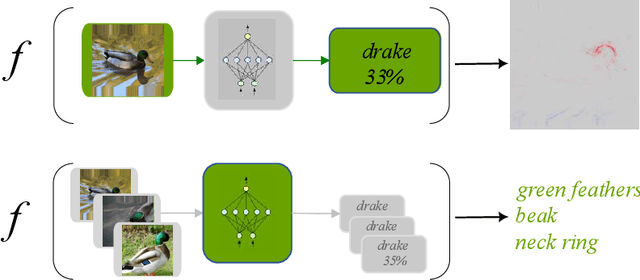

The increasing prevalence of Artificial Intelligence (AI) in safety-critical contexts such as air-traffic control leads to systems that are practical and efficient, and to some extent explainable to humans to be trusted and accepted. The present structured literature analysis examines n = 236 articles on the requirements for the explainability and acceptance of AI. Results include a comprehensive review of n = 48 articles on information people need to perceive an AI as explainable, the information needed to accept an AI, and representation and interaction methods promoting trust in an AI. Results indicate that the two main groups of users are developers who require information about the internal operations of the model and end users who require information about AI results or behavior. Users' information needs vary in specificity, complexity, and urgency and must consider context, domain knowledge, and the user's cognitive resources. The acceptance of AI systems depends on information about the system's functions and performance, privacy and ethical considerations, as well as goal-supporting information tailored to individual preferences and information to establish trust in the system. Information about the system's limitations and potential failures can increase acceptance and trust. Trusted interaction methods are human-like, including natural language, speech, text, and visual representations such as graphs, charts, and animations. Our results have significant implications for future human-centric AI systems being developed. Thus, they are suitable as input for further application-specific investigations of user needs.