 Add to Chrome
 Add to Firefox
 Add to Edge
WarmServe: Enabling One-for-Many GPU Prewarming for Multi-LLM Serving
Dec 10, 2025
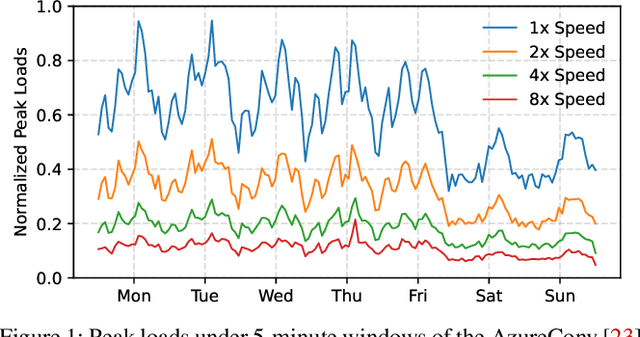
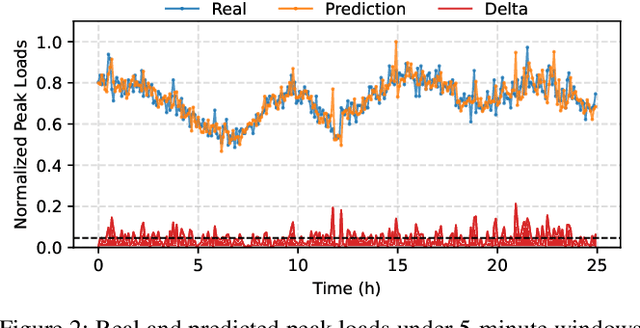
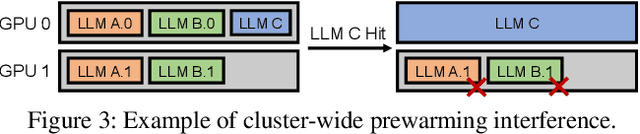
Deploying multiple models within shared GPU clusters is promising for improving resource efficiency in large language model (LLM) serving. Existing multi-LLM serving systems optimize GPU utilization at the cost of worse inference performance, especially time-to-first-token (TTFT). We identify the root cause of such compromise as their unawareness of future workload characteristics. In contrast, recent analysis on real-world traces has shown the high periodicity and long-term predictability of LLM serving workloads. We propose universal GPU workers to enable one-for-many GPU prewarming that loads models with knowledge of future workloads. Based on universal GPU workers, we design and build WarmServe, a multi-LLM serving system that (1) mitigates cluster-wide prewarming interference by adopting an evict-aware model placement strategy, (2) prepares universal GPU workers in advance by proactive prewarming, and (3) manages GPU memory with a zero-overhead memory switching mechanism. Evaluation under real-world datasets shows that WarmServe improves TTFT by up to 50.8$\times$ compared to the state-of-the-art autoscaling-based system, while being capable of serving up to 2.5$\times$ more requests compared to the GPU-sharing system.

CNN-Based Automatic Urinary Particles Recognition
Mar 06, 2018
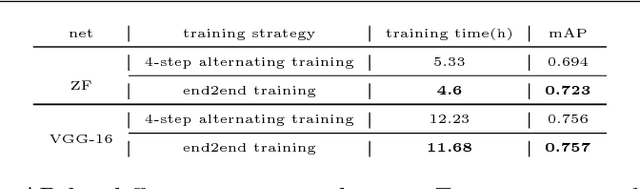


The urine sediment analysis of particles in microscopic images can assist physicians in evaluating patients with renal and urinary tract diseases. Manual urine sediment examination is labor-intensive, subjective and time-consuming, and the traditional automatic algorithms often extract the hand-crafted features for recognition. Instead of using the hand-crafted features, in this paper, we exploit CNN to learn features in an end-to-end manner to recognize the urine particles. We treat the urine particles recognition as object detection and exploit two state-of-the-art CNN-based object detection methods, Faster R-CNN and SSD, as well as their variants for urine particles recognition. We further investigate different factors involving these CNN-based object detection methods for urine particles recognition. We comprehensively evaluate these methods on a dataset consisting of 5,376 annotated images corresponding to 7 categories of urine particles, i.e., erythrocyte, leukocyte, epithelial cell, crystal, cast, mycete, epithelial nuclei, and obtain a best mAP (mean average precision) of 84.1% while taking only 72 ms per image on a NVIDIA Titan X GPU.