 Add to Chrome
 Add to Firefox
 Add to Edge
HyCARD-Net: A Synergistic Hybrid Intelligence Framework for Cardiovascular Disease Diagnosis
Jan 25, 2026
Cardiovascular disease (CVD) remains the foremost cause of mortality worldwide, underscoring the urgent need for intelligent and data-driven diagnostic tools. Traditional predictive models often struggle to generalize across heterogeneous datasets and complex physiological patterns. To address this, we propose a hybrid ensemble framework that integrates deep learning architectures, Convolutional Neural Networks (CNN) and Long Short-Term Memory (LSTM), with classical machine learning algorithms, including K-Nearest Neighbor (KNN) and Extreme Gradient Boosting (XGB), using an ensemble voting mechanism. This approach combines the representational power of deep networks with the interpretability and efficiency of traditional models. Experiments on two publicly available Kaggle datasets demonstrate that the proposed model achieves superior performance, reaching 82.30 percent accuracy on Dataset I and 97.10 percent on Dataset II, with consistent gains in precision, recall, and F1-score. These findings underscore the robustness and clinical potential of hybrid AI frameworks for predicting cardiovascular disease and facilitating early intervention. Furthermore, this study directly supports the United Nations Sustainable Development Goal 3 (Good Health and Well-being) by promoting early diagnosis, prevention, and management of non-communicable diseases through innovative, data-driven healthcare solutions.

Cross-Lingual Probing and Community-Grounded Analysis of Gender Bias in Low-Resource Bengali
Jan 25, 2026Large Language Models (LLMs) have achieved significant success in recent years; yet, issues of intrinsic gender bias persist, especially in non-English languages. Although current research mostly emphasizes English, the linguistic and cultural biases inherent in Global South languages, like Bengali, are little examined. This research seeks to examine the characteristics and magnitude of gender bias in Bengali, evaluating the efficacy of current approaches in identifying and alleviating bias. We use several methods to extract gender-biased utterances, including lexicon-based mining, computational classification models, translation-based comparison analysis, and GPT-based bias creation. Our research indicates that the straight application of English-centric bias detection frameworks to Bengali is severely constrained by language disparities and socio-cultural factors that impact implicit biases. To tackle these difficulties, we executed two field investigations inside rural and low-income areas, gathering authentic insights on gender bias. The findings demonstrate that gender bias in Bengali presents distinct characteristics relative to English, requiring a more localized and context-sensitive methodology. Additionally, our research emphasizes the need of integrating community-driven research approaches to identify culturally relevant biases often neglected by automated systems. Our research enhances the ongoing discussion around gender bias in AI by illustrating the need to create linguistic tools specifically designed for underrepresented languages. This study establishes a foundation for further investigations into bias reduction in Bengali and other Indic languages, promoting the development of more inclusive and fair NLP systems.
Advancing Exchange Rate Forecasting: Leveraging Machine Learning and AI for Enhanced Accuracy in Global Financial Markets
Jun 11, 2025The prediction of foreign exchange rates, such as the US Dollar (USD) to Bangladeshi Taka (BDT), plays a pivotal role in global financial markets, influencing trade, investments, and economic stability. This study leverages historical USD/BDT exchange rate data from 2018 to 2023, sourced from Yahoo Finance, to develop advanced machine learning models for accurate forecasting. A Long Short-Term Memory (LSTM) neural network is employed, achieving an exceptional accuracy of 99.449%, a Root Mean Square Error (RMSE) of 0.9858, and a test loss of 0.8523, significantly outperforming traditional methods like ARIMA (RMSE 1.342). Additionally, a Gradient Boosting Classifier (GBC) is applied for directional prediction, with backtesting on a $10,000 initial capital revealing a 40.82% profitable trade rate, though resulting in a net loss of $20,653.25 over 49 trades. The study analyzes historical trends, showing a decline in BDT/USD rates from 0.012 to 0.009, and incorporates normalized daily returns to capture volatility. These findings highlight the potential of deep learning in forex forecasting, offering traders and policymakers robust tools to mitigate risks. Future work could integrate sentiment analysis and real-time economic indicators to further enhance model adaptability in volatile markets.
An Explainable Deep Learning Framework for Brain Stroke and Tumor Progression via MRI Interpretation
Jun 10, 2025Early and accurate detection of brain abnormalities, such as tumors and strokes, is essential for timely intervention and improved patient outcomes. In this study, we present a deep learning-based system capable of identifying both brain tumors and strokes from MRI images, along with their respective stages. We have executed two groundbreaking strategies involving convolutional neural networks, MobileNet V2 and ResNet-50-optimized through transfer learning to classify MRI scans into five diagnostic categories. Our dataset, aggregated and augmented from various publicly available MRI sources, was carefully curated to ensure class balance and image diversity. To enhance model generalization and prevent overfitting, we applied dropout layers and extensive data augmentation. The models achieved strong performance, with training accuracy reaching 93\% and validation accuracy up to 88\%. While ResNet-50 demonstrated slightly better results, Mobile Net V2 remains a promising option for real-time diagnosis in low resource settings due to its lightweight architecture. This research offers a practical AI-driven solution for early brain abnormality detection, with potential for clinical deployment and future enhancement through larger datasets and multi modal inputs.
Multilingual Question Answering in Low-Resource Settings: A Dzongkha-English Benchmark for Foundation Models
May 24, 2025In this work, we provide DZEN, a dataset of parallel Dzongkha and English test questions for Bhutanese middle and high school students. The over 5K questions in our collection span a variety of scientific topics and include factual, application, and reasoning-based questions. We use our parallel dataset to test a number of Large Language Models (LLMs) and find a significant performance difference between the models in English and Dzongkha. We also look at different prompting strategies and discover that Chain-of-Thought (CoT) prompting works well for reasoning questions but less well for factual ones. We also find that adding English translations enhances the precision of Dzongkha question responses. Our results point to exciting avenues for further study to improve LLM performance in Dzongkha and, more generally, in low-resource languages. We release the dataset at: https://github.com/kraritt/llm_dzongkha_evaluation.
Multimodal Programming in Computer Science with Interactive Assistance Powered by Large Language Model
Mar 09, 2025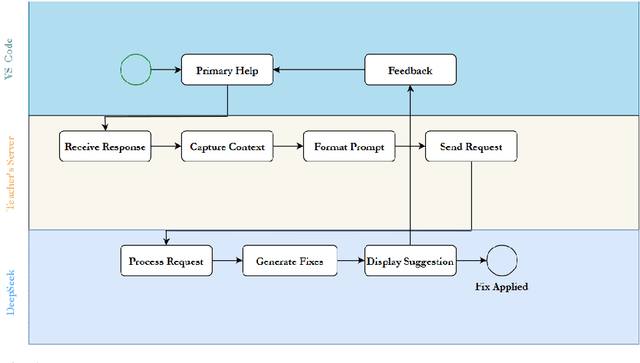
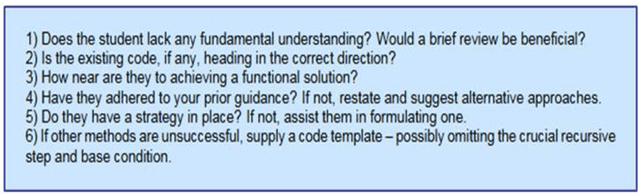
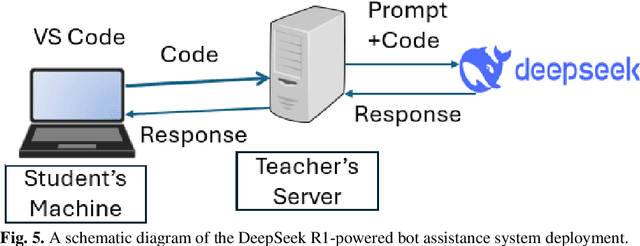
LLM chatbot interfaces allow students to get instant, interactive assistance with homework, but doing so carelessly may not advance educational objectives. In this study, an interactive homework help system based on DeepSeek R1 is developed and first implemented for students enrolled in a large computer science beginning programming course. In addition to an assist button in a well-known code editor, our assistant also has a feedback option in our command-line automatic evaluator. It wraps student work in a personalized prompt that advances our educational objectives without offering answers straight away. We have discovered that our assistant can recognize students' conceptual difficulties and provide ideas, plans, and template code in pedagogically appropriate ways. However, among other mistakes, it occasionally incorrectly labels the correct student code as incorrect or encourages students to use correct-but-lesson-inappropriate approaches, which can lead to long and frustrating journeys for the students. After discussing many development and deployment issues, we provide our conclusions and future actions.