 Add to Chrome
 Add to Firefox
 Add to Edge
Business Logic-Driven Text-to-SQL Data Synthesis for Business Intelligence
Jan 20, 2026
Evaluating Text-to-SQL agents in private business intelligence (BI) settings is challenging due to the scarcity of realistic, domain-specific data. While synthetic evaluation data offers a scalable solution, existing generation methods fail to capture business realism--whether questions reflect realistic business logic and workflows. We propose a Business Logic-Driven Data Synthesis framework that generates data grounded in business personas, work scenarios, and workflows. In addition, we improve the data quality by imposing a business reasoning complexity control strategy that diversifies the analytical reasoning steps required to answer the questions. Experiments on a production-scale Salesforce database show that our synthesized data achieves high business realism (98.44%), substantially outperforming OmniSQL (+19.5%) and SQL-Factory (+54.7%), while maintaining strong question-SQL alignment (98.59%). Our synthetic data also reveals that state-of-the-art Text-to-SQL models still have significant performance gaps, achieving only 42.86% execution accuracy on the most complex business queries.

Adaptive Neural Network Backstepping Control Method for Aerial Manipulator Based on Variable Inertia Parameter Modeling
Dec 08, 2022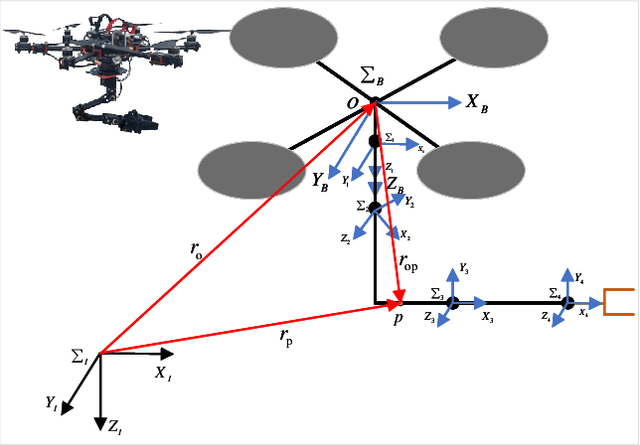
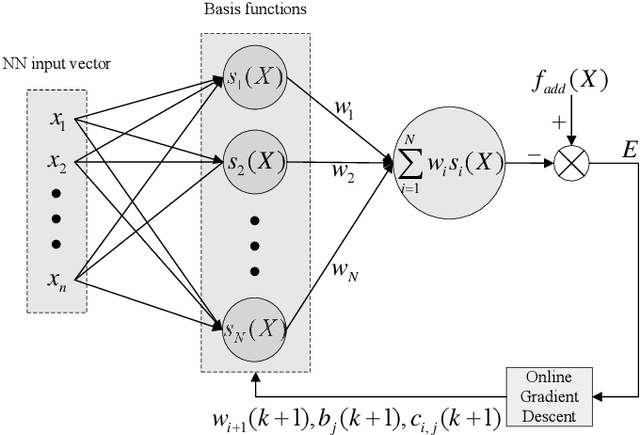
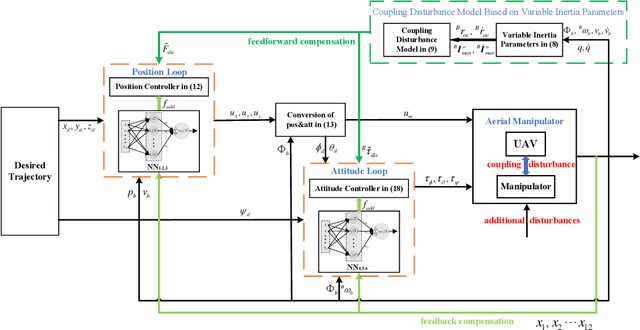
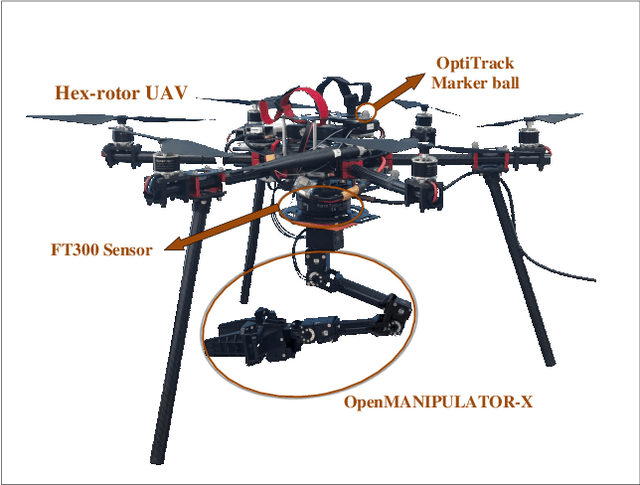
For the aerial manipulator that performs aerial work tasks, the actual operating environment it faces is very complex, and it is affected by internal and external multi-source disturbances. In this paper, to effectively improve the anti-disturbance control performance of the aerial manipulator, an adaptive neural network backstepping control method based on variable inertia parameter modeling is proposed. Firstly, for the intense internal coupling disturbance, we analyze and model it from the perspective of the generation mechanism of the coupling disturbance, and derive the dynamics model of the aerial manipulator system and the coupling disturbance model based on the variable inertia parameters. Through the proposed coupling disturbance model, we can compensate the strong coupling disturbance in a way of feedforward. Then, the adaptive neural network is proposed and applid to estimate and compensate the additional disturbances, and the closed-loop controller is designed based on the backstepping control method. Finally, we verify the correctness of the proposed coupling disturbance model through physical experiment under a large range motion of the manipulator. Two sets of comparative simulation results also prove the accurate estimation of the proposed adaptive neural network for additional disturbances and the effectiveness and superiority of the proposed control method.