 Add to Chrome
 Add to Firefox
 Add to Edge
ToxiTwitch: Toward Emote-Aware Hybrid Moderation for Live Streaming Platforms
Jan 22, 2026
The rapid growth of live-streaming platforms such as Twitch has introduced complex challenges in moderating toxic behavior. Traditional moderation approaches, such as human annotation and keyword-based filtering, have demonstrated utility, but human moderators on Twitch constantly struggle to scale effectively in the fast-paced, high-volume, and context-rich chat environment of the platform while also facing harassment themselves. Recent advances in large language models (LLMs), such as DeepSeek-R1-Distill and Llama-3-8B-Instruct, offer new opportunities for toxicity detection, especially in understanding nuanced, multimodal communication involving emotes. In this work, we present an exploratory comparison of toxicity detection approaches tailored to Twitch. Our analysis reveals that incorporating emotes improves the detection of toxic behavior. To this end, we introduce ToxiTwitch, a hybrid model that combines LLM-generated embeddings of text and emotes with traditional machine learning classifiers, including Random Forest and SVM. In our case study, the proposed hybrid approach reaches up to 80 percent accuracy under channel-specific training (with 13 percent improvement over BERT and F1-score of 76 percent). This work is an exploratory study intended to surface challenges and limits of emote-aware toxicity detection on Twitch.

Do LLMs Exhibit Human-Like Reasoning? Evaluating Theory of Mind in LLMs for Open-Ended Responses
Jun 09, 2024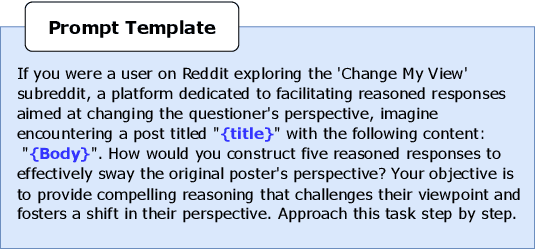

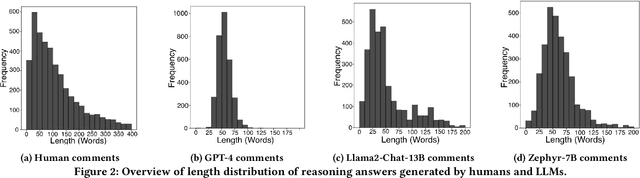

Theory of Mind (ToM) reasoning entails recognizing that other individuals possess their own intentions, emotions, and thoughts, which is vital for guiding one's own thought processes. Although large language models (LLMs) excel in tasks such as summarization, question answering, and translation, they still face challenges with ToM reasoning, especially in open-ended questions. Despite advancements, the extent to which LLMs truly understand ToM reasoning and how closely it aligns with human ToM reasoning remains inadequately explored in open-ended scenarios. Motivated by this gap, we assess the abilities of LLMs to perceive and integrate human intentions and emotions into their ToM reasoning processes within open-ended questions. Our study utilizes posts from Reddit's ChangeMyView platform, which demands nuanced social reasoning to craft persuasive responses. Our analysis, comparing semantic similarity and lexical overlap metrics between responses generated by humans and LLMs, reveals clear disparities in ToM reasoning capabilities in open-ended questions, with even the most advanced models showing notable limitations. To enhance LLM capabilities, we implement a prompt tuning method that incorporates human intentions and emotions, resulting in improvements in ToM reasoning performance. However, despite these improvements, the enhancement still falls short of fully achieving human-like reasoning. This research highlights the deficiencies in LLMs' social reasoning and demonstrates how integrating human intentions and emotions can boost their effectiveness.