 Add to Chrome
 Add to Firefox
 Add to Edge
Scientific Theory of a Black-Box: A Life Cycle-Scale XAI Framework Based on Constructive Empiricism
Feb 02, 2026
Explainable AI (XAI) offers a growing number of algorithms that aim to answer specific questions about black-box models. What is missing is a principled way to consolidate explanatory information about a fixed black-box model into a persistent, auditable artefact, that accompanies the black-box throughout its life cycle. We address this gap by introducing the notion of a scientific theory of a black (SToBB). Grounded in Constructive Empiricism, a SToBB fulfils three obligations: (i) empirical adequacy with respect to all available observations of black-box behaviour, (ii) adaptability via explicit update commitments that restore adequacy when new observations arrive, and (iii) auditability through transparent documentation of assumptions, construction choices, and update behaviour. We operationalise these obligations as a general framework that specifies an extensible observation base, a traceable hypothesis class, algorithmic components for construction and revision, and documentation sufficient for third-party assessment. Explanations for concrete stakeholder needs are then obtained by querying the maintained record through interfaces, rather than by producing isolated method outputs. As a proof of concept, we instantiate a complete SToBB for a neural-network classifier on a tabular task and introduce the Constructive Box Theoriser (CoBoT) algorithm, an online procedure that constructs and maintains an empirically adequate rule-based surrogate as observations accumulate. Together, these contributions position SToBBs as a life cycle-scale, inspectable point of reference that supports consistent, reusable analyses and systematic external scrutiny.

Learning Weakly Convex Sets in Metric Spaces
May 10, 2021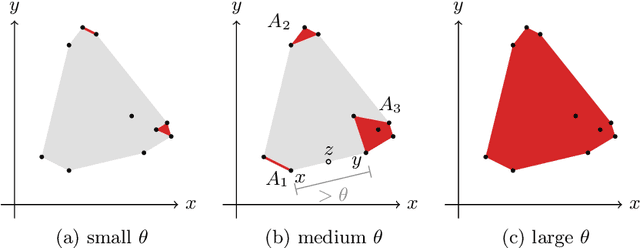

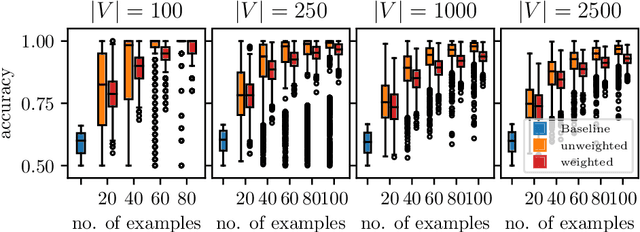
We introduce the notion of weak convexity in metric spaces, a generalization of ordinary convexity commonly used in machine learning. It is shown that weakly convex sets can be characterized by a closure operator and have a unique decomposition into a set of pairwise disjoint connected blocks. We give two generic efficient algorithms, an extensional and an intensional one for learning weakly convex concepts and study their formal properties. Our experimental results concerning vertex classification clearly demonstrate the excellent predictive performance of the extensional algorithm. Two non-trivial applications of the intensional algorithm to polynomial PAC-learnability are presented. The first one deals with learning $k$-convex Boolean functions, which are already known to be efficiently PAC-learnable. It is shown how to derive this positive result in a fairly easy way by the generic intensional algorithm. The second one is concerned with the Euclidean space equipped with the Manhattan distance. For this metric space, weakly convex sets are a union of pairwise disjoint axis-aligned hyperrectangles. We show that a weakly convex set that is consistent with a set of examples and contains a minimum number of hyperrectangles can be found in polynomial time. In contrast, this problem is known to be NP-complete if the hyperrectangles may be overlapping.