 Add to Chrome
 Add to Firefox
 Add to Edge
CaDrift: A Time-dependent Causal Generator of Drifting Data Streams
Feb 23, 2026
This work presents Causal Drift Generator (CaDrift), a time-dependent synthetic data generator framework based on Structural Causal Models (SCMs). The framework produces a virtually infinite combination of data streams with controlled shift events and time-dependent data, making it a tool to evaluate methods under evolving data. CaDrift synthesizes various distributional and covariate shifts by drifting mapping functions of the SCM, which change underlying cause-and-effect relationships between features and the target. In addition, CaDrift models occasional perturbations by leveraging interventions in causal modeling. Experimental results show that, after distributional shift events, the accuracy of classifiers tends to drop, followed by a gradual retrieval, confirming the generator's effectiveness in simulating shifts. The framework has been made available on GitHub.

Distance Functions and Normalization Under Stream Scenarios
Jul 04, 2023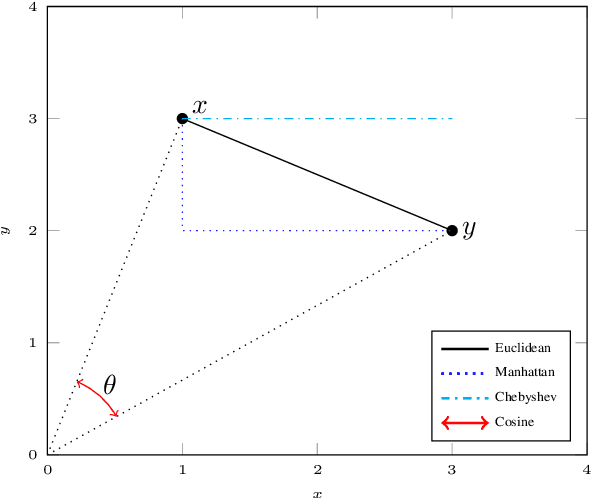
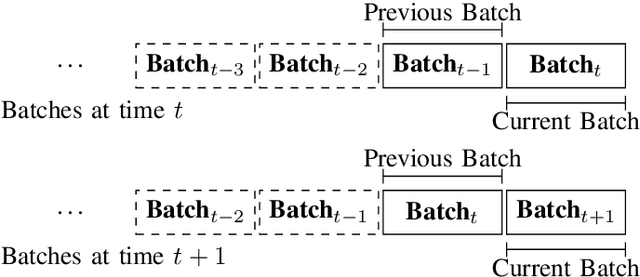
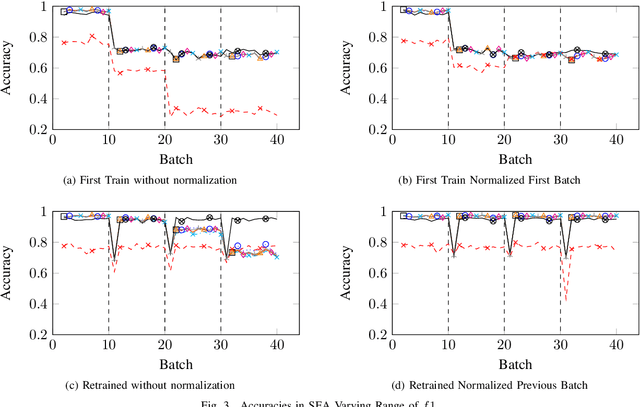
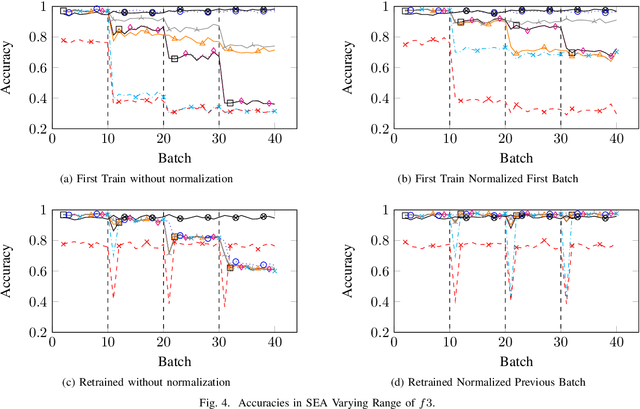
Data normalization is an essential task when modeling a classification system. When dealing with data streams, data normalization becomes especially challenging since we may not know in advance the properties of the features, such as their minimum/maximum values, and these properties may change over time. We compare the accuracies generated by eight well-known distance functions in data streams without normalization, normalized considering the statistics of the first batch of data received, and considering the previous batch received. We argue that experimental protocols for streams that consider the full stream as normalized are unrealistic and can lead to biased and poor results. Our results indicate that using the original data stream without applying normalization, and the Canberra distance, can be a good combination when no information about the data stream is known beforehand.