 Add to Chrome
 Add to Firefox
 Add to Edge
Region of Interest Segmentation and Morphological Analysis for Membranes in Cryo-Electron Tomography
Feb 24, 2026
Cryo-electron tomography (cryo-ET) enables high resolution, three-dimensional reconstruction of biological structures, including membranes and membrane proteins. Identification of regions of interest (ROIs) is central to scientific imaging, as it enables isolation and quantitative analysis of specific structural features within complex datasets. In practice, however, ROIs are typically derived indirectly through full structure segmentation followed by post hoc analysis. This limitation is especially apparent for continuous and geometrically complex structures such as membranes, which are segmented as single entities. Here, we developed TomoROIS-SurfORA, a two step framework for direct, shape-agnostic ROI segmentation and morphological surface analysis. TomoROIS performs deep learning-based ROI segmentation and can be trained from scratch using small annotated datasets, enabling practical application across diverse imaging data. SurfORA processes segmented structures as point clouds and surface meshes to extract quantitative morphological features, including inter-membrane distances, curvature, and surface roughness. It supports both closed and open surfaces, with specific considerations for open surfaces, which are common in cryo-ET due to the missing wedge effect. We demonstrate both tools using in vitro reconstituted membrane systems containing deformable vesicles with complex geometries, enabling automatic quantitative analysis of membrane contact sites and remodeling events such as invagination. While demonstrated here on cryo-ET membrane data, the combined approach is applicable to ROI detection and surface analysis in broader scientific imaging contexts.

Data Noising as Smoothing in Neural Network Language Models
Mar 07, 2017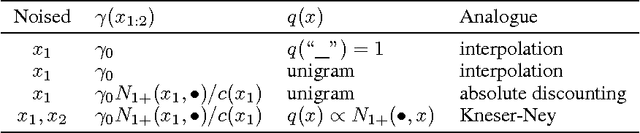
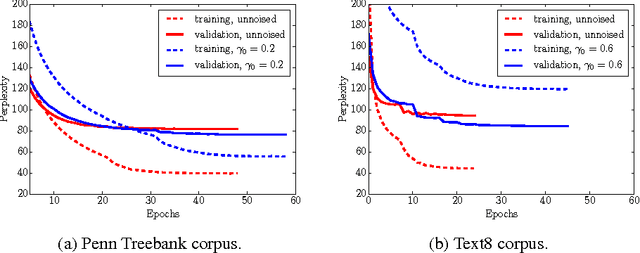
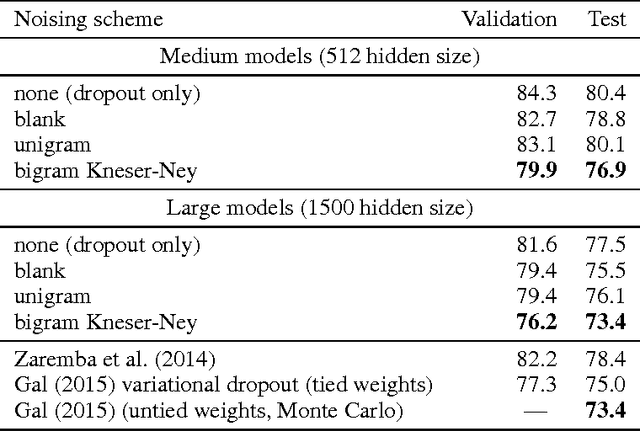
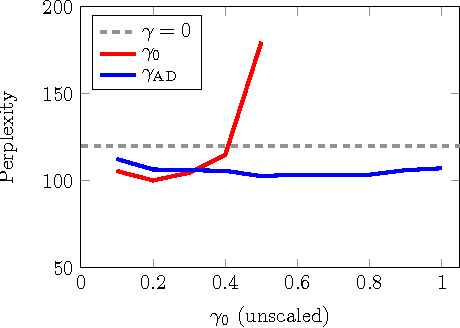
Data noising is an effective technique for regularizing neural network models. While noising is widely adopted in application domains such as vision and speech, commonly used noising primitives have not been developed for discrete sequence-level settings such as language modeling. In this paper, we derive a connection between input noising in neural network language models and smoothing in $n$-gram models. Using this connection, we draw upon ideas from smoothing to develop effective noising schemes. We demonstrate performance gains when applying the proposed schemes to language modeling and machine translation. Finally, we provide empirical analysis validating the relationship between noising and smoothing.
Breast Mass Classification from Mammograms using Deep Convolutional Neural Networks
Dec 02, 2016
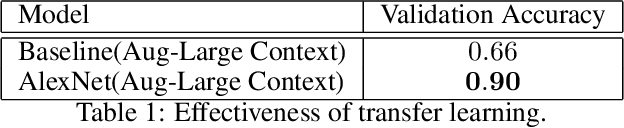
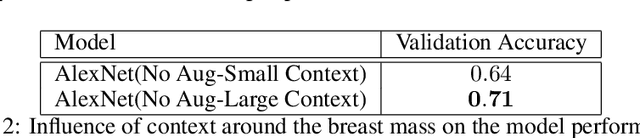
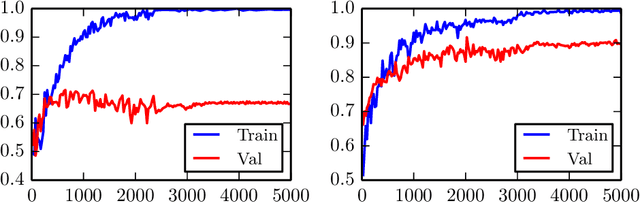
Mammography is the most widely used method to screen breast cancer. Because of its mostly manual nature, variability in mass appearance, and low signal-to-noise ratio, a significant number of breast masses are missed or misdiagnosed. In this work, we present how Convolutional Neural Networks can be used to directly classify pre-segmented breast masses in mammograms as benign or malignant, using a combination of transfer learning, careful pre-processing and data augmentation to overcome limited training data. We achieve state-of-the-art results on the DDSM dataset, surpassing human performance, and show interpretability of our model.