 Add to Chrome
 Add to Firefox
 Add to Edge
Embodied.cpp: A Portable Inference Runtime of Embodied AI Models on Heterogeneous Robots
Jul 02, 2026
Embodied AI models now span vision-language-action (VLA) models and world-action models (WAMs), but practical deployment remains fragmented across model-specific Python stacks, backend assumptions, and robot-side glue code, especially on heterogeneous edge devices. Existing inference runtimes are designed mainly for request-response serving and therefore do not satisfy the runtime contract of embodied deployment: multi-rate execution inside closed-loop control, latency-first batch-1 inference on heterogeneous hardware, and extensible embodied interfaces beyond fixed token I/O. We present Embodied.cpp, a portable C++ inference runtime for embodied models. Based on an architectural analysis of representative VLA models and WAMs, Embodied.cpp captures a shared execution path and organizes it into five layers: input adapters, sequence builders, backbone execution, head plugins, and deployment adapters. The runtime provides modular multi-rate execution, latency-first fused inference, and extensible operator and I/O support, enabling deployment across heterogeneous devices, robots, and simulators through one backend abstraction. We evaluate Embodied.cpp on two VLA models, HY-VLA and pi0.5, and on a preliminary WAM benchmark using a LingBot-VA Transformer block. The VLA deployments achieve successful closed-loop execution with 100.0% and 91.0% task success rates, respectively. The WAM benchmark reduces block memory from 312.2 MiB to 88.1 MiB. These results show that Embodied.cpp improves deployment efficiency while preserving high accuracy across diverse embodied model architectures.

SenseCrypt: Sensitivity-guided Selective Homomorphic Encryption for Joint Federated Learning in Cross-Device Scenarios
Aug 06, 2025Homomorphic Encryption (HE) prevails in securing Federated Learning (FL), but suffers from high overhead and adaptation cost. Selective HE methods, which partially encrypt model parameters by a global mask, are expected to protect privacy with reduced overhead and easy adaptation. However, in cross-device scenarios with heterogeneous data and system capabilities, traditional Selective HE methods deteriorate client straggling, and suffer from degraded HE overhead reduction performance. Accordingly, we propose SenseCrypt, a Sensitivity-guided selective Homomorphic EnCryption framework, to adaptively balance security and HE overhead per cross-device FL client. Given the observation that model parameter sensitivity is effective for measuring clients' data distribution similarity, we first design a privacy-preserving method to respectively cluster the clients with similar data distributions. Then, we develop a scoring mechanism to deduce the straggler-free ratio of model parameters that can be encrypted by each client per cluster. Finally, for each client, we formulate and solve a multi-objective model parameter selection optimization problem, which minimizes HE overhead while maximizing model security without causing straggling. Experiments demonstrate that SenseCrypt ensures security against the state-of-the-art inversion attacks, while achieving normal model accuracy as on IID data, and reducing training time by 58.4%-88.7% as compared to traditional HE methods.
EgoVLA: Learning Vision-Language-Action Models from Egocentric Human Videos
Jul 16, 2025Real robot data collection for imitation learning has led to significant advancements in robotic manipulation. However, the requirement for robot hardware in the process fundamentally constrains the scale of the data. In this paper, we explore training Vision-Language-Action (VLA) models using egocentric human videos. The benefit of using human videos is not only for their scale but more importantly for the richness of scenes and tasks. With a VLA trained on human video that predicts human wrist and hand actions, we can perform Inverse Kinematics and retargeting to convert the human actions to robot actions. We fine-tune the model using a few robot manipulation demonstrations to obtain the robot policy, namely EgoVLA. We propose a simulation benchmark called Isaac Humanoid Manipulation Benchmark, where we design diverse bimanual manipulation tasks with demonstrations. We fine-tune and evaluate EgoVLA with Isaac Humanoid Manipulation Benchmark and show significant improvements over baselines and ablate the importance of human data. Videos can be found on our website: https://rchalyang.github.io/EgoVLA
A Novel Approach to Grasping Control of Soft Robotic Grippers based on Digital Twin
Oct 19, 2024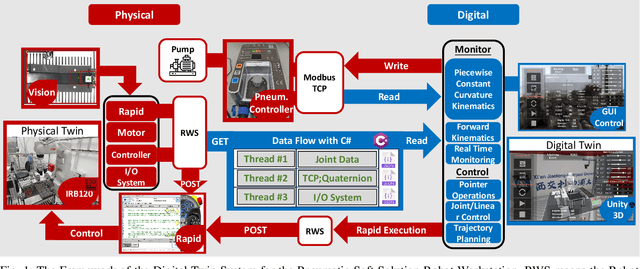
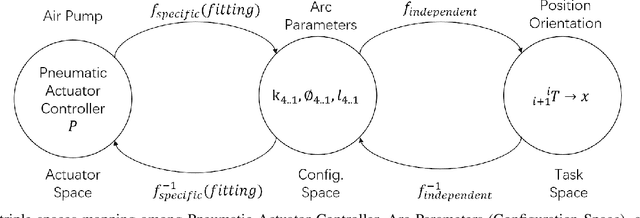
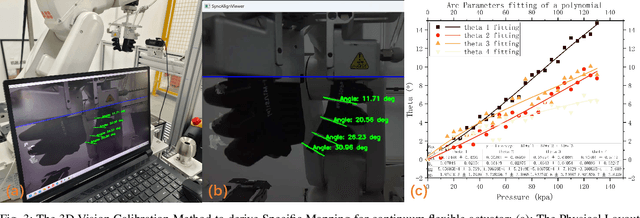
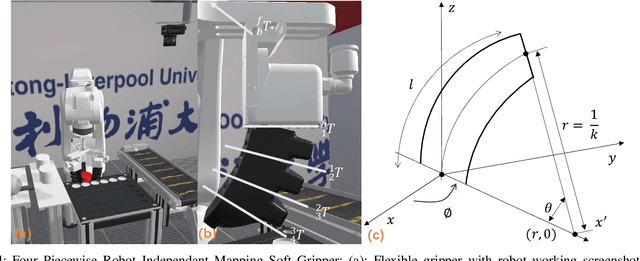
This paper has proposed a Digital Twin (DT) framework for real-time motion and pose control of soft robotic grippers. The developed DT is based on an industrial robot workstation, integrated with our newly proposed approach for soft gripper control, primarily based on computer vision, for setting the driving pressure for desired gripper status in real-time. Knowing the gripper motion, the gripper parameters (e.g. curvatures and bending angles, etc.) are simulated by kinematics modelling in Unity 3D, which is based on four-piecewise constant curvature kinematics. The mapping in between the driving pressure and gripper parameters is achieved by implementing OpenCV based image processing algorithms and data fitting. Results show that our DT-based approach can achieve satisfactory performance in real-time control of soft gripper manipulation, which can satisfy a wide range of industrial applications.
Development of a Simple and Novel Digital Twin Framework for Industrial Robots in Intelligent robotics manufacturing
Oct 19, 2024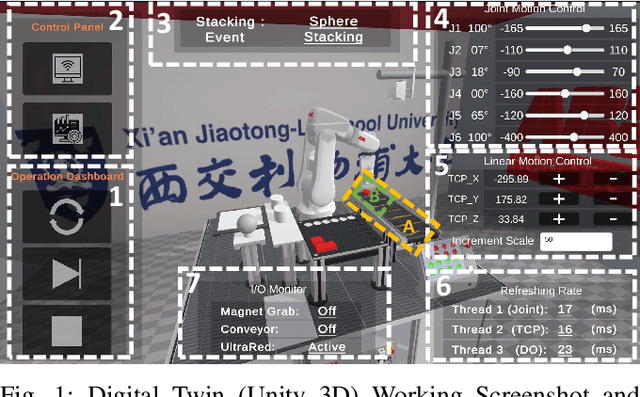
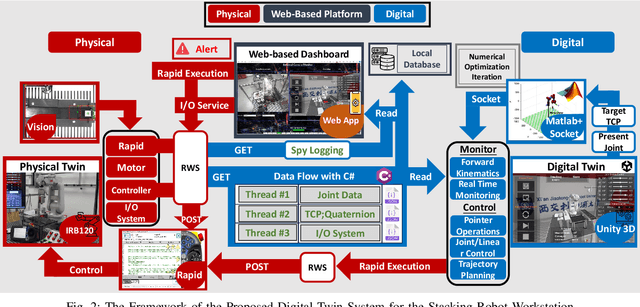
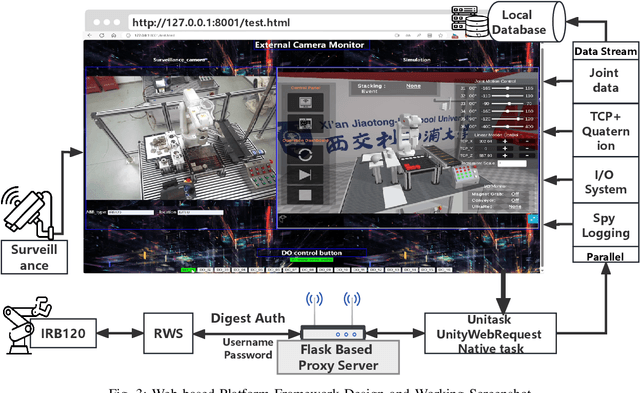
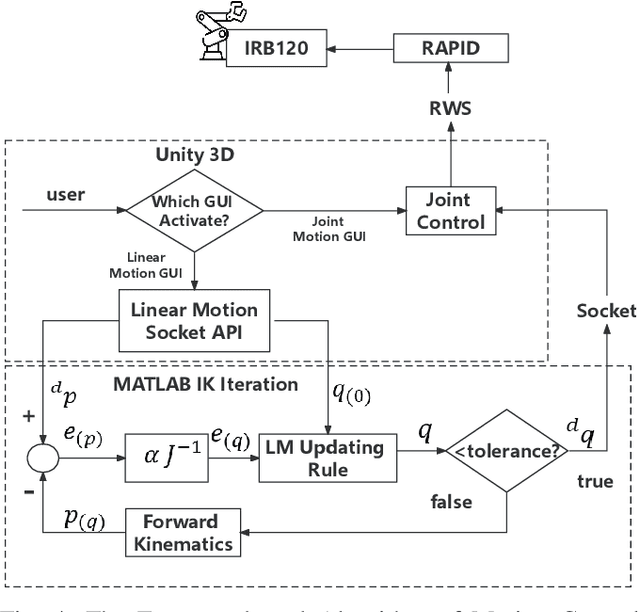
This paper has proposed an easily replicable and novel approach for developing a Digital Twin (DT) system for industrial robots in intelligent manufacturing applications. Our framework enables effective communication via Robot Web Service (RWS), while a real-time simulation is implemented in Unity 3D and Web-based Platform without any other 3rd party tools. The framework can do real-time visualization and control of the entire work process, as well as implement real-time path planning based on algorithms executed in MATLAB. Results verify the high communication efficiency with a refresh rate of only $17 ms$. Furthermore, our developed web-based platform and Graphical User Interface (GUI) enable easy accessibility and user-friendliness in real-time control.