 Add to Chrome
 Add to Firefox
 Add to Edge
LLaTTE: Scaling Laws for Multi-Stage Sequence Modeling in Large-Scale Ads Recommendation
Jan 27, 2026
We present LLaTTE (LLM-Style Latent Transformers for Temporal Events), a scalable transformer architecture for production ads recommendation. Through systematic experiments, we demonstrate that sequence modeling in recommendation systems follows predictable power-law scaling similar to LLMs. Crucially, we find that semantic features bend the scaling curve: they are a prerequisite for scaling, enabling the model to effectively utilize the capacity of deeper and longer architectures. To realize the benefits of continued scaling under strict latency constraints, we introduce a two-stage architecture that offloads the heavy computation of large, long-context models to an asynchronous upstream user model. We demonstrate that upstream improvements transfer predictably to downstream ranking tasks. Deployed as the largest user model at Meta, this multi-stage framework drives a 4.3\% conversion uplift on Facebook Feed and Reels with minimal serving overhead, establishing a practical blueprint for harnessing scaling laws in industrial recommender systems.

Classification of Flames in Computer Mediated Communications
Feb 17, 2012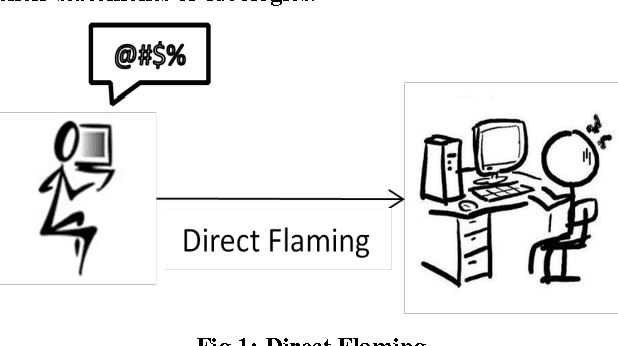
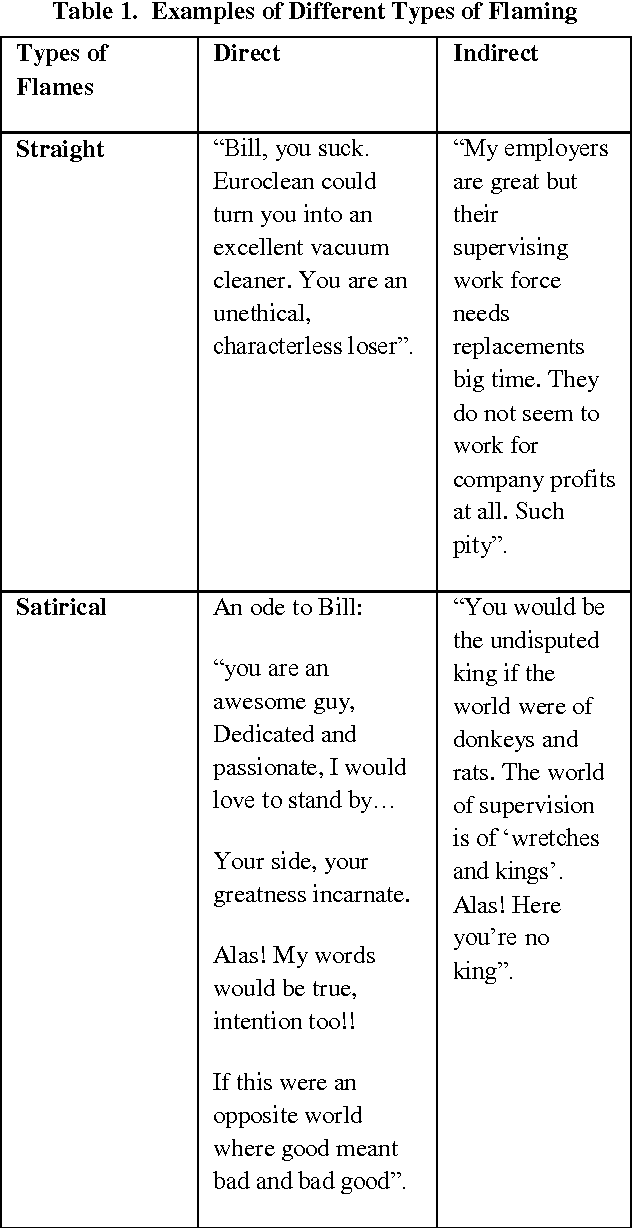
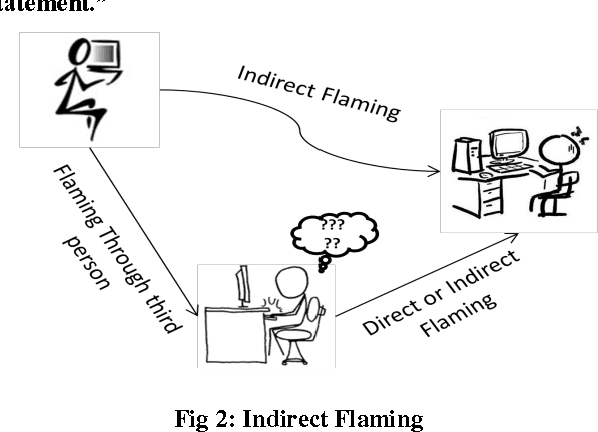
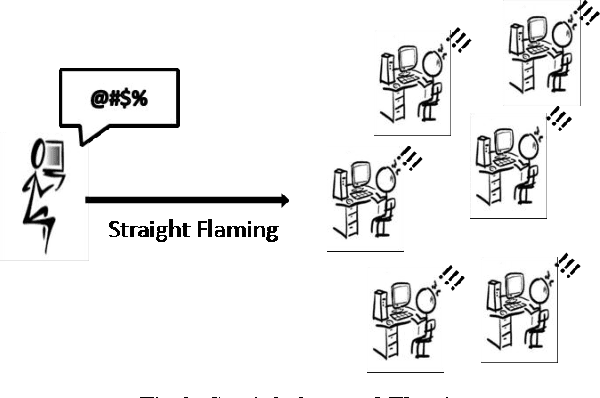
Computer Mediated Communication (CMC) has brought about a revolution in the way the world communicates with each other. With the increasing number of people, interacting through the internet and the rise of new platforms and technologies has brought together the people from different social, cultural and geographical backgrounds to present their thoughts, ideas and opinions on topics of their interest. CMC has, in some cases, gave users more freedom to express themselves as compared to Face-to-face communication. This has also led to rise in the use of hostile and aggressive language and terminologies uninhibitedly. Since such use of language is detrimental to the discussion process and affects the audience and individuals negatively, efforts are being taken to control them. The research sees the need to understand the concept of flaming and hence attempts to classify them in order to give a better understanding of it. The classification is done on the basis of type of flame content being presented and the Style in which they are presented.
* 6 pages, 4 figures