 Add to Chrome
 Add to Firefox
 Add to Edge
OpenAI GPT-5 System Card
Dec 19, 2025
This is the system card published alongside the OpenAI GPT-5 launch, August 2025. GPT-5 is a unified system with a smart and fast model that answers most questions, a deeper reasoning model for harder problems, and a real-time router that quickly decides which model to use based on conversation type, complexity, tool needs, and explicit intent (for example, if you say 'think hard about this' in the prompt). The router is continuously trained on real signals, including when users switch models, preference rates for responses, and measured correctness, improving over time. Once usage limits are reached, a mini version of each model handles remaining queries. This system card focuses primarily on gpt-5-thinking and gpt-5-main, while evaluations for other models are available in the appendix. The GPT-5 system not only outperforms previous models on benchmarks and answers questions more quickly, but -- more importantly -- is more useful for real-world queries. We've made significant advances in reducing hallucinations, improving instruction following, and minimizing sycophancy, and have leveled up GPT-5's performance in three of ChatGPT's most common uses: writing, coding, and health. All of the GPT-5 models additionally feature safe-completions, our latest approach to safety training to prevent disallowed content. Similarly to ChatGPT agent, we have decided to treat gpt-5-thinking as High capability in the Biological and Chemical domain under our Preparedness Framework, activating the associated safeguards. While we do not have definitive evidence that this model could meaningfully help a novice to create severe biological harm -- our defined threshold for High capability -- we have chosen to take a precautionary approach.

Optimal Resource Allocation for Serverless Queries
Jul 19, 2021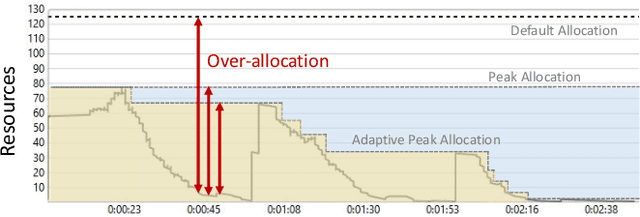
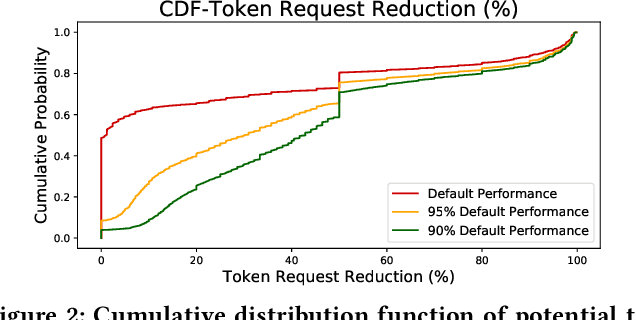
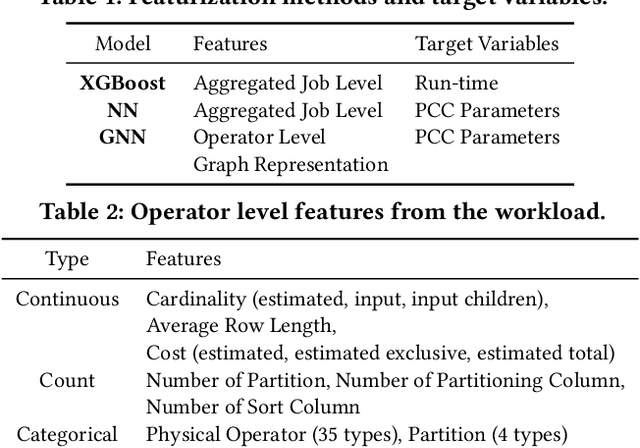
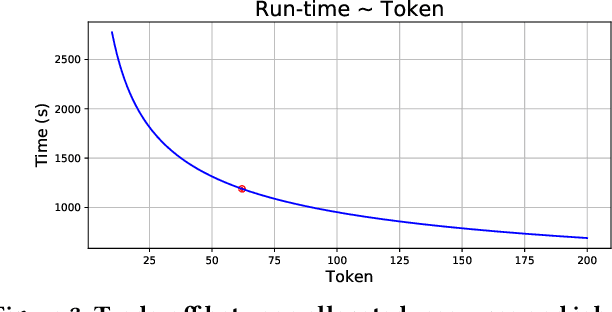
Optimizing resource allocation for analytical workloads is vital for reducing costs of cloud-data services. At the same time, it is incredibly hard for users to allocate resources per query in serverless processing systems, and they frequently misallocate by orders of magnitude. Unfortunately, prior work focused on predicting peak allocation while ignoring aggressive trade-offs between resource allocation and run-time. Additionally, these methods fail to predict allocation for queries that have not been observed in the past. In this paper, we tackle both these problems. We introduce a system for optimal resource allocation that can predict performance with aggressive trade-offs, for both new and past observed queries. We introduce the notion of a performance characteristic curve (PCC) as a parameterized representation that can compactly capture the relationship between resources and performance. To tackle training data sparsity, we introduce a novel data augmentation technique to efficiently synthesize the entire PCC using a single run of the query. Lastly, we demonstrate the advantages of a constrained loss function coupled with GNNs, over traditional ML methods, for capturing the domain specific behavior through an extensive experimental evaluation over SCOPE big data workloads at Microsoft.