 Add to Chrome
 Add to Firefox
 Add to Edge
Learnable Multi-level Discrete Wavelet Transforms for 3D Gaussian Splatting Frequency Modulation
Feb 15, 2026
3D Gaussian Splatting (3DGS) has emerged as a powerful approach for novel view synthesis. However, the number of Gaussian primitives often grows substantially during training as finer scene details are reconstructed, leading to increased memory and storage costs. Recent coarse-to-fine strategies regulate Gaussian growth by modulating the frequency content of the ground-truth images. In particular, AutoOpti3DGS employs the learnable Discrete Wavelet Transform (DWT) to enable data-adaptive frequency modulation. Nevertheless, its modulation depth is limited by the 1-level DWT, and jointly optimizing wavelet regularization with 3D reconstruction introduces gradient competition that promotes excessive Gaussian densification. In this paper, we propose a multi-level DWT-based frequency modulation framework for 3DGS. By recursively decomposing the low-frequency subband, we construct a deeper curriculum that provides progressively coarser supervision during early training, consistently reducing Gaussian counts. Furthermore, we show that the modulation can be performed using only a single scaling parameter, rather than learning the full 2-tap high-pass filter. Experimental results on standard benchmarks demonstrate that our method further reduces Gaussian counts while maintaining competitive rendering quality.

Learning to Reason over Scene Graphs: A Case Study of Finetuning GPT-2 into a Robot Language Model for Grounded Task Planning
May 12, 2023
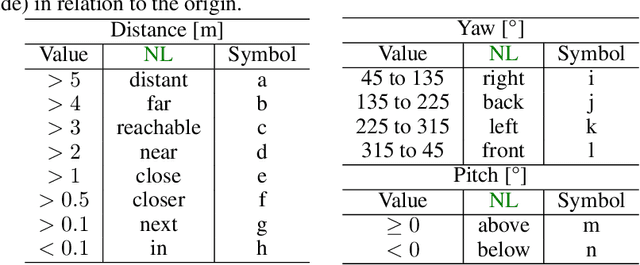
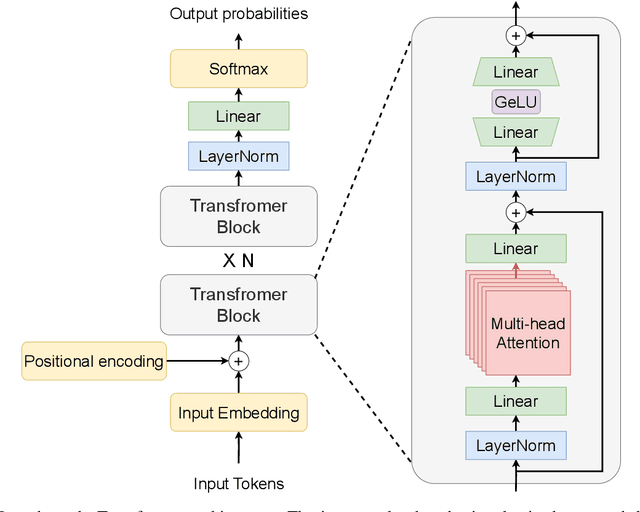
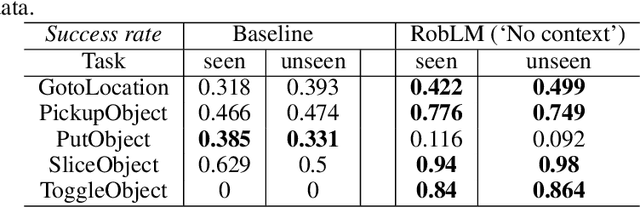
Long-horizon task planning is essential for the development of intelligent assistive and service robots. In this work, we investigate the applicability of a smaller class of large language models (LLMs), specifically GPT-2, in robotic task planning by learning to decompose tasks into subgoal specifications for a planner to execute sequentially. Our method grounds the input of the LLM on the domain that is represented as a scene graph, enabling it to translate human requests into executable robot plans, thereby learning to reason over long-horizon tasks, as encountered in the ALFRED benchmark. We compare our approach with classical planning and baseline methods to examine the applicability and generalizability of LLM-based planners. Our findings suggest that the knowledge stored in an LLM can be effectively grounded to perform long-horizon task planning, demonstrating the promising potential for the future application of neuro-symbolic planning methods in robotics.