 Add to Chrome
 Add to Firefox
 Add to Edge
Leveraging Energy Features for Surface Classification with Deep Learning: A Comparative Analysis Across Three Independent Datasets
Jun 17, 2026
The energy-based method remains a comparatively underexamined approach for surface classification in mobile robotics, despite promising results in constrained environments. This study evaluated the viability of using energy-derived features as either a standalone classification modality or as supplementary input to inertial data. A comprehensive evaluation was conducted across three publicly available datasets, comparing the performance of modern deep learning architectures including recurrent neural networks, convolutional neural networks, encoder-only transformers, and Mamba state-space models, under automated hyperparameter tuning and input sequence length optimization. The models achieved higher accuracy than previously reported values on all evaluated datasets, with the convolutional neural network yielding the highest overall performance. When relying exclusively on energy-based features, the models attained classification accuracies in the range of 85-90%, approximately 5-10% lower than those achieved when combined with inertial features (96-99%). Augmenting inertial data with energy features resulted in a consistent mean accuracy improvement of 1-2%. These findings indicate that classifiers relying solely on energy features offer sufficient accuracy for standalone deployment, while also providing a consistent gain when used in combination with other sensing modalities.

Accuracy Improvements for Convolutional and Differential Distance Function Approximations
Dec 12, 2024Given a bounded domain, we deal with the problem of estimating the distance function from the internal points of the domain to the boundary of the domain. Convolutional and differential distance estimation schemes are considered and, for both the schemes, accuracy improvements are proposed and evaluated. Asymptotics of Laplace integrals and Taylor series extrapolations are used to achieve the improvements.
A Reference Model for Common Understanding of Capabilities and Skills in Manufacturing
Sep 15, 2022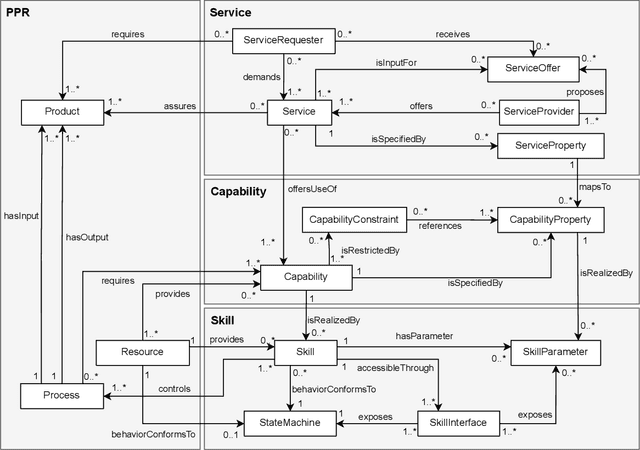
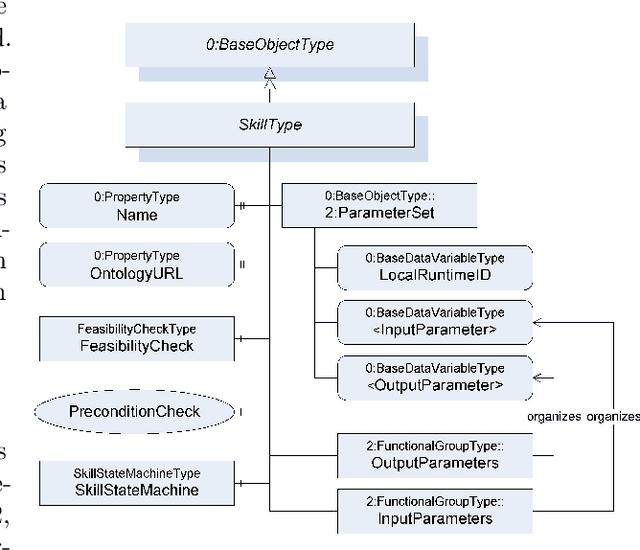
In manufacturing, many use cases of Industry 4.0 require vendor-neutral and machine-readable information models to describe, implement and execute resource functions. Such models have been researched under the terms capabilities and skills. Standardization of such models is required, but currently not available. This paper presents a reference model developed jointly by members of various organizations in a working group of the Plattform Industrie 4.0. This model covers definitions of most important aspects of capabilities and skills. It can be seen as a basis for further standardization efforts.