 Add to Chrome
 Add to Firefox
 Add to Edge
Active Flow Matching
Mar 01, 2026
Discrete diffusion and flow matching models capture complex, non-additive and non-autoregressive structure in high-dimensional objective landscapes through parallel, iterative refinement. However, their implicit generative nature precludes direct integration with principled variational frameworks for online black-box optimisation, such as variational search distributions (VSD) and conditioning by adaptive sampling (CbAS). We introduce Active Flow Matching (AFM), which reformulates variational objectives to operate on conditional endpoint distributions along the flow, enabling gradient-based steering of flow models toward high-fitness regions while preserving the rigour of VSD and CbAS. We derive forward and reverse Kullback-Leibler (KL) variants using self-normalised importance sampling. Across a suite of online protein and small molecule design tasks, forward-KL AFM consistently performs competitively compared to state-of-the-art baselines, demonstrating effective exploration-exploitation under tight experimental budgets.

Improving Uncertainty Quantification in Large Language Models via Semantic Embeddings
Oct 30, 2024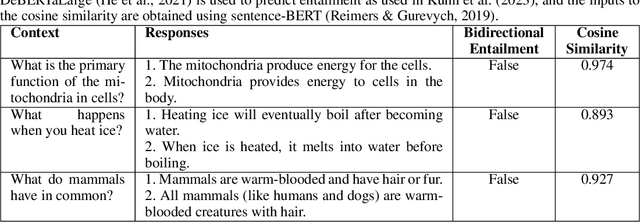
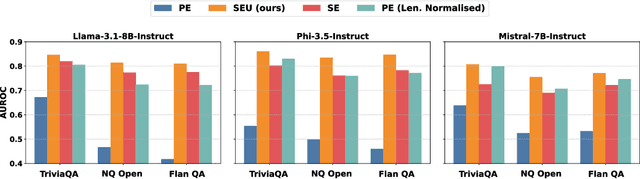
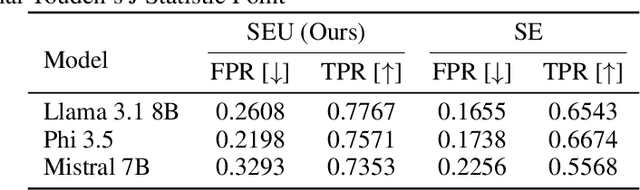
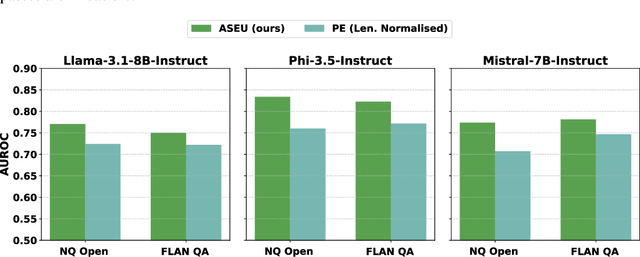
Accurately quantifying uncertainty in large language models (LLMs) is crucial for their reliable deployment, especially in high-stakes applications. Current state-of-the-art methods for measuring semantic uncertainty in LLMs rely on strict bidirectional entailment criteria between multiple generated responses and also depend on sequence likelihoods. While effective, these approaches often overestimate uncertainty due to their sensitivity to minor wording differences, additional correct information, and non-important words in the sequence. We propose a novel approach that leverages semantic embeddings to achieve smoother and more robust estimation of semantic uncertainty in LLMs. By capturing semantic similarities without depending on sequence likelihoods, our method inherently reduces any biases introduced by irrelevant words in the answers. Furthermore, we introduce an amortised version of our approach by explicitly modelling semantics as latent variables in a joint probabilistic model. This allows for uncertainty estimation in the embedding space with a single forward pass, significantly reducing computational overhead compared to existing multi-pass methods. Experiments across multiple question-answering datasets and frontier LLMs demonstrate that our embedding-based methods provide more accurate and nuanced uncertainty quantification than traditional approaches.