 Add to Chrome
 Add to Firefox
 Add to Edge
FiMI: A Domain-Specific Language Model for Indian Finance Ecosystem
Feb 05, 2026
We present FiMI (Finance Model for India), a domain-specialized financial language model developed for Indian digital payment systems. We develop two model variants: FiMI Base and FiMI Instruct. FiMI adapts the Mistral Small 24B architecture through a multi-stage training pipeline, beginning with continuous pre-training on 68 Billion tokens of curated financial, multilingual (English, Hindi, Hinglish), and synthetic data. This is followed by instruction fine-tuning and domain-specific supervised fine-tuning focused on multi-turn, tool-driven conversations that model real-world workflows, such as transaction disputes and mandate lifecycle management. Evaluations reveal that FiMI Base achieves a 20% improvement over the Mistral Small 24B Base model on finance reasoning benchmark, while FiMI Instruct outperforms the Mistral Small 24B Instruct model by 87% on domain-specific tool-calling. Moreover, FiMI achieves these significant domain gains while maintaining comparable performance to models of similar size on general benchmarks.

MILDSum: A Novel Benchmark Dataset for Multilingual Summarization of Indian Legal Case Judgments
Oct 28, 2023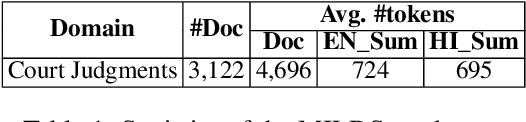
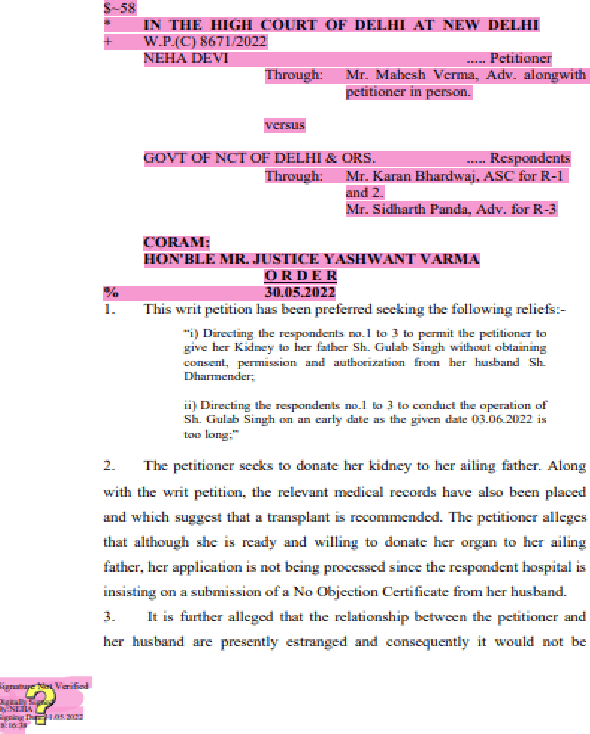
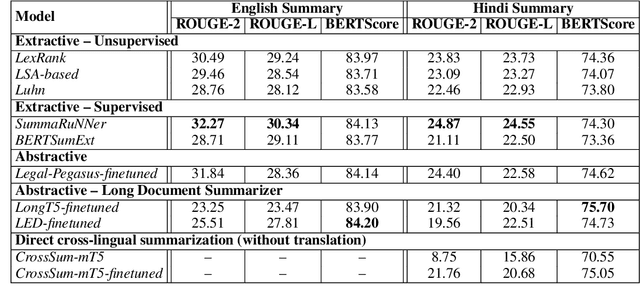
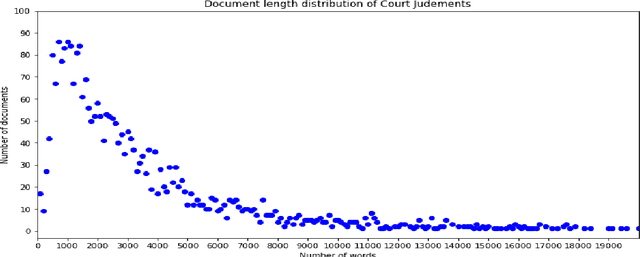
Automatic summarization of legal case judgments is a practically important problem that has attracted substantial research efforts in many countries. In the context of the Indian judiciary, there is an additional complexity -- Indian legal case judgments are mostly written in complex English, but a significant portion of India's population lacks command of the English language. Hence, it is crucial to summarize the legal documents in Indian languages to ensure equitable access to justice. While prior research primarily focuses on summarizing legal case judgments in their source languages, this study presents a pioneering effort toward cross-lingual summarization of English legal documents into Hindi, the most frequently spoken Indian language. We construct the first high-quality legal corpus comprising of 3,122 case judgments from prominent Indian courts in English, along with their summaries in both English and Hindi, drafted by legal practitioners. We benchmark the performance of several diverse summarization approaches on our corpus and demonstrate the need for further research in cross-lingual summarization in the legal domain.
Improving Access to Justice for the Indian Population: A Benchmark for Evaluating Translation of Legal Text to Indian Languages
Oct 15, 2023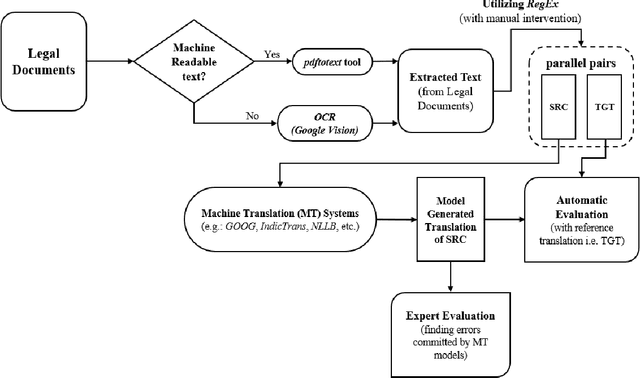
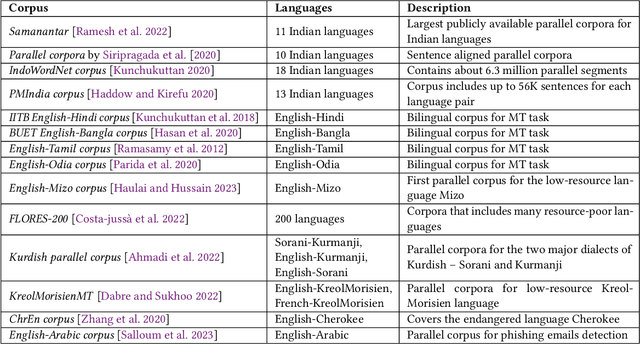
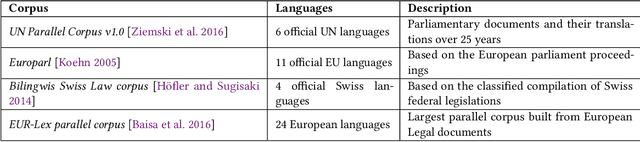
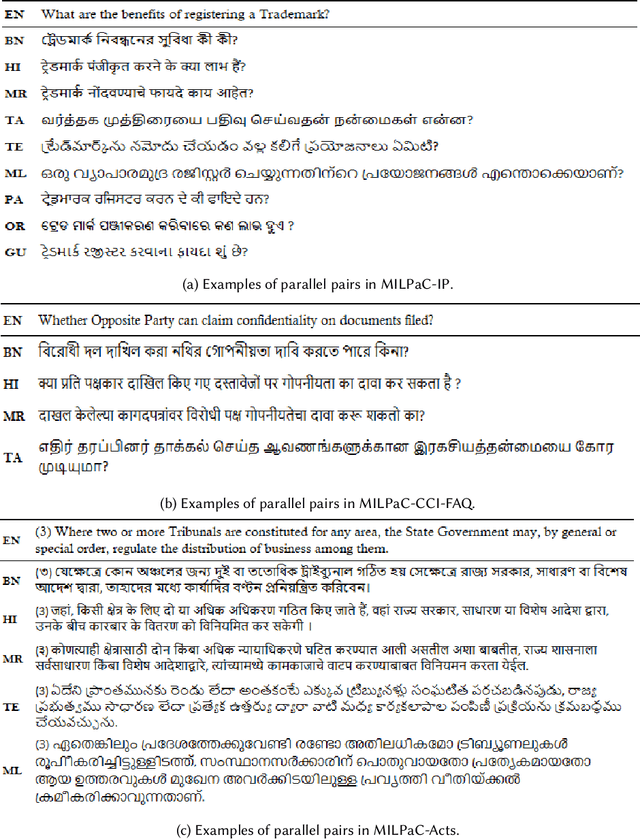
Most legal text in the Indian judiciary is written in complex English due to historical reasons. However, only about 10% of the Indian population is comfortable in reading English. Hence legal text needs to be made available in various Indian languages, possibly by translating the available legal text from English. Though there has been a lot of research on translation to and between Indian languages, to our knowledge, there has not been much prior work on such translation in the legal domain. In this work, we construct the first high-quality legal parallel corpus containing aligned text units in English and nine Indian languages, that includes several low-resource languages. We also benchmark the performance of a wide variety of Machine Translation (MT) systems over this corpus, including commercial MT systems, open-source MT systems and Large Language Models. Through a comprehensive survey by Law practitioners, we check how satisfied they are with the translations by some of these MT systems, and how well automatic MT evaluation metrics agree with the opinions of Law practitioners.