 Add to Chrome
 Add to Firefox
 Add to Edge
Trust Me, I'm an Expert: Decoding and Steering Authority Bias in Large Language Models
Jan 19, 2026
Prior research demonstrates that performance of language models on reasoning tasks can be influenced by suggestions, hints and endorsements. However, the influence of endorsement source credibility remains underexplored. We investigate whether language models exhibit systematic bias based on the perceived expertise of the provider of the endorsement. Across 4 datasets spanning mathematical, legal, and medical reasoning, we evaluate 11 models using personas representing four expertise levels per domain. Our results reveal that models are increasingly susceptible to incorrect/misleading endorsements as source expertise increases, with higher-authority sources inducing not only accuracy degradation but also increased confidence in wrong answers. We also show that this authority bias is mechanistically encoded within the model and a model can be steered away from the bias, thereby improving its performance even when an expert gives a misleading endorsement.

Directional GAN: A Novel Conditioning Strategy for Generative Networks
May 13, 2021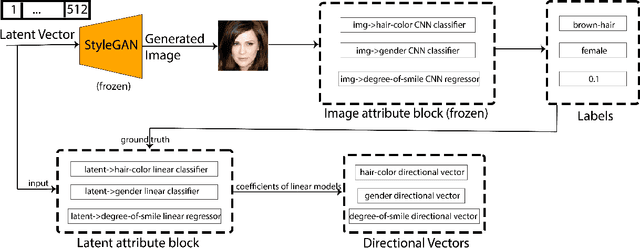

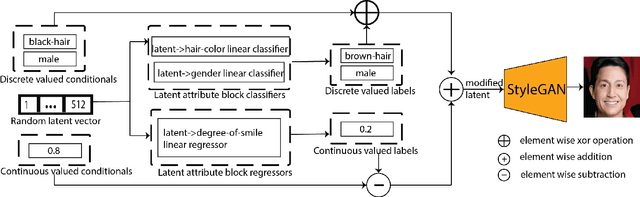
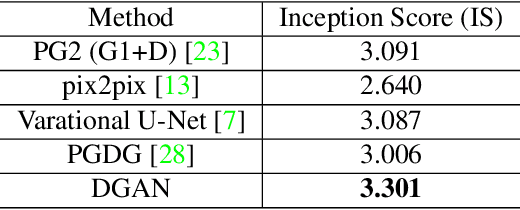
Image content is a predominant factor in marketing campaigns, websites and banners. Today, marketers and designers spend considerable time and money in generating such professional quality content. We take a step towards simplifying this process using Generative Adversarial Networks (GANs). We propose a simple and novel conditioning strategy which allows generation of images conditioned on given semantic attributes using a generator trained for an unconditional image generation task. Our approach is based on modifying latent vectors, using directional vectors of relevant semantic attributes in latent space. Our method is designed to work with both discrete (binary and multi-class) and continuous image attributes. We show the applicability of our proposed approach, named Directional GAN, on multiple public datasets, with an average accuracy of 86.4% across different attributes.