 Add to Chrome
 Add to Firefox
 Add to Edge
Optimizing Agentic Workflows using Meta-tools
Jan 29, 2026
Agentic AI enables LLM to dynamically reason, plan, and interact with tools to solve complex tasks. However, agentic workflows often require many iterative reasoning steps and tool invocations, leading to significant operational expense, end-to-end latency and failures due to hallucinations. This work introduces Agent Workflow Optimization (AWO), a framework that identifies and optimizes redundant tool execution patterns to improve the efficiency and robustness of agentic workflows. AWO analyzes existing workflow traces to discover recurring sequences of tool calls and transforms them into meta-tools, which are deterministic, composite tools that bundle multiple agent actions into a single invocation. Meta-tools bypass unnecessary intermediate LLM reasoning steps and reduce operational cost while also shortening execution paths, leading to fewer failures. Experiments on two agentic AI benchmarks show that AWO reduces the number of LLM calls up to 11.9% while also increasing the task success rate by up to 4.2 percent points.

Towards Unifying Evaluation of Counterfactual Explanations: Leveraging Large Language Models for Human-Centric Assessments
Oct 28, 2024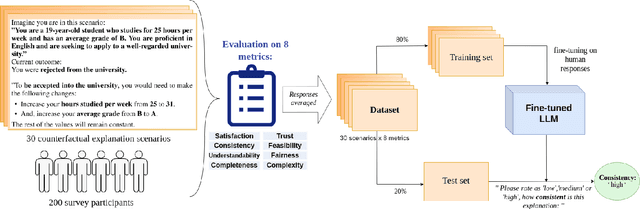
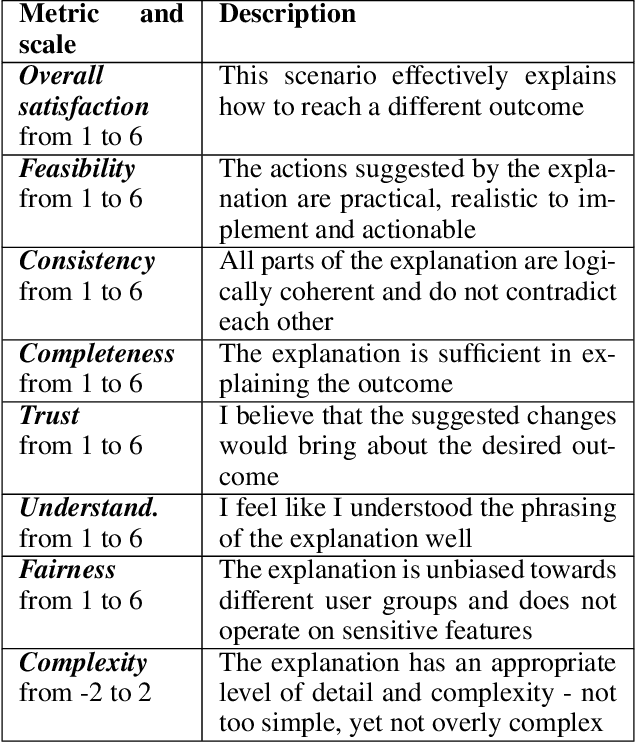
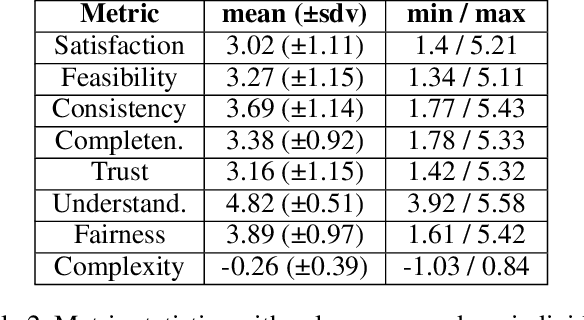
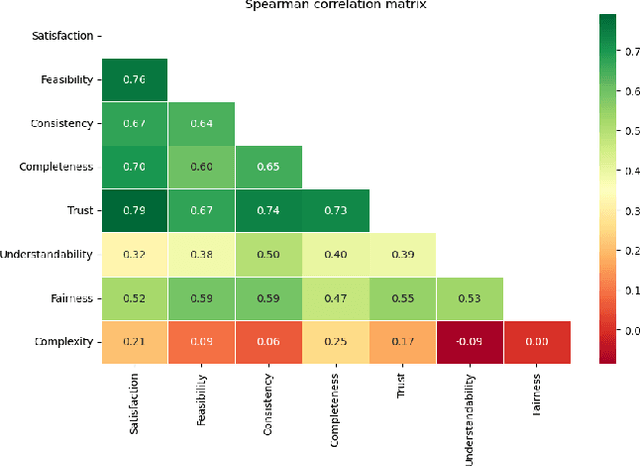
As machine learning models evolve, maintaining transparency demands more human-centric explainable AI techniques. Counterfactual explanations, with roots in human reasoning, identify the minimal input changes needed to obtain a given output and, hence, are crucial for supporting decision-making. Despite their importance, the evaluation of these explanations often lacks grounding in user studies and remains fragmented, with existing metrics not fully capturing human perspectives. To address this challenge, we developed a diverse set of 30 counterfactual scenarios and collected ratings across 8 evaluation metrics from 206 respondents. Subsequently, we fine-tuned different Large Language Models (LLMs) to predict average or individual human judgment across these metrics. Our methodology allowed LLMs to achieve an accuracy of up to 63% in zero-shot evaluations and 85% (over a 3-classes prediction) with fine-tuning across all metrics. The fine-tuned models predicting human ratings offer better comparability and scalability in evaluating different counterfactual explanation frameworks.