 Add to Chrome
 Add to Firefox
 Add to Edge
$V_0$: A Generalist Value Model for Any Policy at State Zero
Feb 03, 2026
Policy gradient methods rely on a baseline to measure the relative advantage of an action, ensuring the model reinforces behaviors that outperform its current average capability. In the training of Large Language Models (LLMs) using Actor-Critic methods (e.g., PPO), this baseline is typically estimated by a Value Model (Critic) often as large as the policy model itself. However, as the policy continuously evolves, the value model requires expensive, synchronous incremental training to accurately track the shifting capabilities of the policy. To avoid this overhead, Group Relative Policy Optimization (GRPO) eliminates the coupled value model by using the average reward of a group of rollouts as the baseline; yet, this approach necessitates extensive sampling to maintain estimation stability. In this paper, we propose $V_0$, a Generalist Value Model capable of estimating the expected performance of any model on unseen prompts without requiring parameter updates. We reframe value estimation by treating the policy's dynamic capability as an explicit context input; specifically, we leverage a history of instruction-performance pairs to dynamically profile the model, departing from the traditional paradigm that relies on parameter fitting to perceive capability shifts. Focusing on value estimation at State Zero (i.e., the initial prompt, hence $V_0$), our model serves as a critical resource scheduler. During GRPO training, $V_0$ predicts success rates prior to rollout, allowing for efficient sampling budget allocation; during deployment, it functions as a router, dispatching instructions to the most cost-effective and suitable model. Empirical results demonstrate that $V_0$ significantly outperforms heuristic budget allocation and achieves a Pareto-optimal trade-off between performance and cost in LLM routing tasks.

CoBA-RL: Capability-Oriented Budget Allocation for Reinforcement Learning in LLMs
Feb 03, 2026Reinforcement Learning with Verifiable Rewards (RLVR) has emerged as a key approach for enhancing LLM reasoning.However, standard frameworks like Group Relative Policy Optimization (GRPO) typically employ a uniform rollout budget, leading to resource inefficiency. Moreover, existing adaptive methods often rely on instance-level metrics, such as task pass rates, failing to capture the model's dynamic learning state. To address these limitations, we propose CoBA-RL, a reinforcement learning algorithm designed to adaptively allocate rollout budgets based on the model's evolving capability. Specifically, CoBA-RL utilizes a Capability-Oriented Value function to map tasks to their potential training gains and employs a heap-based greedy strategy to efficiently self-calibrate the distribution of computational resources to samples with high training value. Extensive experiments demonstrate that our approach effectively orchestrates the trade-off between exploration and exploitation, delivering consistent generalization improvements across multiple challenging benchmarks. These findings underscore that quantifying sample training value and optimizing budget allocation are pivotal for advancing LLM post-training efficiency.
LongCat-Flash-Thinking-2601 Technical Report
Jan 23, 2026We introduce LongCat-Flash-Thinking-2601, a 560-billion-parameter open-source Mixture-of-Experts (MoE) reasoning model with superior agentic reasoning capability. LongCat-Flash-Thinking-2601 achieves state-of-the-art performance among open-source models on a wide range of agentic benchmarks, including agentic search, agentic tool use, and tool-integrated reasoning. Beyond benchmark performance, the model demonstrates strong generalization to complex tool interactions and robust behavior under noisy real-world environments. Its advanced capability stems from a unified training framework that combines domain-parallel expert training with subsequent fusion, together with an end-to-end co-design of data construction, environments, algorithms, and infrastructure spanning from pre-training to post-training. In particular, the model's strong generalization capability in complex tool-use are driven by our in-depth exploration of environment scaling and principled task construction. To optimize long-tailed, skewed generation and multi-turn agentic interactions, and to enable stable training across over 10,000 environments spanning more than 20 domains, we systematically extend our asynchronous reinforcement learning framework, DORA, for stable and efficient large-scale multi-environment training. Furthermore, recognizing that real-world tasks are inherently noisy, we conduct a systematic analysis and decomposition of real-world noise patterns, and design targeted training procedures to explicitly incorporate such imperfections into the training process, resulting in improved robustness for real-world applications. To further enhance performance on complex reasoning tasks, we introduce a Heavy Thinking mode that enables effective test-time scaling by jointly expanding reasoning depth and width through intensive parallel thinking.
VitaBench: Benchmarking LLM Agents with Versatile Interactive Tasks in Real-world Applications
Sep 30, 2025As LLM-based agents are increasingly deployed in real-life scenarios, existing benchmarks fail to capture their inherent complexity of handling extensive information, leveraging diverse resources, and managing dynamic user interactions. To address this gap, we introduce VitaBench, a challenging benchmark that evaluates agents on versatile interactive tasks grounded in real-world settings. Drawing from daily applications in food delivery, in-store consumption, and online travel services, VitaBench presents agents with the most complex life-serving simulation environment to date, comprising 66 tools. Through a framework that eliminates domain-specific policies, we enable flexible composition of these scenarios and tools, yielding 100 cross-scenario tasks (main results) and 300 single-scenario tasks. Each task is derived from multiple real user requests and requires agents to reason across temporal and spatial dimensions, utilize complex tool sets, proactively clarify ambiguous instructions, and track shifting user intent throughout multi-turn conversations. Moreover, we propose a rubric-based sliding window evaluator, enabling robust assessment of diverse solution pathways in complex environments and stochastic interactions. Our comprehensive evaluation reveals that even the most advanced models achieve only 30% success rate on cross-scenario tasks, and less than 50% success rate on others. Overall, we believe VitaBench will serve as a valuable resource for advancing the development of AI agents in practical real-world applications. The code, dataset, and leaderboard are available at https://vitabench.github.io/
System-level Simulation of Reconfigurable Intelligent Surface assisted Wireless Communications System
Jun 29, 2022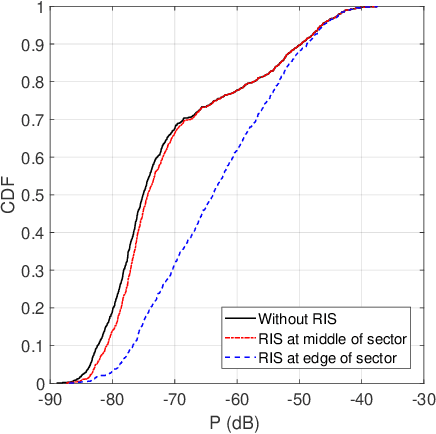
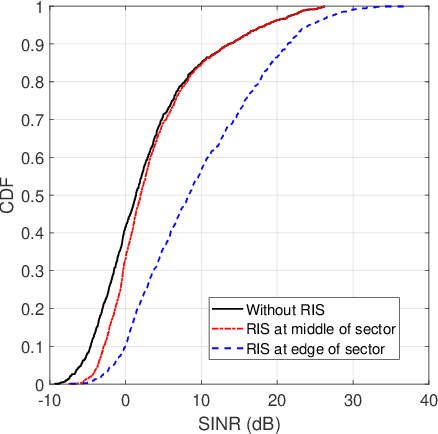
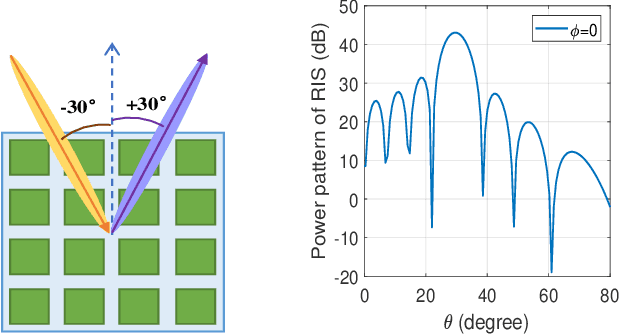
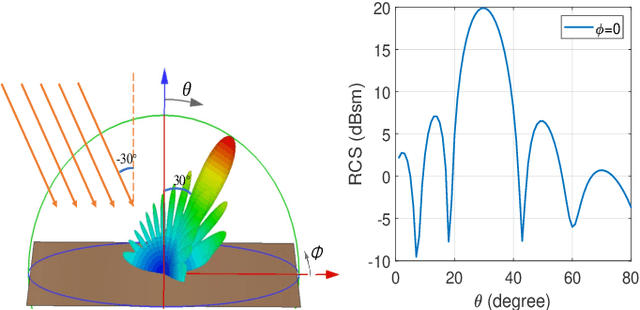
Reconfigurable intelligent surface (RIS) is an emerging technique employing metasurface to reflect the signal from the source node to the destination node. By smartly reconfiguring the electromagnetic (EM) properties of the metasurface and adjusting the EM parameters of the reflected radio waves, RIS can turn the uncontrollable propagation environment into an artificially reconfigurable space, and thus, can significantly increase the communications capacity and improve the coverage of the system. In this paper, we investigate the far field channel in which the line-of-sight (LOS) propagation is dominant. We propose an antenna model that can characterize the radiation patterns of realistic RIS elements, and consider the signal power received from the two-hop path through RIS. System-level simulations of network performance under various scenarios and parameter.