 Add to Chrome
 Add to Firefox
 Add to Edge
Impact of Preprocessing on Neural Network-Based RSS/AoA Positioning
Feb 18, 2026
Hybrid received signal strength (RSS)-angle of arrival (AoA)-based positioning offers low-cost distance estimation and high-resolution angular measurements. Still, it comes at a cost of inherent nonlinearities, geometry-dependent noise, and suboptimal weighting in conventional linear estimators that might limit accuracy. In this paper, we propose a neural network-based approach using a multilayer perceptron (MLP) to directly map RSS-AoA measurements to 3D positions, capturing nonlinear relationships that are difficult to model with traditional methods. We evaluate the impact of input representation by comparing networks trained on raw measurements versus preprocessed features derived from a linearization method. Simulation results show that the learning-based approach consistently outperforms existing linear methods under RSS noise across all noise levels, and matches or surpasses state-of-the-art performance under increasing AoA noise. Furthermore, preprocessing measurements using the linearization method provides a clear advantage over raw data, demonstrating the benefit of geometry-aware feature extraction.

Low-overhead Joint Channel Estimation and Data Detection in ZP-OTFS System
Apr 04, 2023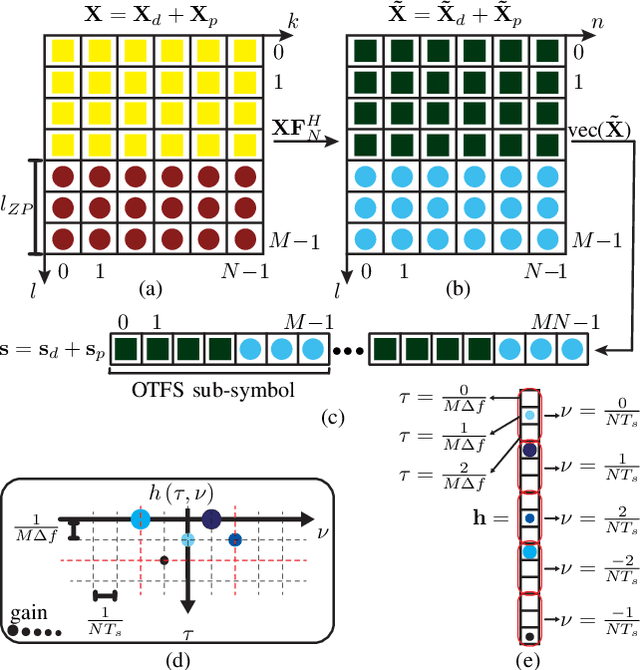
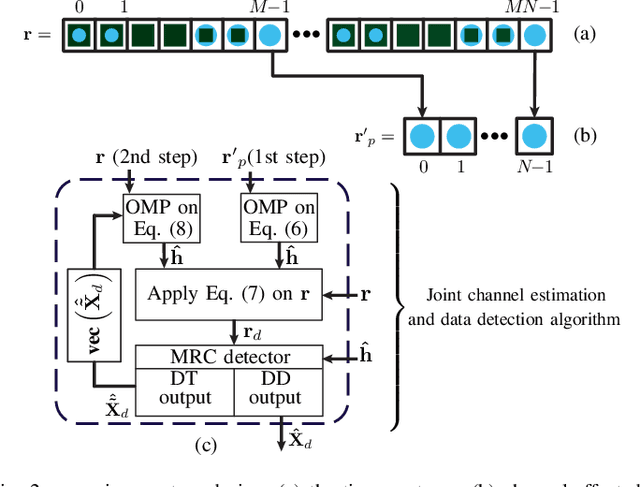
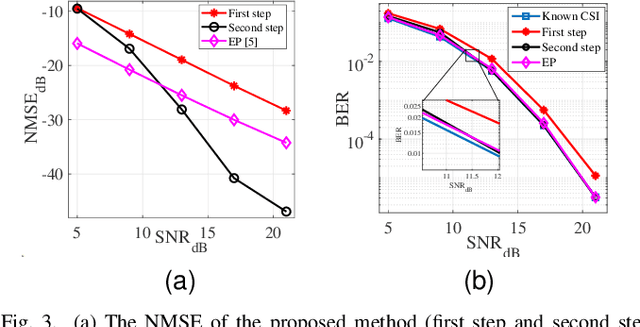
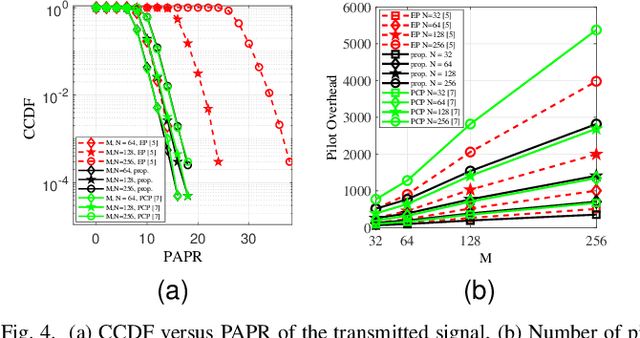
High pilot overhead and peak-to-average power ratio (PAPR) are challenging issues in channel estimation for orthogonal time frequency space (OTFS) systems. ZP-OTFS is a modified OTFS system where multiple rows along the delay axis are zero. We propose a two-step channel estimation method for the ZP-OTFS system. The proposed method inserts pilot sequences in the zero bins of the ZP-OTFS system, resulting in low overhead and PAPR. Our simulation results demonstrate the effectiveness of the proposed method and show that it outperforms embedded pilot estimation in terms of normalized mean square error (NMSE) at the same bit error rate (BER).
Superimposed Channel Estimation in OTFS Modulation Using Compressive Sensing
Dec 19, 2022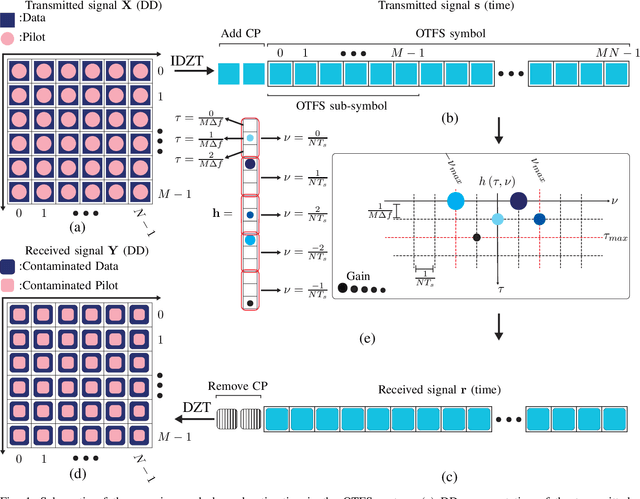
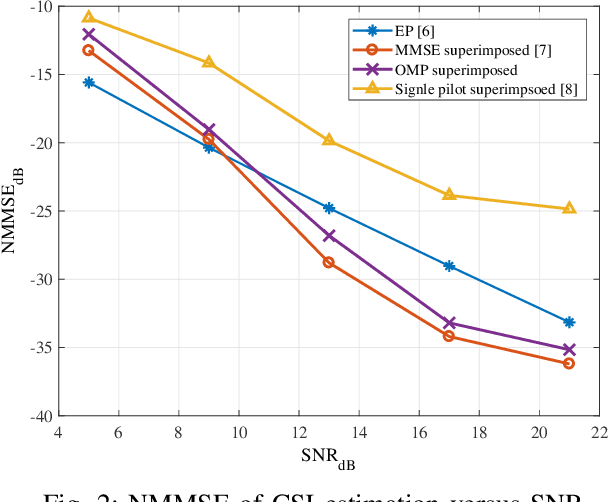
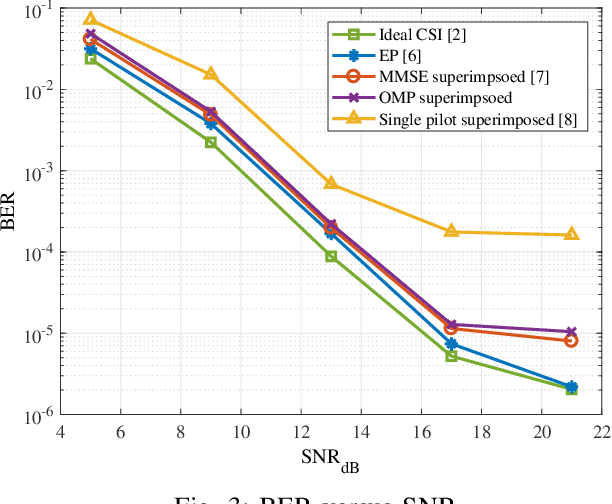
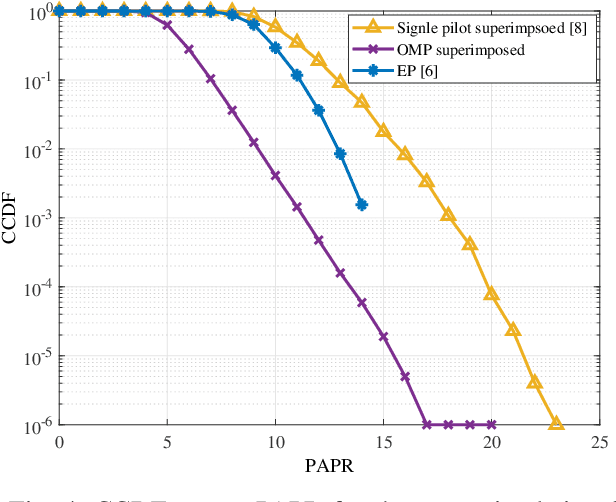
Orthogonal time frequency space (OTFS) technique is a two-dimensional modulation method that multiplexes information symbols in the delay-Doppler (DD) domain. OTFS combats high Doppler shift existing in high speed wireless communication. However, conventional channel estimation in OTFS suffers from high pilot overhead because guard symbols occupy a significant part of the DD domain grids. In this paper, a superimposed channel estimation is proposed which can completely estimate channel parameters without considering pilot overhead and performance degradation. As the channel state information (CSI) in the DD domain is sparse, a sparse recovery algorithm orthogonal matching pursuit (OMP) is used. Besides, our proposed method does not suffer from high peak to average power ratio (PAPR). To detect information symbols, a message passing (MP) detector, which exploits the sparsity of DD channel representation, is employed.