 Add to Chrome
 Add to Firefox
 Add to Edge
PersistBench: When Should Long-Term Memories Be Forgotten by LLMs?
Feb 01, 2026
Conversational assistants are increasingly integrating long-term memory with large language models (LLMs). This persistence of memories, e.g., the user is vegetarian, can enhance personalization in future conversations. However, the same persistence can also introduce safety risks that have been largely overlooked. Hence, we introduce PersistBench to measure the extent of these safety risks. We identify two long-term memory-specific risks: cross-domain leakage, where LLMs inappropriately inject context from the long-term memories; and memory-induced sycophancy, where stored long-term memories insidiously reinforce user biases. We evaluate 18 frontier and open-source LLMs on our benchmark. Our results reveal a surprisingly high failure rate across these LLMs - a median failure rate of 53% on cross-domain samples and 97% on sycophancy samples. To address this, our benchmark encourages the development of more robust and safer long-term memory usage in frontier conversational systems.

HOPPR Medical-Grade Platform for Medical Imaging AI
Nov 26, 2024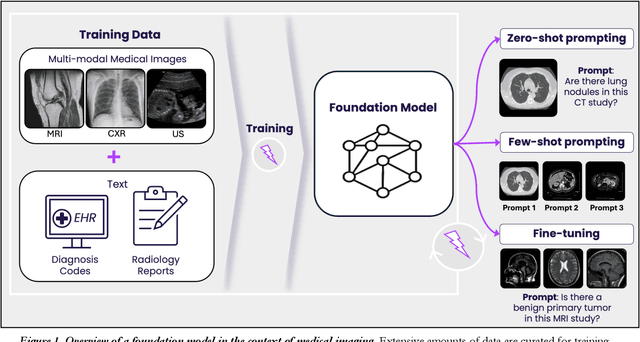
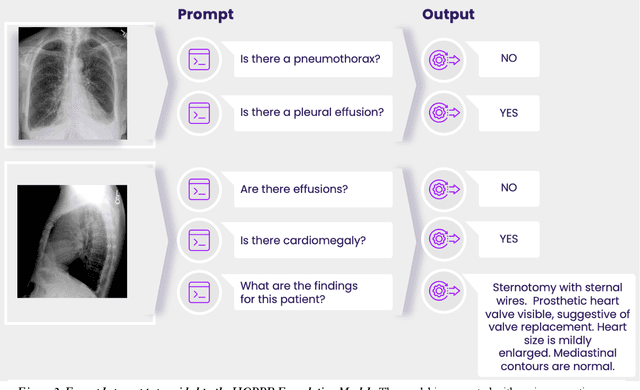
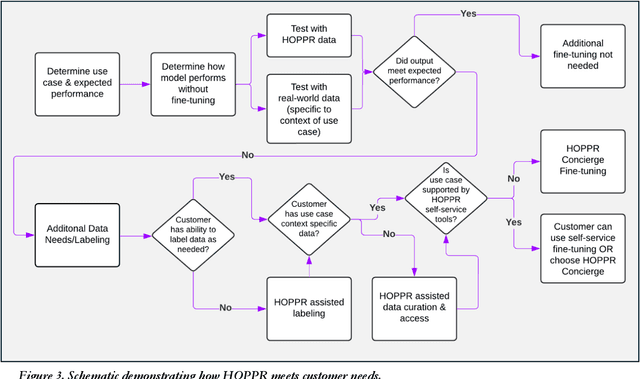
Technological advances in artificial intelligence (AI) have enabled the development of large vision language models (LVLMs) that are trained on millions of paired image and text samples. Subsequent research efforts have demonstrated great potential of LVLMs to achieve high performance in medical imaging use cases (e.g., radiology report generation), but there remain barriers that hinder the ability to deploy these solutions broadly. These include the cost of extensive computational requirements for developing large scale models, expertise in the development of sophisticated AI models, and the difficulty in accessing substantially large, high-quality datasets that adequately represent the population in which the LVLM solution is to be deployed. The HOPPR Medical-Grade Platform addresses these barriers by providing powerful computational infrastructure, a suite of foundation models on top of which developers can fine-tune for their specific use cases, and a robust quality management system that sets a standard for evaluating fine-tuned models for deployment in clinical settings. The HOPPR Platform has access to millions of imaging studies and text reports sourced from hundreds of imaging centers from diverse populations to pretrain foundation models and enable use case-specific cohorts for fine-tuning. All data are deidentified and securely stored for HIPAA compliance. Additionally, developers can securely host models on the HOPPR platform and access them via an API to make inferences using these models within established clinical workflows. With the Medical-Grade Platform, HOPPR's mission is to expedite the deployment of LVLM solutions for medical imaging and ultimately optimize radiologist's workflows and meet the growing demands of the field.