 Add to Chrome
 Add to Firefox
 Add to Edge
Power-of-Two Quantization-Aware-Training (PoT-QAT) in Large Language Models (LLMs)
Jan 05, 2026
In Large Language Models (LLMs), the number of parameters has grown exponentially in the past few years, e.g., from 1.5 billion parameters in GPT-2 to 175 billion in GPT-3 to possibly more than trillion in higher versions. This raises a significant challenge for implementation, especially for Edge devices. Unlike cloud computing, memory and processing power for Edge devices are very limited, which necessitates developing novel ideas to make such applications feasible. In this work, we investigate compressing weights with a special quantization that limits numbers to only power-of-two (PoT). This helps save a huge amount of memory as only exponents need to be stored, more importantly, it significantly reduces processing power by replacing costly multiplication with low cost bit shifting. To overcome performance loss due to this strict quantization, we investigate Quantization Aware Training (QAT) to enhance performance through additional training. Results on GPT-2 124M show a major enhancement for quantized PoT model after additional training, with a perplexity enhancement of 66% and BERT-Score loss to baseline GPT-2 of 1%. The memory saving is estimated to be 87.5% while the inference speed is expected to be 3-10x faster with PoT quantization versus full-precision.

On the Achievable Rate of MIMO Narrowband PLC with Spatio-Temporal Correlated Noise
Aug 28, 2023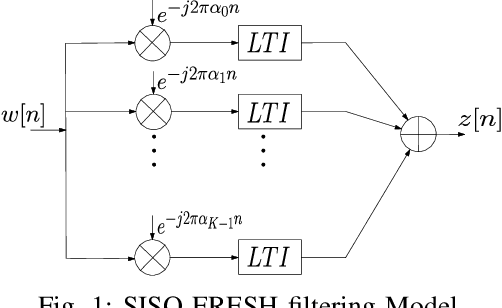
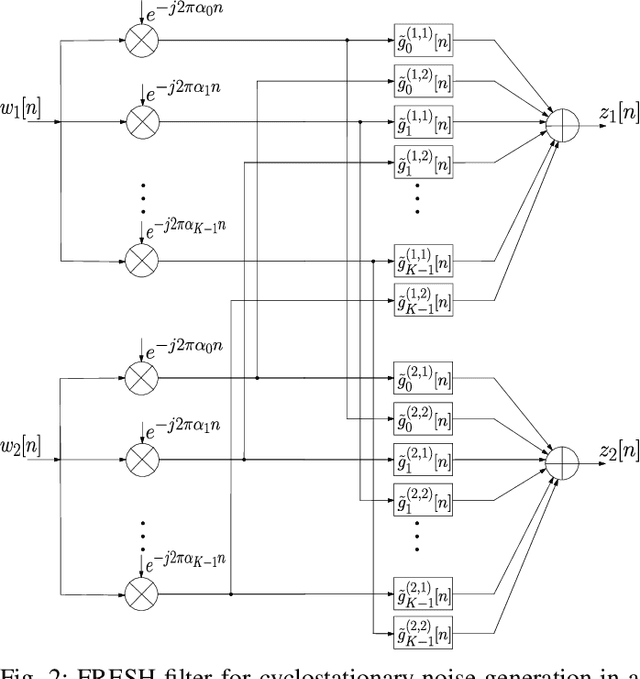
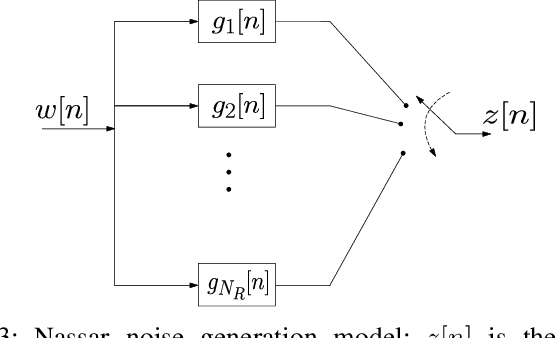
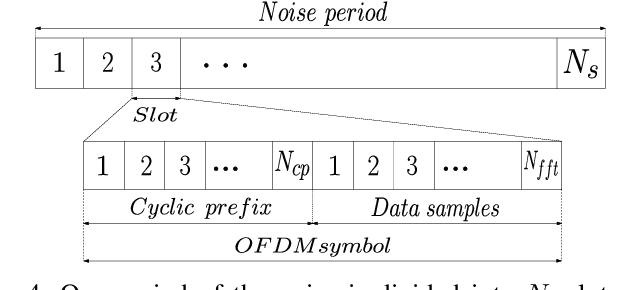
Narrowband power line communication (NB-PLC) systems are an attractive solution for supporting current and future smart grids. A technology proposed to enhance data rate in NB-PLC is multiple-input multiple-output (MIMO) transmission over multiple power line phases. To achieve reliable communication over MIMO NB-PLC, a key challenge is to take into account and mitigate the effects of temporally and spatially correlated cyclostationary noise. Noise samples in a cycle can be divided into three classes with different distributions, i.e. Gaussian, moderate impulsive, and strong impulsive. However, in this paper we first show that the impulsive classes in their turn can be divided into sub-classes with normal distributions and, after deriving the theoretical capacity, two noise sample sets with such characteristics are used to evaluate achievable information rates: one sample set is the measured noise in laboratory and the other is produced through MIMO frequency-shift (FRESH) filtering. The achievable information rates are attained by means of a spatio-temporal whitening of the portions of the cyclostationary correlated noise samples that belong to the Gaussian sub-classes. The proposed approach can be useful to design the optimal receiver in terms of bit allocation using waterfilling algorithm and to adapt modulation order.