 Add to Chrome
 Add to Firefox
 Add to Edge
Improving Day-Ahead Grid Carbon Intensity Forecasting by Joint Modeling of Local-Temporal and Cross-Variable Dependencies Across Different Frequencies
Jan 10, 2026
Accurate forecasting of the grid carbon intensity factor (CIF) is critical for enabling demand-side management and reducing emissions in modern electricity systems. Leveraging multiple interrelated time series, CIF prediction is typically formulated as a multivariate time series forecasting problem. Despite advances in deep learning-based methods, it remains challenging to capture the fine-grained local-temporal dependencies, dynamic higher-order cross-variable dependencies, and complex multi-frequency patterns for CIF forecasting. To address these issues, we propose a novel model that integrates two parallel modules: 1) one enhances the extraction of local-temporal dependencies under multi-frequency by applying multiple wavelet-based convolutional kernels to overlapping patches of varying lengths; 2) the other captures dynamic cross-variable dependencies under multi-frequency to model how inter-variable relationships evolve across the time-frequency domain. Evaluations on four representative electricity markets from Australia, featuring varying levels of renewable penetration, demonstrate that the proposed method outperforms the state-of-the-art models. An ablation study further validates the complementary benefits of the two proposed modules. Designed with built-in interpretability, the proposed model also enables better understanding of its predictive behavior, as shown in a case study where it adaptively shifts attention to relevant variables and time intervals during a disruptive event.

Planogram Compliance Checking Based on Detection of Recurring Patterns
Feb 22, 2016
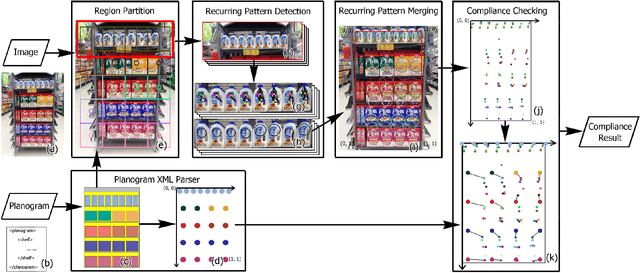
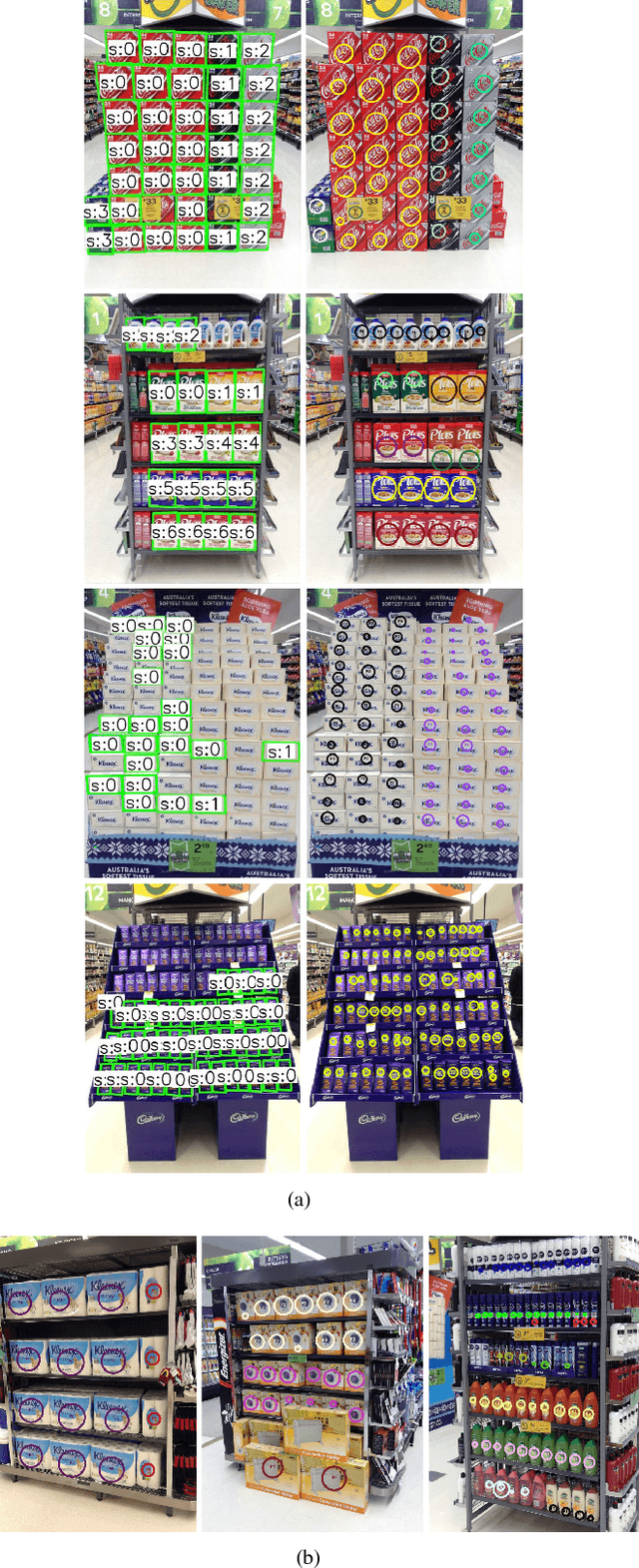
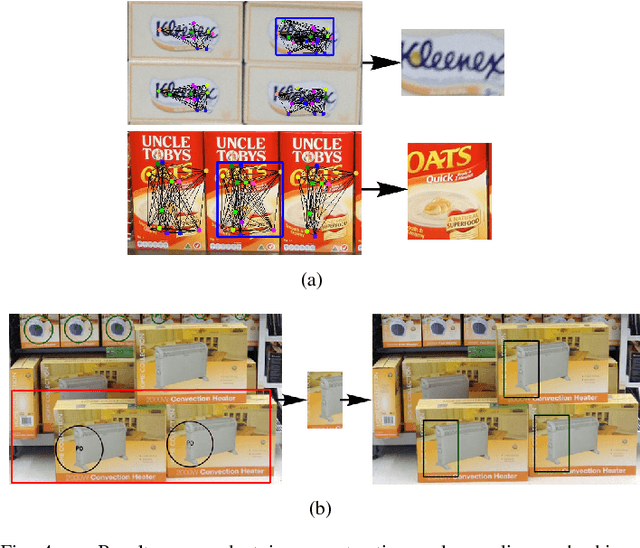
In this paper, a novel method for automatic planogram compliance checking in retail chains is proposed without requiring product template images for training. Product layout is extracted from an input image by means of unsupervised recurring pattern detection and matched via graph matching with the expected product layout specified by a planogram to measure the level of compliance. A divide and conquer strategy is employed to improve the speed. Specifically, the input image is divided into several regions based on the planogram. Recurring patterns are detected in each region respectively and then merged together to estimate the product layout. Experimental results on real data have verified the efficacy of the proposed method. Compared with a template-based method, higher accuracies are achieved by the proposed method over a wide range of products.