 Add to Chrome
 Add to Firefox
 Add to Edge
Improving Methodologies for Agentic Evaluations Across Domains: Leakage of Sensitive Information, Fraud and Cybersecurity Threats
Jan 22, 2026
The rapid rise of autonomous AI systems and advancements in agent capabilities are introducing new risks due to reduced oversight of real-world interactions. Yet agent testing remains nascent and is still a developing science. As AI agents begin to be deployed globally, it is important that they handle different languages and cultures accurately and securely. To address this, participants from The International Network for Advanced AI Measurement, Evaluation and Science, including representatives from Singapore, Japan, Australia, Canada, the European Commission, France, Kenya, South Korea, and the United Kingdom have come together to align approaches to agentic evaluations. This is the third exercise, building on insights from two earlier joint testing exercises conducted by the Network in November 2024 and February 2025. The objective is to further refine best practices for testing advanced AI systems. The exercise was split into two strands: (1) common risks, including leakage of sensitive information and fraud, led by Singapore AISI; and (2) cybersecurity, led by UK AISI. A mix of open and closed-weight models were evaluated against tasks from various public agentic benchmarks. Given the nascency of agentic testing, our primary focus was on understanding methodological issues in conducting such tests, rather than examining test results or model capabilities. This collaboration marks an important step forward as participants work together to advance the science of agentic evaluations.

The race to robustness: exploiting fragile models for urban camouflage and the imperative for machine learning security
Jun 26, 2023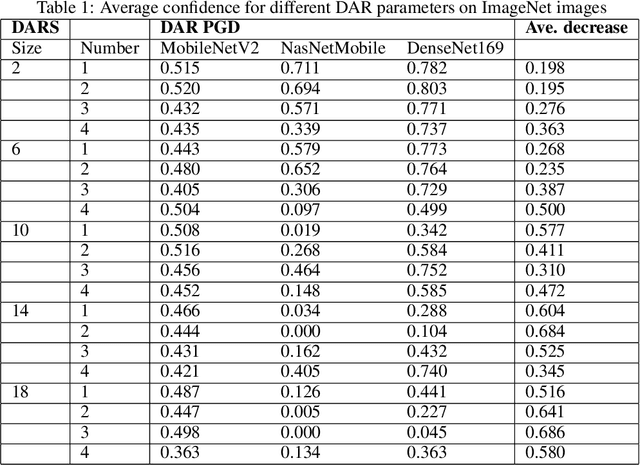
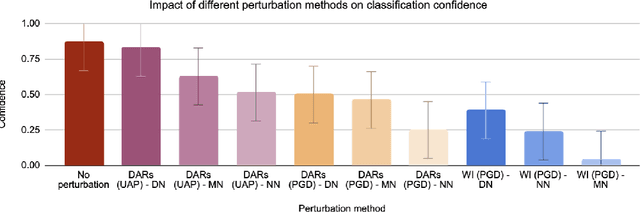
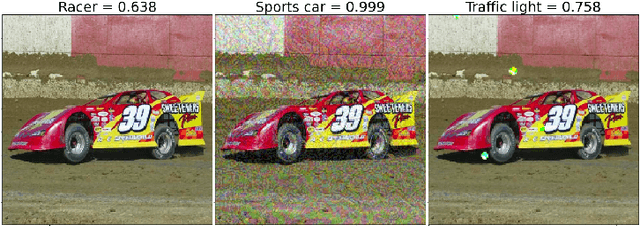
Adversarial Machine Learning (AML) represents the ability to disrupt Machine Learning (ML) algorithms through a range of methods that broadly exploit the architecture of deep learning optimisation. This paper presents Distributed Adversarial Regions (DAR), a novel method that implements distributed instantiations of computer vision-based AML attack methods that may be used to disguise objects from image recognition in both white and black box settings. We consider the context of object detection models used in urban environments, and benchmark the MobileNetV2, NasNetMobile and DenseNet169 models against a subset of relevant images from the ImageNet dataset. We evaluate optimal parameters (size, number and perturbation method), and compare to state-of-the-art AML techniques that perturb the entire image. We find that DARs can cause a reduction in confidence of 40.4% on average, but with the benefit of not requiring the entire image, or the focal object, to be perturbed. The DAR method is a deliberately simple approach where the intention is to highlight how an adversary with very little skill could attack models that may already be productionised, and to emphasise the fragility of foundational object detection models. We present this as a contribution to the field of ML security as well as AML. This paper contributes a novel adversarial method, an original comparison between DARs and other AML methods, and frames it in a new context - that of urban camouflage and the necessity for ML security and model robustness.