 Add to Chrome
 Add to Firefox
 Add to Edge
UniFi: Combining Irregularly Sampled CSI from Diverse Communication Packets and Frequency Bands for Wi-Fi Sensing
Dec 14, 2025
Existing Wi-Fi sensing systems rely on injecting high-rate probing packets to extract channel state information (CSI), leading to communication degradation and poor deployability. Although Integrated Sensing and Communication (ISAC) is a promising direction, existing solutions still rely on auxiliary packet injection because they exploit only CSI from data frames. We present UniFi, the first Wi-Fi-based ISAC framework that fully eliminates intrusive packet injection by directly exploiting irregularly sampled CSI from diverse communication packets across multiple frequency bands. UniFi integrates a CSI sanitization pipeline to harmonize heterogeneous packets and remove burst-induced redundancy, together with a time-aware attention model that learns directly from non-uniform CSI sequences without resampling. We further introduce CommCSI-HAR, the first dataset with irregularly sampled CSI from real-world dual-band communication traffic. Extensive evaluations on this dataset and four public benchmarks show that UniFi achieves state-of-the-art accuracy with a compact model size, while fully preserving communication throughput.

Toward Foundation Models for Online Complex Event Detection in CPS-IoT: A Case Study
Mar 15, 2025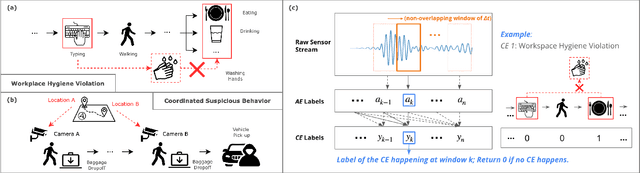
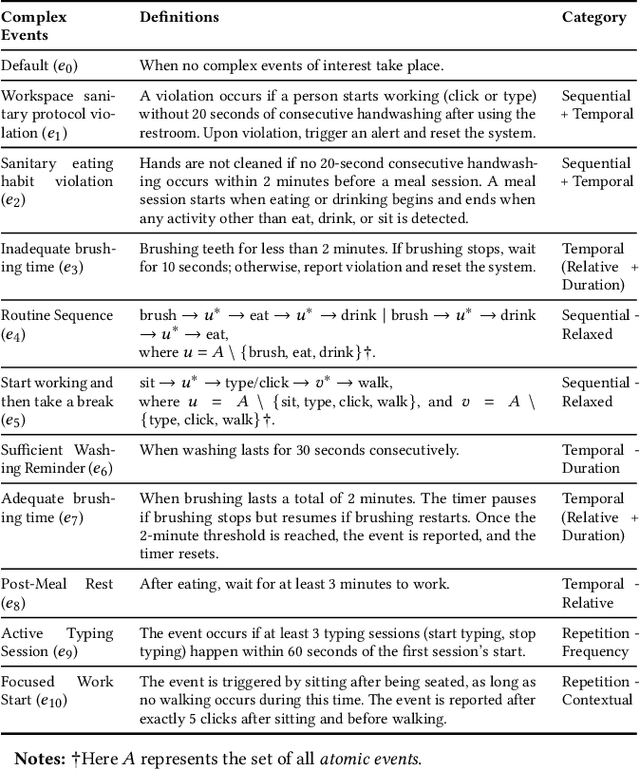
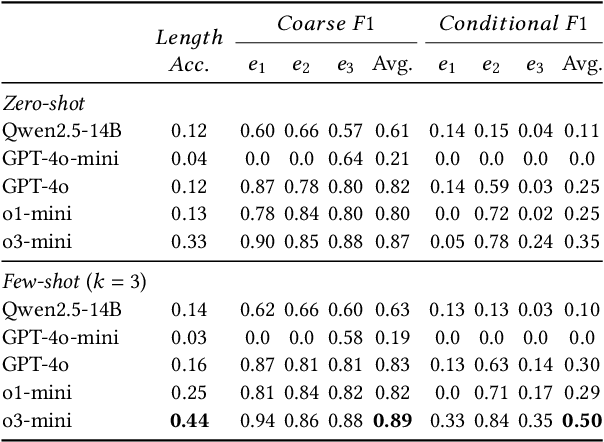
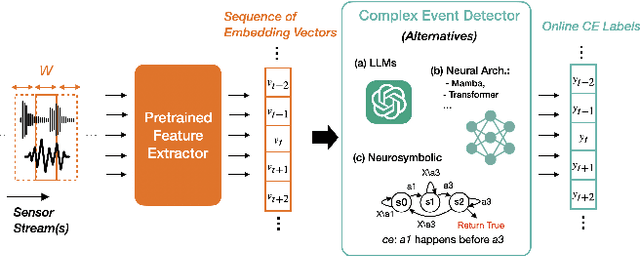
Complex events (CEs) play a crucial role in CPS-IoT applications, enabling high-level decision-making in domains such as smart monitoring and autonomous systems. However, most existing models focus on short-span perception tasks, lacking the long-term reasoning required for CE detection. CEs consist of sequences of short-time atomic events (AEs) governed by spatiotemporal dependencies. Detecting them is difficult due to long, noisy sensor data and the challenge of filtering out irrelevant AEs while capturing meaningful patterns. This work explores CE detection as a case study for CPS-IoT foundation models capable of long-term reasoning. We evaluate three approaches: (1) leveraging large language models (LLMs), (2) employing various neural architectures that learn CE rules from data, and (3) adopting a neurosymbolic approach that integrates neural models with symbolic engines embedding human knowledge. Our results show that the state-space model, Mamba, which belongs to the second category, outperforms all methods in accuracy and generalization to longer, unseen sensor traces. These findings suggest that state-space models could be a strong backbone for CPS-IoT foundation models for long-span reasoning tasks.
NARCE: A Mamba-Based Neural Algorithmic Reasoner Framework for Online Complex Event Detection
Feb 11, 2025Current machine learning models excel in short-span perception tasks but struggle to derive high-level insights from long-term observation, a capability central to understanding complex events (CEs). CEs, defined as sequences of short-term atomic events (AEs) governed by spatiotemporal rules, are challenging to detect online due to the need to extract meaningful patterns from long and noisy sensor data while ignoring irrelevant events. We hypothesize that state-based methods are well-suited for CE detection, as they capture event progression through state transitions without requiring long-term memory. Baseline experiments validate this, demonstrating that the state-space model Mamba outperforms existing architectures. However, Mamba's reliance on extensive labeled data, which are difficult to obtain, motivates our second hypothesis: decoupling CE rule learning from noisy sensor data can reduce data requirements. To address this, we propose NARCE, a framework that combines Neural Algorithmic Reasoning (NAR) to split the task into two components: (i) learning CE rules independently of sensor data using synthetic concept traces generated by LLMs and (ii) mapping sensor inputs to these rules via an adapter. Our results show that NARCE outperforms baselines in accuracy, generalization to unseen and longer sensor data, and data efficiency, significantly reducing annotation costs while advancing robust CE detection.