 Add to Chrome
 Add to Firefox
 Add to Edge
Causal Inference for Preprocessed Outcomes with an Application to Functional Connectivity
Feb 02, 2026
In biomedical research, repeated measurements within each subject are often processed to remove artifacts and unwanted sources of variation. The resulting data are used to construct derived outcomes that act as proxies for scientific outcomes that are not directly observable. Although intra-subject processing is widely used, its impact on inter-subject statistical inference has not been systematically studied, and a principled framework for causal analysis in this setting is lacking. In this article, we propose a semiparametric framework for causal inference with derived outcomes obtained after intra-subject processing. This framework applies to settings with a modular structure, where intra-subject analyses are conducted independently across subjects and are followed by inter-subject analyses based on parameters from the intra-subject stage. We develop multiply robust estimators of causal parameters under rate conditions on both intra-subject and inter-subject models, which allows the use of flexible machine learning. We specialize the framework to a mediation setting and focus on the natural direct effect. For high dimensional inference, we employ a step-down procedure that controls the exceedance rate of the false discovery proportion. Simulation studies demonstrate the superior performance of the proposed approach. We apply our method to estimate the impact of stimulant medication on brain connectivity in children with autism spectrum disorder.

Optimization and Testing in Linear Non-Gaussian Component Analysis
Dec 29, 2017
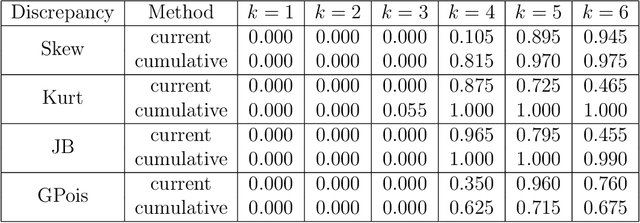


Independent component analysis (ICA) decomposes multivariate data into mutually independent components (ICs). The ICA model is subject to a constraint that at most one of these components is Gaussian, which is required for model identifiability. Linear non-Gaussian component analysis (LNGCA) generalizes the ICA model to a linear latent factor model with any number of both non-Gaussian components (signals) and Gaussian components (noise), where observations are linear combinations of independent components. Although the individual Gaussian components are not identifiable, the Gaussian subspace is identifiable. We introduce an estimator along with its optimization approach in which non-Gaussian and Gaussian components are estimated simultaneously, maximizing the discrepancy of each non-Gaussian component from Gaussianity while minimizing the discrepancy of each Gaussian component from Gaussianity. When the number of non-Gaussian components is unknown, we develop a statistical test to determine it based on resampling and the discrepancy of estimated components. Through a variety of simulation studies, we demonstrate the improvements of our estimator over competing estimators, and we illustrate the effectiveness of the test to determine the number of non-Gaussian components. Further, we apply our method to real data examples and demonstrate its practical value.