 Add to Chrome
 Add to Firefox
 Add to Edge
"I'm happy even though it's not real": GenAI Photo Editing as a Remembering Experience
Feb 03, 2026
Generative Artificial Intelligence (GenAI) is increasingly integrated into photo applications on personal devices, making editing photographs easier than ever while potentially influencing the memories they represent. This study explores how and why people use GenAI to edit personal photos and how this shapes their remembering experience. We conducted a two-phase qualitative study with 12 participants: a photo editing session using a GenAI tool guided by the Remembering Experience (RX) dimensions, followed by semi-structured interviews where participants reflected on the editing process and results. Findings show that participants prioritised felt memory over factual accuracy. For different photo elements, environments were modified easily, however, editing was deemed unacceptable if it touched upon a person's identity. Editing processes brought positive and negative impacts, and itself also became a remembering experience. We further discuss potential benefits and risks of GenAI editing for remembering purposes and propose design implications for responsible GenAI.

PERCY: A Multimodal Dataset and Conversational System for Personalized and Emotionally Aware Human-Robot Interaction
Dec 06, 2024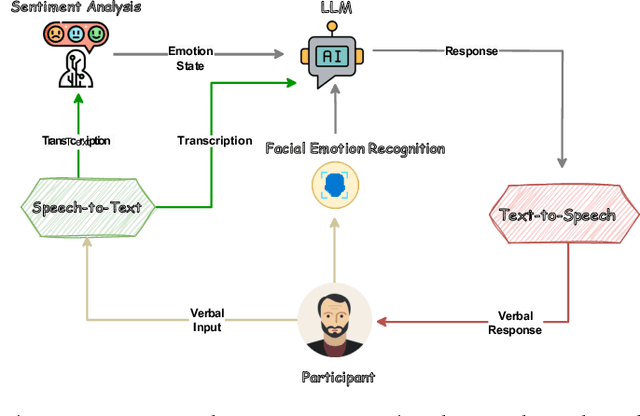
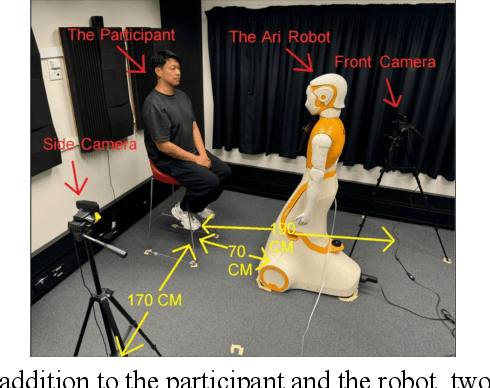
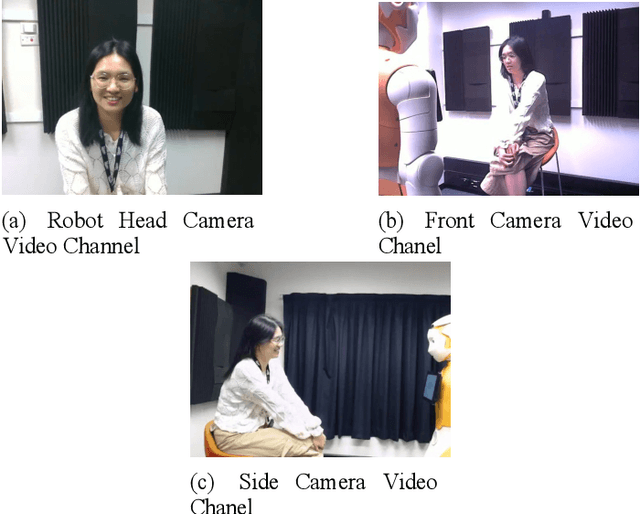
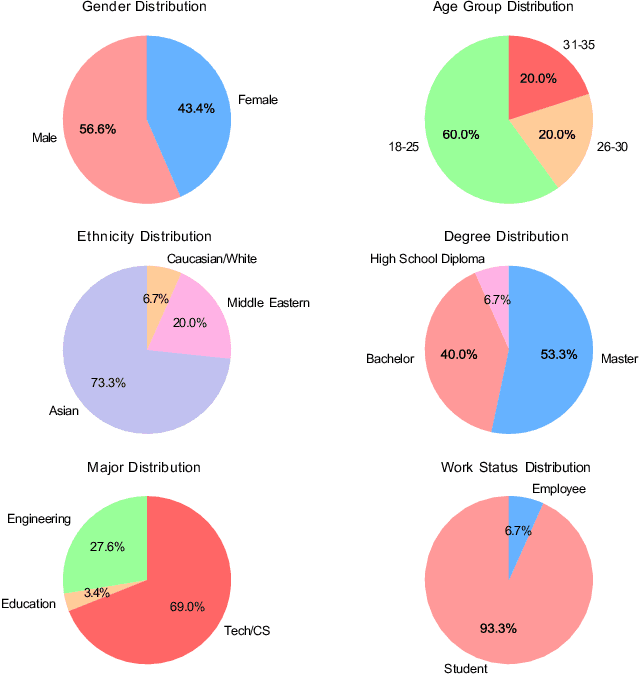
The integration of conversational agents into our daily lives has become increasingly common, yet many of these agents cannot engage in deep interactions with humans. Despite this, there is a noticeable shortage of datasets that capture multimodal information from human-robot interaction dialogues. To address this gap, we have developed a Personal Emotional Robotic Conversational sYstem (PERCY) and recorded a novel multimodal dataset that encompasses rich embodied interaction data. The process involved asking participants to complete a questionnaire and gathering their profiles on ten topics, such as hobbies and favourite music. Subsequently, we initiated conversations between the robot and the participants, leveraging GPT-4 to generate contextually appropriate responses based on the participant's profile and emotional state, as determined by facial expression recognition and sentiment analysis. Automatic and user evaluations were conducted to assess the overall quality of the collected data. The results of both evaluations indicated a high level of naturalness, engagement, fluency, consistency, and relevance in the conversation, as well as the robot's ability to provide empathetic responses. It is worth noting that the dataset is derived from genuine interactions with the robot, involving participants who provided personal information and conveyed actual emotions.