 Add to Chrome
 Add to Firefox
 Add to Edge
Resource-Aware Deployment Optimization for Collaborative Intrusion Detection in Layered Networks
Feb 12, 2026
Collaborative Intrusion Detection Systems (CIDS) are increasingly adopted to counter cyberattacks, as their collaborative nature enables them to adapt to diverse scenarios across heterogeneous environments. As distributed critical infrastructure operates in rapidly evolving environments, such as drones in both civil and military domains, there is a growing need for CIDS architectures that can flexibly accommodate these dynamic changes. In this study, we propose a novel CIDS framework designed for easy deployment across diverse distributed environments. The framework dynamically optimizes detector allocation per node based on available resources and data types, enabling rapid adaptation to new operational scenarios with minimal computational overhead. We first conducted a comprehensive literature review to identify key characteristics of existing CIDS architectures. Based on these insights and real-world use cases, we developed our CIDS framework, which we evaluated using several distributed datasets that feature different attack chains and network topologies. Notably, we introduce a public dataset based on a realistic cyberattack targeting a ground drone aimed at sabotaging critical infrastructure. Experimental results demonstrate that the proposed CIDS framework can achieve adaptive, efficient intrusion detection in distributed settings, automatically reconfiguring detectors to maintain an optimal configuration, without requiring heavy computation, since all experiments were conducted on edge devices.

A Forgotten Danger in DNN Supervision Testing: Generating and Detecting True Ambiguity
Jul 21, 2022
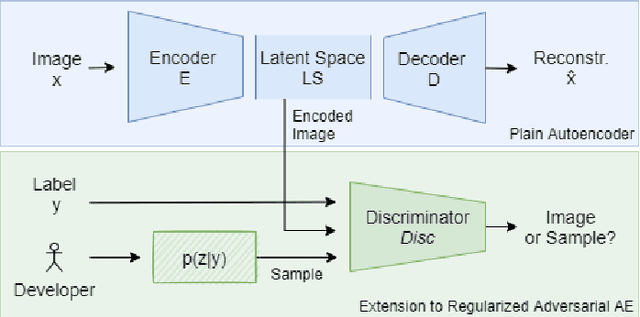
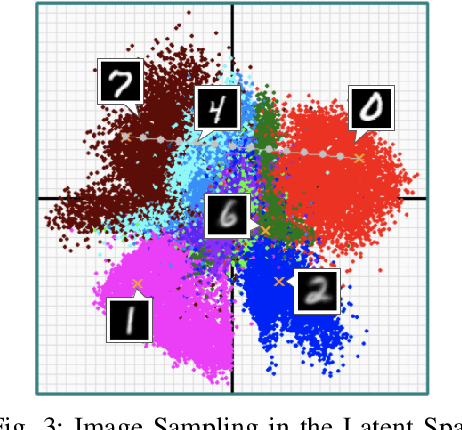
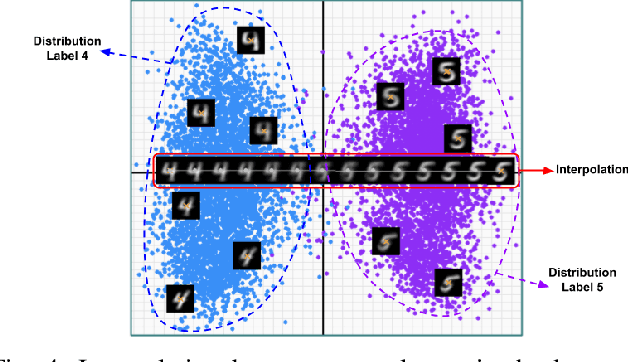
Deep Neural Networks (DNNs) are becoming a crucial component of modern software systems, but they are prone to fail under conditions that are different from the ones observed during training (out-of-distribution inputs) or on inputs that are truly ambiguous, i.e., inputs that admit multiple classes with nonzero probability in their ground truth labels. Recent work proposed DNN supervisors to detect high-uncertainty inputs before their possible misclassification leads to any harm. To test and compare the capabilities of DNN supervisors, researchers proposed test generation techniques, to focus the testing effort on high-uncertainty inputs that should be recognized as anomalous by supervisors. However, existing test generators can only produce out-of-distribution inputs. No existing model- and supervisor-independent technique supports the generation of truly ambiguous test inputs. In this paper, we propose a novel way to generate ambiguous inputs to test DNN supervisors and used it to empirically compare several existing supervisor techniques. In particular, we propose AmbiGuess to generate ambiguous samples for image classification problems. AmbiGuess is based on gradient-guided sampling in the latent space of a regularized adversarial autoencoder. Moreover, we conducted what is - to the best of our knowledge - the most extensive comparative study of DNN supervisors, considering their capabilities to detect 4 distinct types of high-uncertainty inputs, including truly ambiguous ones.