 Add to Chrome
 Add to Firefox
 Add to Edge
Report on CHIIR 2026 Workshop on Generative AI and Academic Search (GAI&AS)
Jun 08, 2026
This report summarizes the CHIIR 2026 Workshop on Generative AI and Academic Search (GAI\&AS), which examined how GenAI is reshaping academic search systems and research practices. The workshop brought together researchers in human information interaction and information retrieval to explore key challenges and opportunities in designing and evaluating future academic search systems that integrate GenAI, moving beyond traditional document retrieval to support summarization, recommendation, synthesis, and conversational interaction. Participants' interests and discussions focused on three thematic clusters: foundations and principles, applications and opportunities, and search-as-learning. Across these themes, the workshop highlighted the importance of academic search systems in supporting transparency, credibility, research integrity, and long-term scholarly needs, as well as in fostering higher-order cognitive processes. Participants discussed guiding theories, design principles, methodological approaches, partnerships, and community-building efforts aimed at advancing human-centered GenAI-enhanced academic search systems. Overall, the workshop demonstrated strong community interest and a diverse range of ongoing and emerging research initiatives at the intersection of GenAI and academic search.

Regression-Oriented Knowledge Distillation for Lightweight Ship Orientation Angle Prediction with Optical Remote Sensing Images
Jul 13, 2023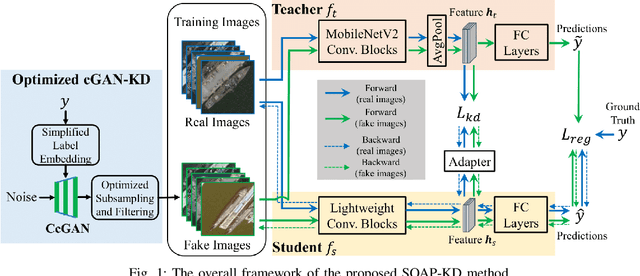
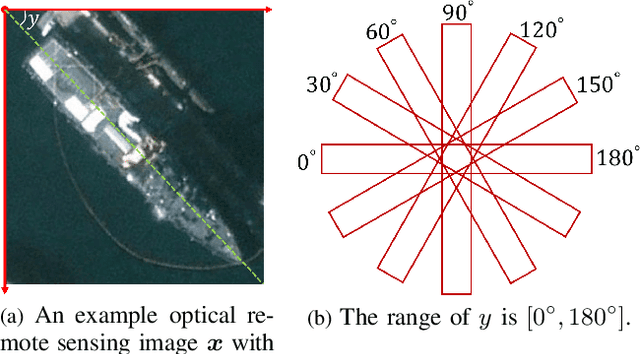
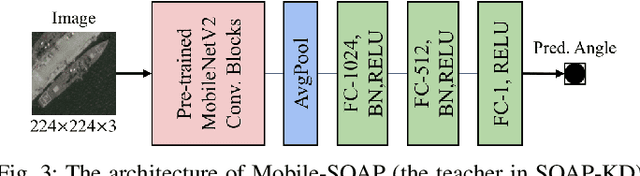
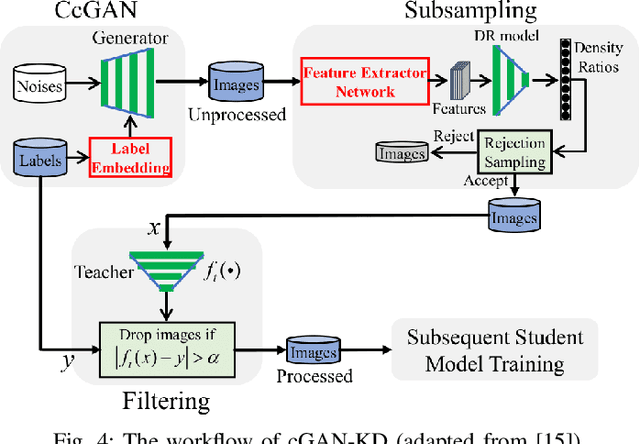
Ship orientation angle prediction (SOAP) with optical remote sensing images is an important image processing task, which often relies on deep convolutional neural networks (CNNs) to make accurate predictions. This paper proposes a novel framework to reduce the model sizes and computational costs of SOAP models without harming prediction accuracy. First, a new SOAP model called Mobile-SOAP is designed based on MobileNetV2, achieving state-of-the-art prediction accuracy. Four tiny SOAP models are also created by replacing the convolutional blocks in Mobile-SOAP with four small-scale networks, respectively. Then, to transfer knowledge from Mobile-SOAP to four lightweight models, we propose a novel knowledge distillation (KD) framework termed SOAP-KD consisting of a novel feature-based guidance loss and an optimized synthetic samples-based knowledge transfer mechanism. Lastly, extensive experiments on the FGSC-23 dataset confirm the superiority of Mobile-SOAP over existing models and also demonstrate the effectiveness of SOAP-KD in improving the prediction performance of four specially designed tiny models. Notably, by using SOAP-KD, the test mean absolute error of the ShuffleNetV2x1.0-based model is only 8% higher than that of Mobile-SOAP, but its number of parameters and multiply-accumulate operations (MACs) are respectively 61.6% and 60.8% less.