 Add to Chrome
 Add to Firefox
 Add to Edge
GeoTeacher: Geometry-Guided Semi-Supervised 3D Object Detection
Dec 29, 2025
Semi-supervised 3D object detection, aiming to explore unlabeled data for boosting 3D object detectors, has emerged as an active research area in recent years. Some previous methods have shown substantial improvements by either employing heterogeneous teacher models to provide high-quality pseudo labels or enforcing feature-perspective consistency between the teacher and student networks. However, these methods overlook the fact that the model usually tends to exhibit low sensitivity to object geometries with limited labeled data, making it difficult to capture geometric information, which is crucial for enhancing the student model's ability in object perception and localization. In this paper, we propose GeoTeacher to enhance the student model's ability to capture geometric relations of objects with limited training data, especially unlabeled data. We design a keypoint-based geometric relation supervision module that transfers the teacher model's knowledge of object geometry to the student, thereby improving the student's capability in understanding geometric relations. Furthermore, we introduce a voxel-wise data augmentation strategy that increases the diversity of object geometries, thereby further improving the student model's ability to comprehend geometric structures. To preserve the integrity of distant objects during augmentation, we incorporate a distance-decay mechanism into this strategy. Moreover, GeoTeacher can be combined with different SS3D methods to further improve their performance. Extensive experiments on the ONCE and Waymo datasets indicate the effectiveness and generalization of our method and we achieve the new state-of-the-art results. Code will be available at https://github.com/SII-Whaleice/GeoTeacher

Traffic Prediction using Artificial Intelligence: Review of Recent Advances and Emerging Opportunities
Jun 04, 2023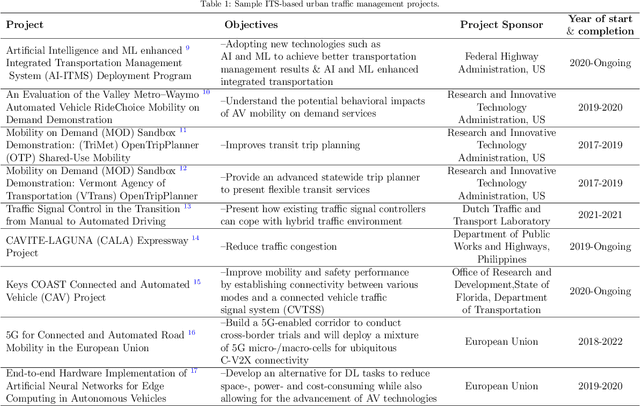
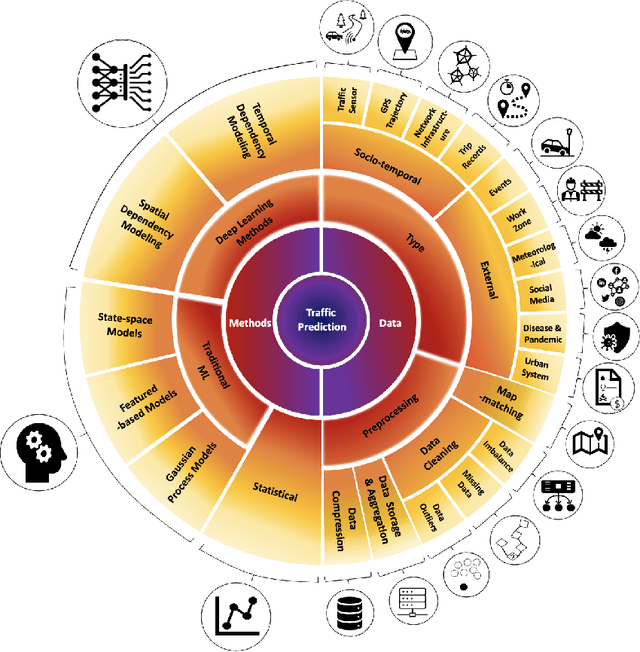
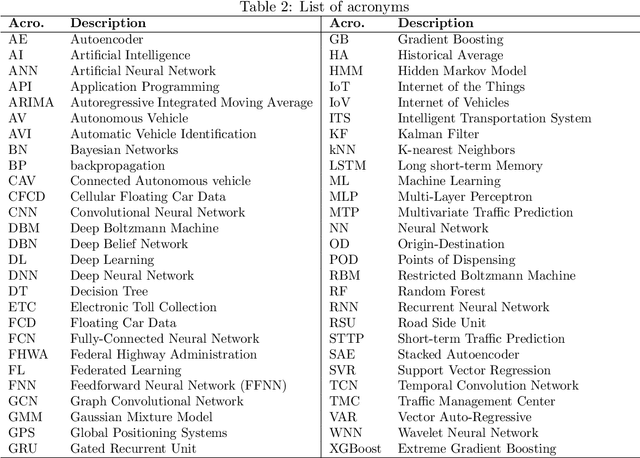
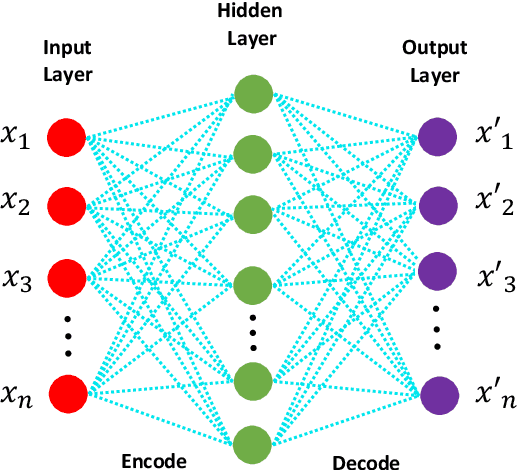
Traffic prediction plays a crucial role in alleviating traffic congestion which represents a critical problem globally, resulting in negative consequences such as lost hours of additional travel time and increased fuel consumption. Integrating emerging technologies into transportation systems provides opportunities for improving traffic prediction significantly and brings about new research problems. In order to lay the foundation for understanding the open research challenges in traffic prediction, this survey aims to provide a comprehensive overview of traffic prediction methodologies. Specifically, we focus on the recent advances and emerging research opportunities in Artificial Intelligence (AI)-based traffic prediction methods, due to their recent success and potential in traffic prediction, with an emphasis on multivariate traffic time series modeling. We first provide a list and explanation of the various data types and resources used in the literature. Next, the essential data preprocessing methods within the traffic prediction context are categorized, and the prediction methods and applications are subsequently summarized. Lastly, we present primary research challenges in traffic prediction and discuss some directions for future research.