 Add to Chrome
 Add to Firefox
 Add to Edge
Cerebellar-Inspired Residual Control for Fault Recovery: From Inference-Time Adaptation to Structural Consolidation
Feb 06, 2026
Robotic policies deployed in real-world environments often encounter post-training faults, where retraining, exploration, or system identification are impractical. We introduce an inference-time, cerebellar-inspired residual control framework that augments a frozen reinforcement learning policy with online corrective actions, enabling fault recovery without modifying base policy parameters. The framework instantiates core cerebellar principles, including high-dimensional pattern separation via fixed feature expansion, parallel microzone-style residual pathways, and local error-driven plasticity with excitatory and inhibitory eligibility traces operating at distinct time scales. These mechanisms enable fast, localized correction under post-training disturbances while avoiding destabilizing global policy updates. A conservative, performance-driven meta-adaptation regulates residual authority and plasticity, preserving nominal behavior and suppressing unnecessary intervention. Experiments on MuJoCo benchmarks under actuator, dynamic, and environmental perturbations show improvements of up to $+66\%$ on \texttt{HalfCheetah-v5} and $+53\%$ on \texttt{Humanoid-v5} under moderate faults, with graceful degradation under severe shifts and complementary robustness from consolidating persistent residual corrections into policy parameters.

An Autotuning-based Optimization Framework for Mixed-kernel SVM Classifications in Smart Pixel Datasets and Heterojunction Transistors
Jun 26, 2024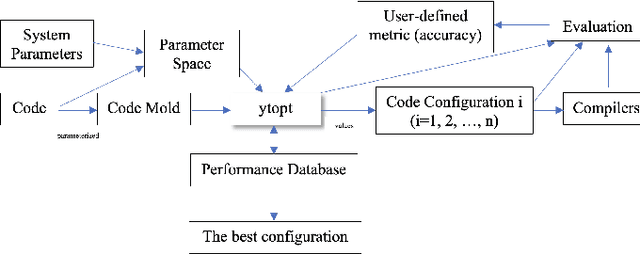
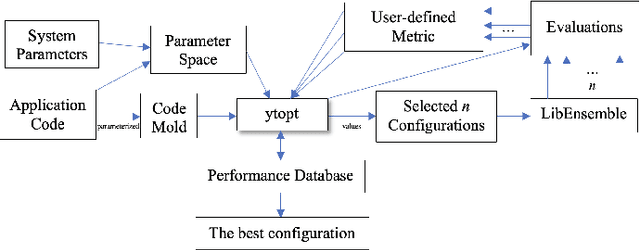
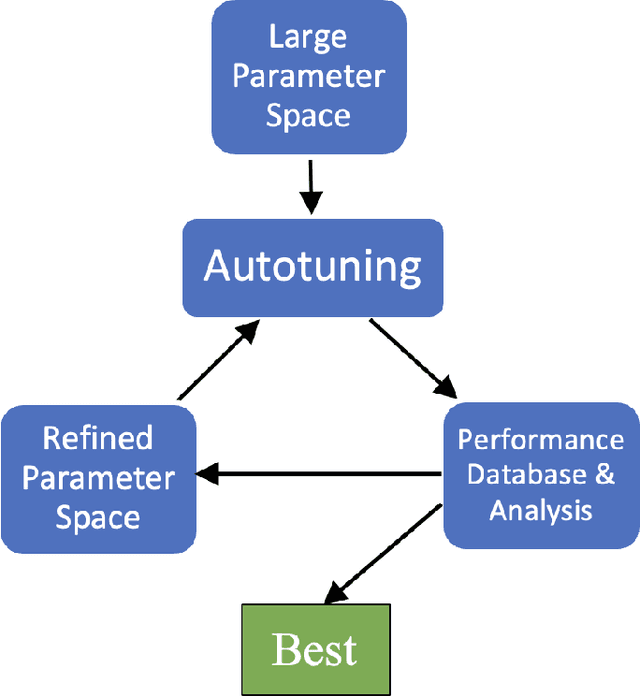
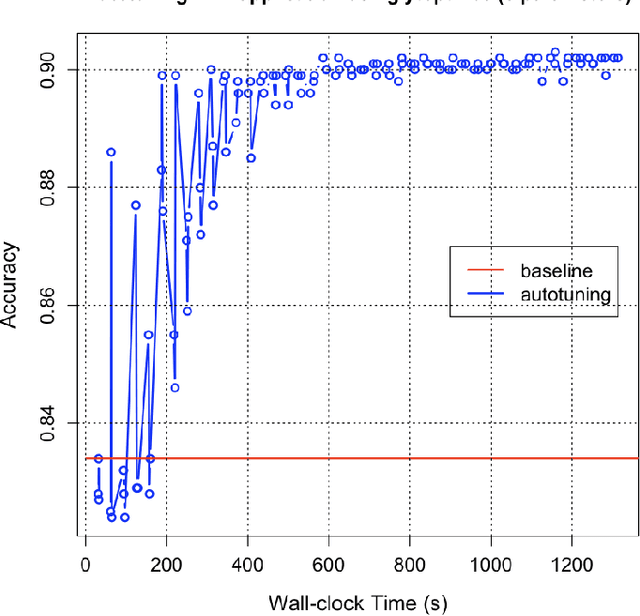
Support Vector Machine (SVM) is a state-of-the-art classification method widely used in science and engineering due to its high accuracy, its ability to deal with high dimensional data, and its flexibility in modeling diverse sources of data. In this paper, we propose an autotuning-based optimization framework to quantify the ranges of hyperparameters in SVMs to identify their optimal choices, and apply the framework to two SVMs with the mixed-kernel between Sigmoid and Gaussian kernels for smart pixel datasets in high energy physics (HEP) and mixed-kernel heterojunction transistors (MKH). Our experimental results show that the optimal selection of hyperparameters in the SVMs and the kernels greatly varies for different applications and datasets, and choosing their optimal choices is critical for a high classification accuracy of the mixed kernel SVMs. Uninformed choices of hyperparameters C and coef0 in the mixed-kernel SVMs result in severely low accuracy, and the proposed framework effectively quantifies the proper ranges for the hyperparameters in the SVMs to identify their optimal choices to achieve the highest accuracy 94.6\% for the HEP application and the highest average accuracy 97.2\% with far less tuning time for the MKH application.