 Add to Chrome
 Add to Firefox
 Add to Edge
ImmuVis: Hyperconvolutional Foundation Model for Imaging Mass Cytometry
Feb 04, 2026
We present ImmuVis, an efficient convolutional foundation model for imaging mass cytometry (IMC), a high-throughput multiplex imaging technology that handles molecular marker measurements as image channels and enables large-scale spatial tissue profiling. Unlike natural images, multiplex imaging lacks a fixed channel space, as real-world marker sets vary across studies, violating a core assumption of standard vision backbones. To address this, ImmuVis introduces marker-adaptive hyperconvolutions that generate convolutional kernels from learned marker embeddings, enabling a single model to operate on arbitrary measured marker subsets without retraining. We pretrain ImmuVis on the largest to-date dataset, IMC17M (28 cohorts, 24,405 images, 265 markers, over 17M patches), using self-supervised masked reconstruction. ImmuVis outperforms SOTA baselines and ablations in virtual staining and downstream classification tasks at substantially lower compute cost than transformer-based alternatives, and is the sole model that provides calibrated uncertainty via a heteroscedastic likelihood objective. These results position ImmuVis as a practical, efficient foundation model for real-world IMC modeling.

Contrastive News and Social Media Linking using BERT for Articles and Tweets across Dual Platforms
Dec 11, 2023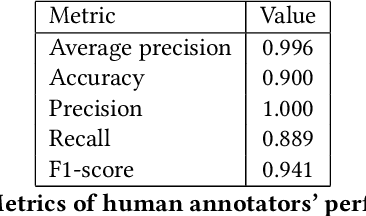
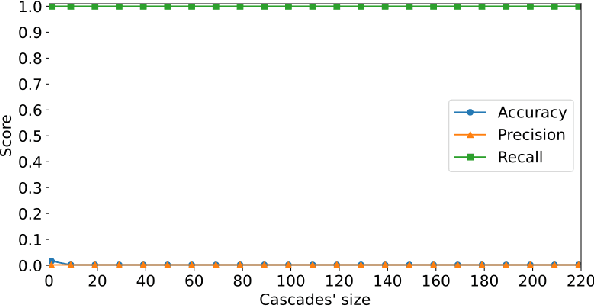
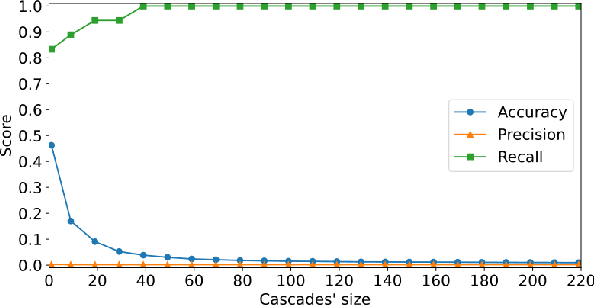

X (formerly Twitter) has evolved into a contemporary agora, offering a platform for individuals to express opinions and viewpoints on current events. The majority of the topics discussed on Twitter are directly related to ongoing events, making it an important source for monitoring public discourse. However, linking tweets to specific news presents a significant challenge due to their concise and informal nature. Previous approaches, including topic models, graph-based models, and supervised classifiers, have fallen short in effectively capturing the unique characteristics of tweets and articles. Inspired by the success of the CLIP model in computer vision, which employs contrastive learning to model similarities between images and captions, this paper introduces a contrastive learning approach for training a representation space where linked articles and tweets exhibit proximity. We present our contrastive learning approach, CATBERT (Contrastive Articles Tweets BERT), leveraging pre-trained BERT models. The model is trained and tested on a dataset containing manually labeled English and Polish tweets and articles related to the Russian-Ukrainian war. We evaluate CATBERT's performance against traditional approaches like LDA, and the novel method based on OpenAI embeddings, which has not been previously applied to this task. Our findings indicate that CATBERT demonstrates superior performance in associating tweets with relevant news articles. Furthermore, we demonstrate the performance of the models when applied to finding the main topic -- represented by an article -- of the whole cascade of tweets. In this new task, we report the performance of the different models in dependence on the cascade size.