 Add to Chrome
 Add to Firefox
 Add to Edge
Uncertainty Quantification for Named Entity Recognition via Full-Sequence and Subsequence Conformal Prediction
Jan 13, 2026
Named Entity Recognition (NER) serves as a foundational component in many natural language processing (NLP) pipelines. However, current NER models typically output a single predicted label sequence without any accompanying measure of uncertainty, leaving downstream applications vulnerable to cascading errors. In this paper, we introduce a general framework for adapting sequence-labeling-based NER models to produce uncertainty-aware prediction sets. These prediction sets are collections of full-sentence labelings that are guaranteed to contain the correct labeling with a user-specified confidence level. This approach serves a role analogous to confidence intervals in classical statistics by providing formal guarantees about the reliability of model predictions. Our method builds on conformal prediction, which offers finite-sample coverage guarantees under minimal assumptions. We design efficient nonconformity scoring functions to construct efficient, well-calibrated prediction sets that support both unconditional and class-conditional coverage. This framework accounts for heterogeneity across sentence length, language, entity type, and number of entities within a sentence. Empirical experiments on four NER models across three benchmark datasets demonstrate the broad applicability, validity, and efficiency of the proposed methods.

A Bootstrap-based Inference Framework for Testing Similarity of Paired Networks
Nov 25, 2019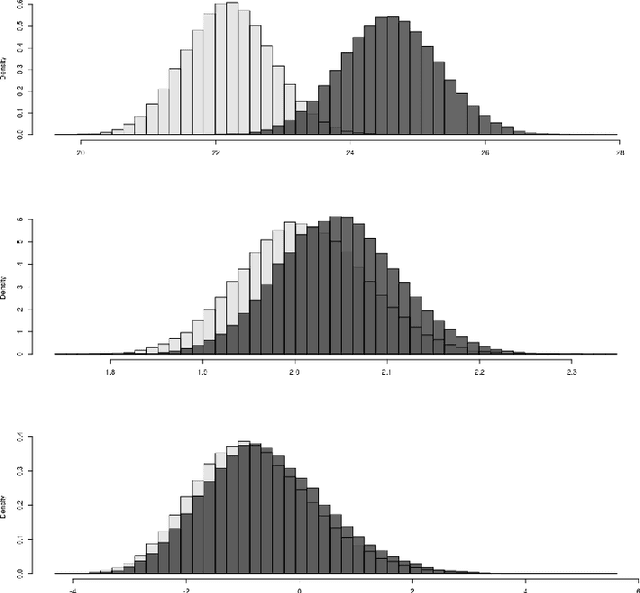
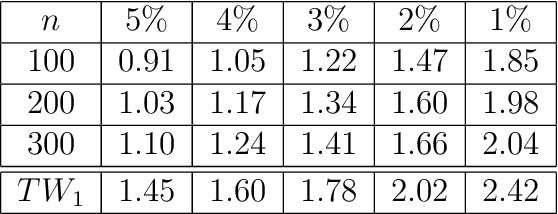
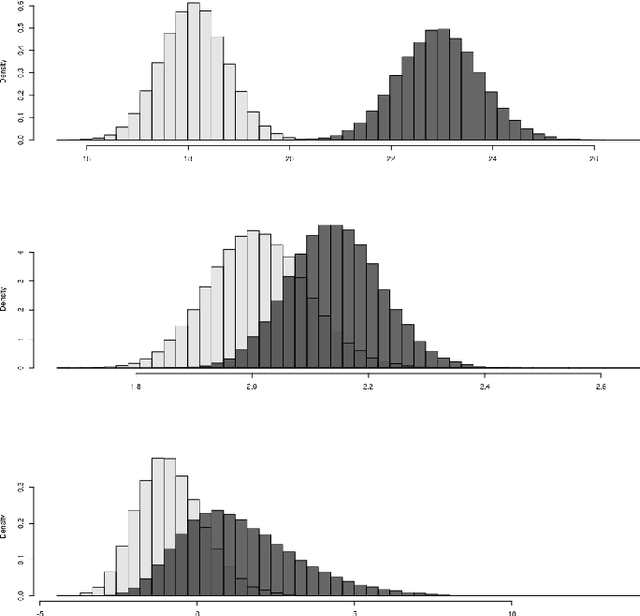
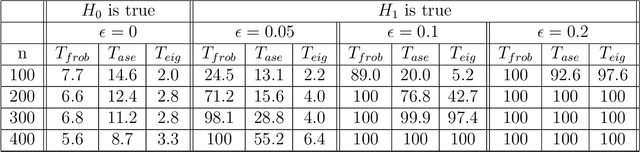
We live in an interconnected world where network valued data arises in many domains, and, fittingly, statistical network analysis has emerged as an active area in the literature. However, the topic of inference in networks has received relatively less attention. In this work, we consider the paired network inference problem where one is given two networks on the same set of nodes, and the goal is to test whether the given networks are stochastically similar in terms of some notion of similarity. We develop a general inferential framework based on parametric bootstrap to address this problem. Under this setting, we address two specific and important problems: the equality problem, i.e., whether the two networks are generated from the same random graph model, and the scaling problem, i.e., whether the underlying probability matrices of the two random graph models are scaled versions of each other.
Anomaly detection in static networks using egonets
Jul 27, 2018


Network data has rapidly emerged as an important and active area of statistical methodology. In this paper we consider the problem of anomaly detection in networks. Given a large background network, we seek to detect whether there is a small anomalous subgraph present in the network, and if such a subgraph is present, which nodes constitute the subgraph. We propose an inferential tool based on egonets to answer this question. The proposed method is computationally efficient and naturally amenable to parallel computing, and easily extends to a wide variety of network models. We demonstrate through simulation studies that the egonet method works well under a wide variety of network models. We obtain some fascinating empirical results by applying the egonet method on several well-studied benchmark datasets.